Rwanda Gorilla Birth: Understanding What Happens When a Mountain Gorilla Is Born
Mountain gorilla births are among the most significant events in the life of any gorilla family. Each birth adds to the population total tracked by the annual census. Each new infant represents a direct measure of the conservation program’s success. The birth, survival, and development of gorilla infants is monitored with intense attention by research teams in Volcanoes National Park. This monitoring is central to the management of Rwanda’s gorilla families.
Mountain gorillas have a slow reproductive rate. Females give birth for the first time at approximately ten years of age. Subsequent births are spaced four to six years apart as the previous infant is nursed and weaned. This slow reproductive pace means that every birth matters enormously for the population’s recovery trajectory. Each infant that survives to adulthood represents years of invested conservation effort.
The Birth and Early Development
A gorilla birth typically occurs during the night or early morning within the group’s sleeping area. The group sleeps together in freshly constructed nests each night. The birth usually happens without complication. First-time mothers occasionally struggle with infant management in the initial hours. Experienced mothers handle the newborn with calm confidence from the first moments.
Newborn gorilla infants are tiny relative to the adult females that give birth to them. They weigh approximately 1.8 kilograms at birth. This is small compared to their eventual adult weight of 80 to 90 kilograms for females and 160 to 220 kilograms for adult males. The newborn’s eyes are open from birth and it clings to its mother’s chest fur within hours of being born.
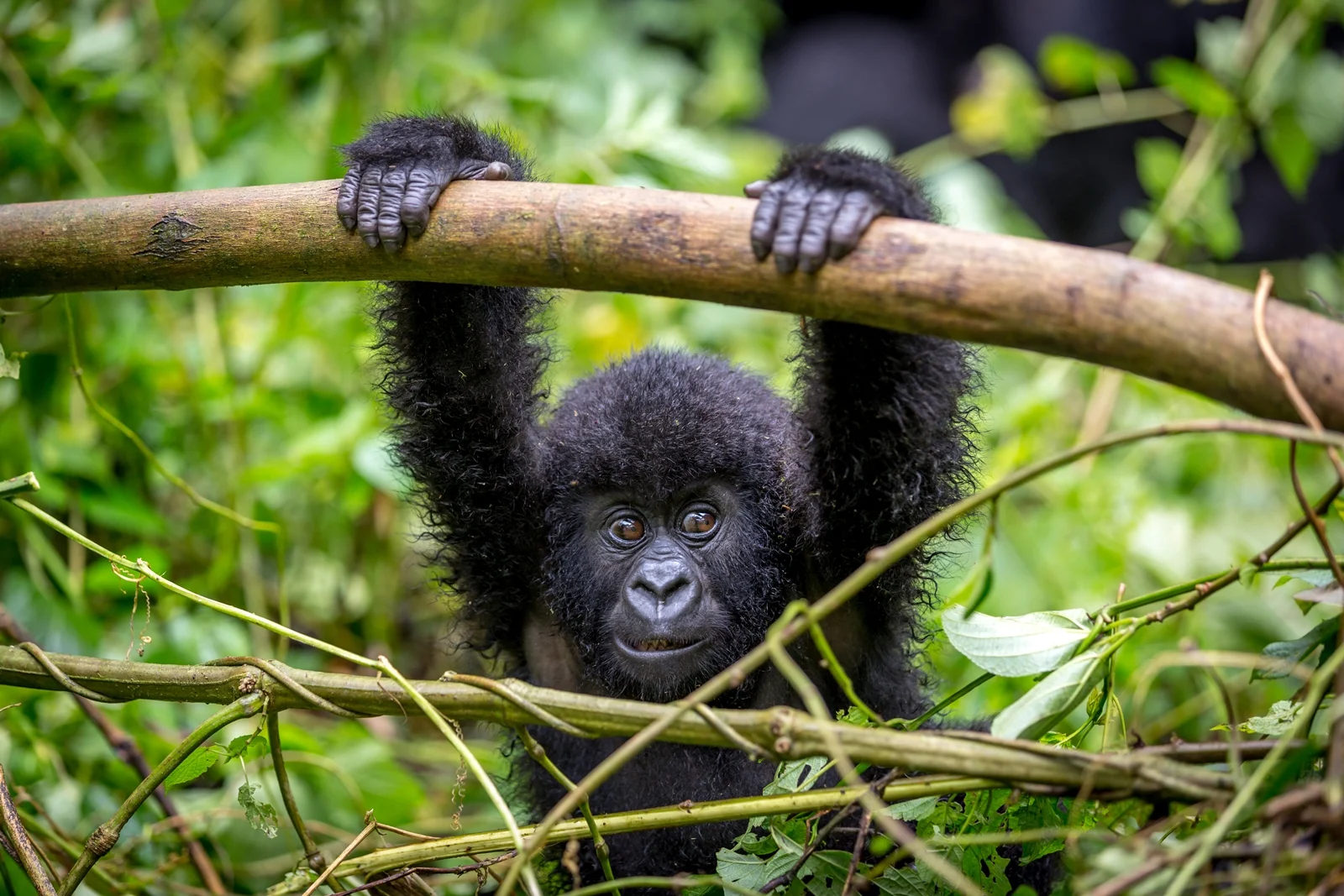
Infant gorillas cling to their mothers continuously for the first several months of life. The mother carries the infant pressed against her chest initially. As the infant grows stronger, it shifts to a dorsal riding position on the mother’s back. This riding position continues until the juvenile is large enough to move independently through the forest, typically at two to three years of age.
What Research Teams Do at Birth
The research team monitoring a habituated group records each birth as early as possible. Confirming the sex of a newborn requires close observation over the infant’s first days, as infants are rarely still enough for confident assessment immediately at birth. The sex ratio of births is one of the population parameters tracked across the gorilla families over time.
Veterinary assessment of the newborn’s health is a priority in the early weeks. Respiratory infections are a significant risk to infant gorillas, particularly in the first months of life. The Mountain Gorilla Veterinary Project maintains the capacity to intervene medically if a newborn shows signs of a serious illness that threatens survival. This veterinary safety net has contributed directly to infant survival rates in recent decades.
The naming of the new infant happens through the Kwita Izina ceremony typically held the following September. The infant carries an assigned reference designation until the official naming at the ceremony. The ceremony announcement reveals the name to the public. It connects each new birth to Rwanda’s cultural tradition of naming ceremonies for newborn children.
Infant Behaviour on the Trek
Groups with young infants provide some of the most engaging gorilla encounters. Infant gorillas are intensely curious, active, and playful in ways that adult gorillas are not. They approach the visitor group more closely than adults do. They interact physically with juvenile siblings and with patient adult females in the group. Their energy and curiosity create the most animated encounters in the gorilla experience.
Young juveniles also engage in vigorous play sessions during the encounter period. Wrestling, chasing, and climbing are common behaviours in groups with juveniles between one and four years of age. The contrast between the still, contemplative behaviour of resting adult gorillas and the energetic play of the young creates a vivid picture of the family’s social life during the encounter hour.
Plan Your Rwanda Gorilla Safari
The best time to see infant gorillas is within one to two years of birth before the Kwita Izina naming. Permit rangers can advise on which groups currently have young infants when you book. A group with an infant under one year old creates one of the most emotionally resonant gorilla encounters available in the entire Africa safari experience.
African Wild Trekkers designs Rwanda gorilla safari itineraries and can advise on which groups have young infants at the time of your planned travel. Contact us to plan a Rwanda gorilla safari that maximises the chance of an encounter with a family group at its most dynamic and most moving.