Red-collared Widowbird: East Africa’s Long-tailed Grassland Acrobat
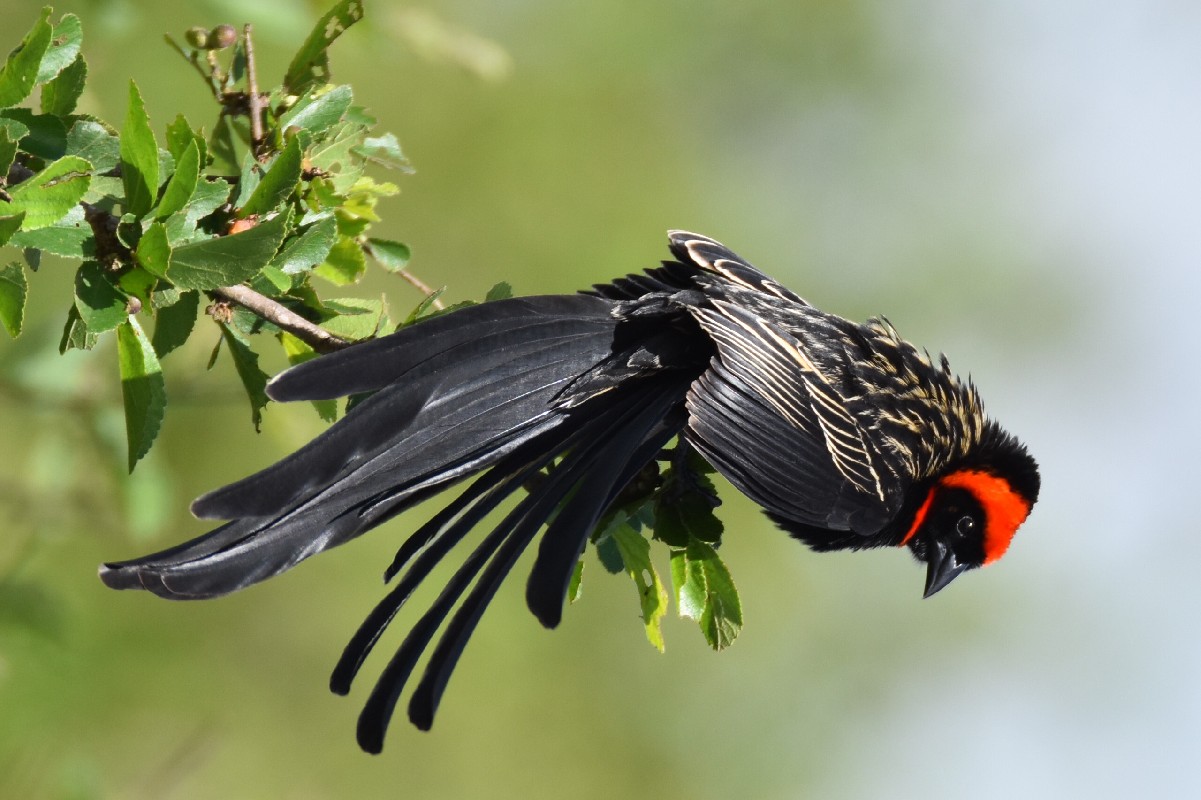
The red-collared widowbird is one of East Africa’s most striking grassland birds. The breeding male displays a jet-black body, a bright red collar, and an exceptionally long tail. During courtship, he performs a slow and dramatic flight display above the grasslands. The long tail flows behind him as he moves across his territory.
This impressive display makes the red-collared widowbird one of the most memorable birds on East Africa’s highland safari routes. Visitors can often spot displaying males from roadsides in Kenya and Tanzania’s elevated grassland areas.
The species prefers cool highland environments with tall grass and regular rainfall. These conditions provide nesting areas and abundant insect food. The red-collared widowbird usually occurs above 1,500 meters, making it a specialty bird of East Africa’s mountain and highland regions.
Identifying the Red-Collared Widowbird
The breeding male red-collared widowbird is easy to recognize. Its head, back, wings, and belly appear completely black. A bright scarlet-red collar stretches across the upper breast and contrasts strongly with the dark plumage.
A narrow white stripe separates the red collar from the black belly. The male also develops long, broad tail feathers that extend far beyond the body. During the breeding season, this combination of colors and the impressive tail makes the bird impossible to confuse with other widowbirds.
The red collar is the feature that gives the species its name. No other long-tailed widowbird in East Africa combines a red breast collar with a black body and extended tail feathers.
Female red-collared widowbirds look very different from breeding males. They have streaked brown and buff feathers that help them blend into the grass. Non-breeding males also lose the bright red collar and develop a more subdued appearance.
Red-Collared Widowbird Display Behaviour
The male red-collared widowbird uses its spectacular appearance to attract females. During the breeding season, males establish territories within suitable grassland habitats. They perform repeated display flights above these areas to advertise their presence.
The display flight usually takes place just above the grass surface. The male rises from a grass perch, spreads his long tail, and moves in a slow bouncing pattern. The red collar becomes highly visible as the bird rises and falls through the air.
These displays can continue for long periods during the breeding season. Visitors who stop near suitable grasslands may watch several males competing for attention through their flight performances.
Female red-collared widowbirds build the nests. They create dome-shaped grass structures hidden inside thick vegetation. The side entrance remains protected by surrounding grass that shields the nest from rain and predators.
Several females may build nests within one male’s territory. The male protects the territory but does not provide direct care for the chicks. The female handles nest construction, incubation, and feeding.
Habitat and Distribution
The red-collared widowbird prefers moist highland grasslands with tall vegetation. These habitats occur in mountain areas where rainfall supports thick grass growth throughout much of the year.
In East Africa, the species occurs mainly in Kenya, Tanzania, and Uganda. Its high-altitude preference means it does not appear in many lowland safari areas. Visitors searching for this species should focus on mountain regions and elevated grasslands.
Kenya’s Aberdare Mountains and Kinangop grasslands provide some of the best opportunities to see red-collared widowbirds. The open highland landscapes create ideal viewing conditions, especially when males perform their breeding displays.
Tanzania’s Ngorongoro Highlands also support strong populations. Visitors driving along the crater rim can often see males displaying in the open grasslands above 2,300 meters. The combination of dramatic scenery and active widowbirds makes this area a highlight for birdwatchers.
Uganda also supports red-collared widowbirds in suitable highland habitats. The montane grasslands around the Rwenzori foothills and some areas near Bwindi provide opportunities, although sightings are less predictable than in Kenya and Tanzania.
Best Time to See Red-Collared Widowbirds
The best time to observe red-collared widowbirds is during the breeding season. In much of East Africa, this period runs from October to March. The timing overlaps with the rainy and green seasons when grasslands become more productive.
During this period, males develop their full breeding plumage and spend more time displaying. The longer tail feathers and bright red collar create the most impressive sightings.
Morning hours provide the best viewing opportunities. Birds are usually more active during cooler periods of the day. Early morning light also creates excellent conditions for photography.
Where to Include Red-Collared Widowbirds on Safari
A dedicated birding trip is not always necessary to see the red-collared widowbird. Many sightings happen during standard wildlife safaris that include highland destinations.
Kenya’s Aberdare region, Tanzania’s Ngorongoro Conservation Area, and Uganda’s mountain regions offer some of the best chances. Combining these locations with wildlife viewing creates a complete East African safari experience.
Bird enthusiasts can also combine red-collared widowbird searches with other highland species found in mountain grasslands. These habitats support unique bird communities that differ greatly from the savanna species found at lower elevations.
Plan Your Birding Safari
The red-collared widowbird adds a unique highland experience to an East African birding safari. Its bright breeding colors, unusual tail, and dramatic display flight make it one of the region’s most rewarding grassland birds.
Visitors who include Kenya’s Aberdare Mountains, Tanzania’s Ngorongoro Highlands, or Uganda’s mountain regions have excellent opportunities to encounter this species. The best sightings come from patient observation in open grassland areas during the breeding season.
African Wild Trekkers designs East Africa birding safaris that combine highland habitats with wildlife destinations across Kenya, Tanzania, and Uganda. Contact us to plan a safari that explores East Africa’s incredible bird diversity, from savanna species to mountain grassland specialists.