Rwandan Culture: Understanding Imigongo Art, Agaseke Baskets, and Traditional Symbols
Rwandan culture Imigongo art and the agaseke peace basket represent two of the country’s most distinctive visual traditions, and understanding their origins and symbolism transforms a casual craft purchase into a genuine connection with Rwandan history and identity. Rwanda’s cultural expressions survived the genocide, adapted through the reconciliation period, and now serve as both economic lifelines for artisan communities and soft-power symbols of a nation confidently reclaiming its heritage. Travelers who encounter these arts in market stalls or lodge décor without knowing their context see beautiful objects; travelers who understand the meaning carry home something far more significant. African Wild Trekkers briefs every client on Rwandan cultural traditions before their trip and recommends artisan visits that deepen this understanding beyond what any guidebook provides.
Imigongo: Rwanda’s Distinctive Geometric Art
Origins and Materials
Imigongo art originated in the Kirehe district of eastern Rwanda approximately 200 years ago, according to oral tradition, when the art form was developed by royalty and produced using cow dung mixed with natural ash and plant-based pigments. The distinctive raised geometric patterns were applied to walls and wooden panels, creating a three-dimensional surface effect that distinguishes imigongo from all other African geometric art traditions. Cow dung provides a structural medium that cures into a rigid, crack-resistant surface when mixed with ash and applied in the traditional manner, and the natural earthy tones of the base material produce the warm brown and cream palette that characterizes authentic pieces. Contemporary imigongo uses commercially available natural and synthetic pigments to expand the color palette beyond the original earth tones, though traditional craftspeople in Kirehe and Kigali maintain the original methods for historically faithful production.
Geometric Patterns and Their Meanings
Imigongo patterns use spirals, zigzags, concentric circles, and interlocking geometric forms that each carry specific symbolic meanings within the Rwandan cultural tradition — spirals represent continuity and the eternal cycle of life, while diagonal zigzags reference the movement of cattle, which historically signified wealth and status in Rwandan society. The spiral remains the most iconic imigongo motif and appears in endless variation across different craftspeople and regions, with each artist bringing personal signature elements to the basic form while respecting the traditional grammar of the art. Rectangular panel compositions traditionally decorated the walls of important household spaces including sleeping quarters and meeting rooms, and the specific patterns placed in each room reflected the status and identity of the household occupants. Modern imigongo appears on canvases, notebooks, cushion covers, and decorative panels, and the adaptation to contemporary formats has expanded the art’s commercial reach without diluting its symbolic vocabulary.
Where to Buy Authentic Imigongo
The most authentic imigongo comes from the Kirehe district cooperatives in eastern Rwanda where the art originated, and pieces from this source carry provenance certificates that distinguish them from mass-produced imitations available at tourist markets. Kigali’s Inema Arts Center stocks work by trained imigongo artists who use traditional methods, and the center’s open studio format allows visitors to watch production and speak directly with artists about the meanings of specific patterns they incorporate into their work. Kimironko Market in Kigali sells imigongo across a wide price range from $5 notebook covers to $150 large framed panels, and the quality varies significantly — examine raised pattern definition and color evenness before purchasing to distinguish hand-crafted pieces from printed reproductions. Airport shops sell imigongo reliably but at prices 50 to 100 percent higher than city market equivalents, so purchasing before your departure day produces better value for the same quality.
Agaseke: Rwanda’s Peace Basket Tradition
History and Cultural Significance
The agaseke basket, known internationally as the peace basket, serves as Rwanda’s most recognized cultural symbol and carries a layered history as a traditional wedding gift, a post-genocide reconciliation tool, and a contemporary economic lifeline for rural women’s cooperatives. Traditionally, an agaseke was presented by a bride’s family at a wedding as a container for sorghum beer offered to guests, and the quality and complexity of the weave signaled the family’s status and artisanal skill. After the 1994 genocide, international development organizations recognized basket weaving as an income-generating activity that brought women from different ethnic backgrounds together in shared productive work, and the cooperative model deliberately mixed Hutu and Tutsi women to weave reconciliation into the economic activity itself. Today the agaseke appears on Rwanda’s coat of arms and in state gift protocols when Rwanda’s government presents international visitors with formal cultural gifts.
Weaving Techniques and Pattern Vocabulary
Agaseke baskets use a coiled weaving technique where sweetgrass and sisal strands are wound around a central core, with each row precisely placed against the previous to create geometric pattern bands that rise from the base to the lid. The traditional colors came exclusively from natural plant dyes — yellow from euphorbia bark, pink from various berries, brown from mud — though contemporary weavers now incorporate commercially available dyes to achieve more vivid colors and respond to international buyer preferences. Each pattern band carries a name and meaning within the Rwandan weaving vocabulary: imvugo represents communication and dialogue, imigongo mirrors the geometric painting tradition, and imishanana references the traditional draped clothing associated with formal Rwandan occasions. A master weaver takes two to three weeks to complete a complex large basket, and the patience, precision, and geometric knowledge required make agaseke production a genuine skilled craft rather than simply a handicraft.
Supporting Cooperatives Through Your Purchase
Purchasing agaseke directly from a cooperative rather than a tourist market intermediary directs the full sale price to the weaving community rather than splitting it through a distribution chain that typically returns less than 40 percent of retail value to the producer. Kigali’s Caplaki Craft Village brings multiple cooperatives under one roof and provides buyer transparency about which cooperative produced each piece on display. The women’s cooperatives around Nyungwe Forest and in Musanze District often produce the most technically accomplished work because the weaving traditions in these areas remained strong through both the genocide and the recovery period. International shipping is available from major Kigali cooperatives for buyers who purchase large or fragile pieces that cannot travel as carry-on luggage. Spending $30 to $80 on a quality agaseke basket funds several days of income for the weaver’s household and sends a tangible piece of Rwandan cultural resilience home with you.
Other Cultural Traditions Worth Understanding
Intore Dance and Traditional Performance
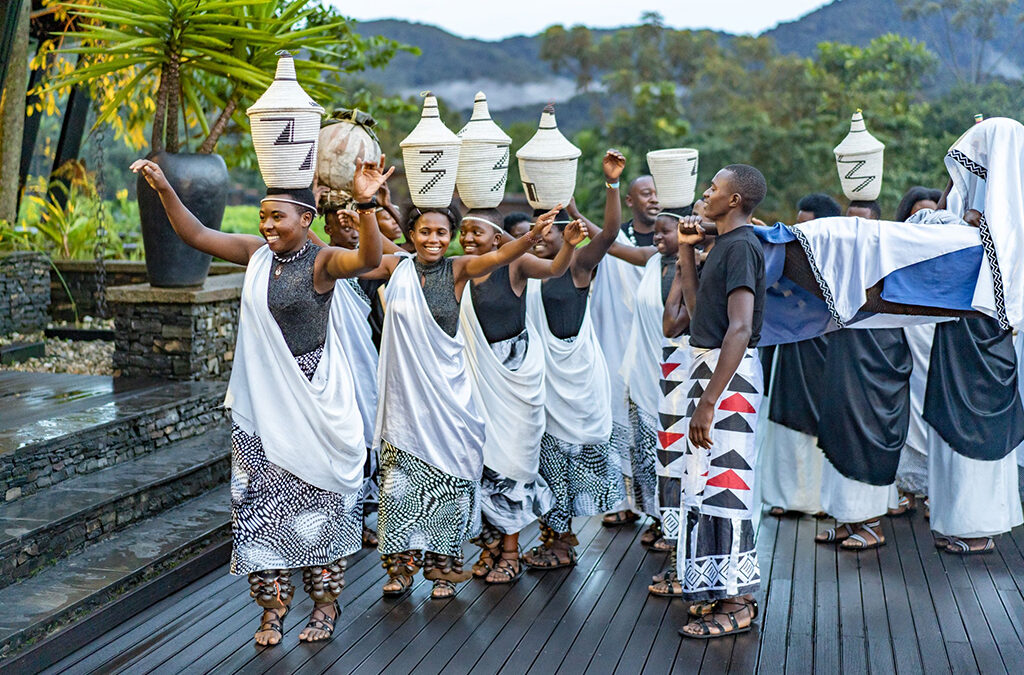
Intore dance originated in the royal court of the Rwandan kingdom and trained elite warriors in a movement vocabulary that combines acrobatic jumps, drumming, and symbolic gesture to narrate stories of battle, cattle herding, and royal celebration. Male intore dancers wear grass wigs and carry traditional weapons during performance, and the intensity of the drumming and footwork creates a visceral physical experience for spectators that no recorded version captures. The Iby’Iwacu Cultural Village near Volcanoes National Park offers the most accessible intore performance in northern Rwanda, where former poachers now lead cultural education programs that include dance demonstration and participation opportunities. Kigali’s cultural events calendar includes intore performances at the National Museum and various arts centers, and African Wild Trekkers can build a performance viewing into city itinerary days for clients who prioritize performing arts experiences alongside wildlife activities.
Urwagwa: Traditional Banana Beer Culture
Urwagwa, the traditional banana beer of Rwanda, plays a social and ceremonial role that extends far beyond the beverage itself into the ritual of communal gathering, guest welcome, and celebration that structures rural Rwandan social life. The beer is produced by fermenting ripe banana pulp with sorghum flour over three to five days, and the resulting amber liquid has a mild, slightly tart flavor that differs fundamentally from both commercial beer and fruit wines. Drinking urwagwa from a shared gourd with a long straw represents an invitation into the social fabric of a Rwandan household, and accepting the invitation with grace rather than refusal demonstrates cultural respect that hosts notice and appreciate. Rural homestay programs and cultural village visits include urwagwa as part of the welcome ceremony, and the experience of participating in this ritual over shared stories and local food provides an authenticity that no wildlife encounter can replicate.
Plan Your Safari
Explore Rwanda’s Culture on Your Safari
African Wild Trekkers builds Rwandan cultural experiences — including artisan visits, cultural villages, and market tours — into wildlife itineraries for clients who want depth beyond the national parks. Contact us at africanwildtrekkers.com/contact to plan your cultural Rwanda experience.
What Your Package Covers
Your Rwanda package can include Iby’Iwacu Cultural Village, Kimironko Market visits, imigongo and agaseke artisan cooperative tours, and the Genocide Memorial alongside all national park activities and wildlife permits.
Request Your Rwanda Cultural Safari Quote
Tell us your interests and we will weave cultural experiences throughout your wildlife itinerary at no extra planning cost. We respond within 24 hours at africanwildtrekkers.com/contact.