Samburu Special Five: Northern Kenya’s Unique Wildlife Treasures
The Samburu special five are the five endemic and near-endemic wildlife species that make Samburu and Buffalo Springs National Reserves uniquely valuable on the Kenya safari circuit. These five species — reticulated giraffe, Grevy’s zebra, gerenuk, Beisa oryx, and Somali ostrich — are found nowhere else in Kenya. The Samburu special five require the specific semi-arid northern Kenya habitat that the Samburu and Buffalo Springs reserves protect. Seeing the Samburu special five in a single game drive is one of Kenya’s most satisfying and rewarding safari achievements. The Ewaso Nyiro river that runs through both reserves supports the Samburu special five alongside lion, leopard, elephant, and crocodile. Samburu National Reserve is the finest single destination in Kenya for the northern arid-country species.
The term Samburu special five was coined by northern Kenya lodge guides to parallel the marketing success of the Southern Africa Big Five concept. The Samburu special five concept effectively communicates the unique wildlife value of the northern Kenya arid zone to visitors planning Kenya safari itineraries. Each of the Samburu special five is either endemic to or at the southern limit of its range in the Samburu area. The Samburu special five distribution boundary marks the transition between the highland Kenya wildlife zone and the East African arid zone.
Samburu Special Five Species
Reticulated Giraffe — Samburu Special Five
Reticulated giraffe is the most dramatically patterned of the world’s giraffe species. The Samburu special five reticulated giraffe has large, clearly defined brown polygons outlined in bright white lines. This pattern contrasts sharply with the irregular blotched pattern of the Masai giraffe found in southern Kenya. The Samburu special five reticulated giraffe is found only in northern Kenya, southern Ethiopia, and northern Somalia. Samburu and Buffalo Springs reserves hold one of the most accessible and numerous reticulated giraffe populations in Kenya. The Samburu special five reticulated giraffe towers above the acacia trees along the Ewaso Nyiro river bank. Photography of the reticulated giraffe against the Samburu red rock kopje backdrop produces some of Kenya’s most dramatic wildlife portraits.
Reticulated giraffe at Samburu special five sites is more solitary than Masai giraffe. Samburu special five reticulated giraffe bulls spar with neck swinging movements called necking in open ground sections. A necking contest between two large Samburu special five reticulated giraffe bulls produces one of the most impressive display behaviours of any Kenya safari species. The Samburu special five reticulated giraffe population faces threats from habitat loss and illegal hunting outside the reserve boundaries. The protected status of Samburu and Buffalo Springs reserves is therefore crucial to the survival of this extraordinary Samburu special five species in Kenya.
Grevy’s Zebra — Samburu Special Five
Grevy’s zebra is the world’s largest wild equid and the rarest of the three African zebra species. The Samburu special five Grevy’s zebra has much narrower and more closely spaced stripes than the common plains zebra. The Grevy’s zebra Samburu special five belly is white without stripes — a diagnostic identification feature visible at distance. Kenya holds approximately 3,000 Grevy’s zebra — over 90 percent of the global population. Samburu and Buffalo Springs National Reserves hold a significant portion of the Kenya Grevy’s zebra population. The Samburu special five Grevy’s zebra grazes in mixed herds with Beisa oryx and reticulated giraffe in the open Samburu grassland sections.
Grevy’s zebra Samburu special five social structure is unusual among large mammals. Adult Grevy’s zebra males at Samburu special five sites hold permanent territories of up to 12 square kilometres. Female Grevy’s zebra at Samburu special five locations move freely between male territories without forming permanent pair bonds. This Samburu special five Grevy’s zebra territorial breeding system differs fundamentally from the harem structure of plains zebra. The Grevy’s Zebra Trust, headquartered in Nairobi, monitors the Samburu special five Grevy’s zebra population through community scouts and citizen science photography. Visitors to Samburu who photograph Grevy’s zebra can submit images to the Grevy’s Zebra Trust for population monitoring purposes.
Gerenuk, Beisa Oryx, and Somali Ostrich
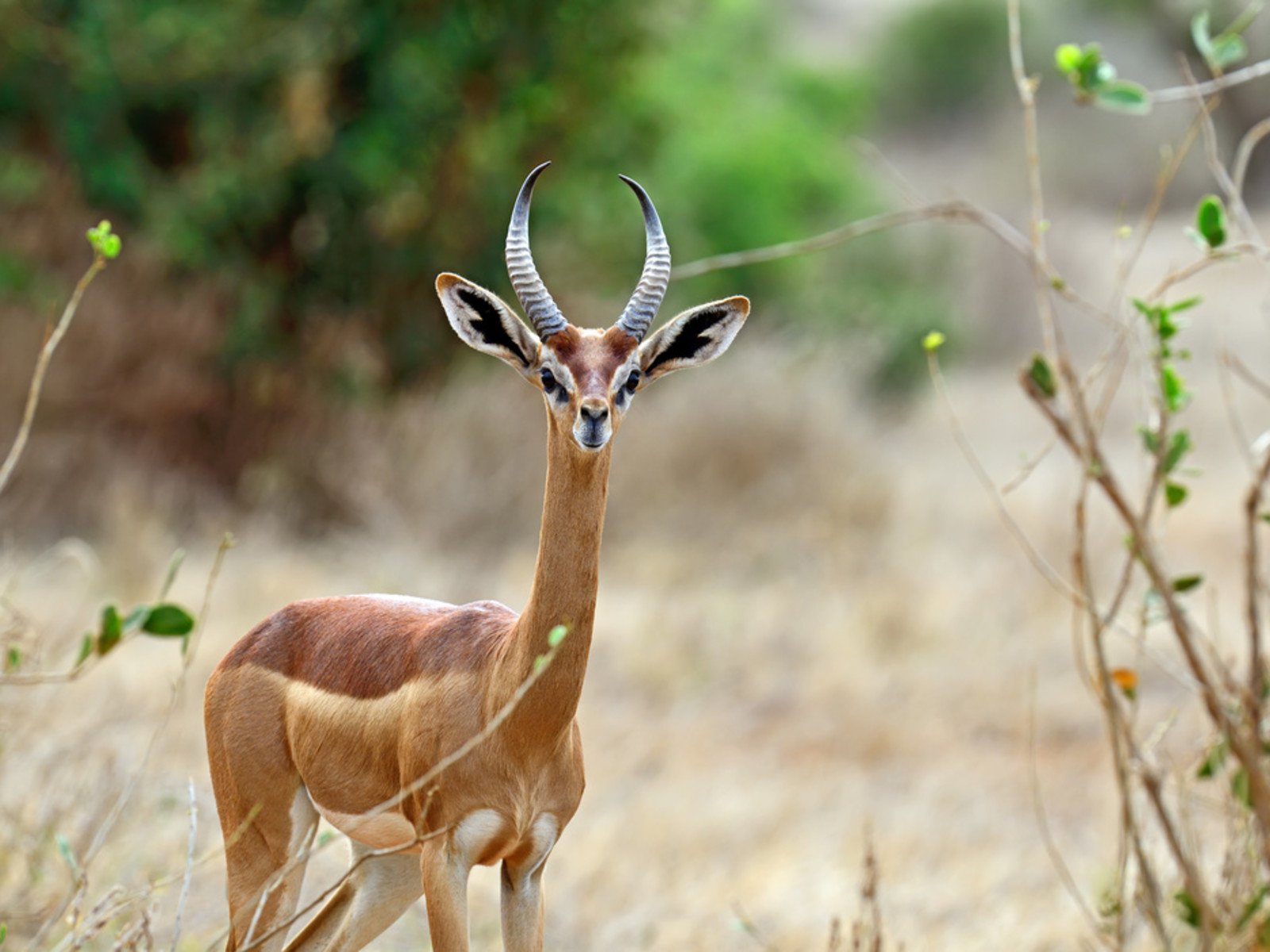
Gerenuk is the most distinctive of the Samburu special five in body form. This antelope has an extraordinarily elongated neck and legs adapted for upright browsing on high acacia branches. The Samburu special five gerenuk stands on its hind legs and uses its front legs against tree trunks to reach browse at three metres height. No other antelope species shares this Samburu special five gerenuk feeding behaviour. The gerenuk never drinks — it extracts all water requirements from the acacia foliage it browses. This Samburu special five gerenuk water independence makes it completely adapted to the dry northern Kenya landscape.
Beisa oryx is the Samburu special five’s most dramatically armed antelope with long, straight, backward-angled horns reaching 80 centimetres. The Samburu special five Beisa oryx has a distinctive black and white facial mask and a grey body. Oryx can survive extreme dehydration using physiological mechanisms that no other large African mammal possesses. The Samburu special five Somali ostrich has a distinctive blue neck in the breeding adult male compared to the pink neck of the southern common ostrich. This Somali ostrich Samburu special five colour difference is the quickest identification feature between the two species. All five of the Samburu special five are visible on a single morning game drive from the main Samburu reserve entrance gate in good conditions.
Samburu Special Five Safari
Best Samburu Special Five Viewing Areas
The Ewaso Nyiro river bank road is the most productive Samburu special five viewing area in the reserve. Reticulated giraffe browse the riverine acacia trees here throughout the day. Grevy’s zebra and Beisa oryx graze the open grass sections adjacent to the river. The kopje section of the reserve northeast of the main gate holds the highest gerenuk density. The Samburu special five dry river bed sections at Buffalo Springs produce concentrated game viewing during the dry season. These Buffalo Springs Samburu special five dry riverbed concentrations include elephant, lion, and all five endemic species at the river water access points during the peak dry months.
The Samburu special five game drive from Samburu Lodge takes the main river road through Buffalo Springs and returns via the kopje circuit. This four-hour loop covers the most productive Samburu special five sections in one morning programme. The afternoon Samburu special five drive from 16:00 to 18:30 catches the evening light on the river bank and the return of lions and leopard to activity at dusk. Leopard is seen regularly on afternoon Samburu special five drives in the doum palm areas along the river bank. The Samburu and Buffalo Springs Samburu special five leopard population is considered the most accessible in northern Kenya.
Plan Your Safari
Stay a minimum of two nights at Samburu to achieve the full Samburu special five checklist with time for the kopje gerenuk, river bank giraffe, and dry country oryx and zebra sections. Book a guide with specific Samburu special five knowledge for the kopje and dry bush Grevy’s zebra locations. Combine Samburu with Buffalo Springs National Reserve for the most complete northern Kenya arid zone wildlife day.
African Wild Trekkers designs Samburu safari programmes focused on the Samburu special five alongside the Ewaso Nyiro river predator and elephant populations. We book lodge stays, specialised guide teams, and create northern Kenya circuits combining Samburu with Shaba, Matthews Range, and Laikipia.
Contact African Wild Trekkers to see the Samburu special five. We respond within 24 hours and design northern Kenya safari programmes that deliver all five endemic species alongside the finest predator and elephant encounters in the Ewaso Nyiro river landscape.