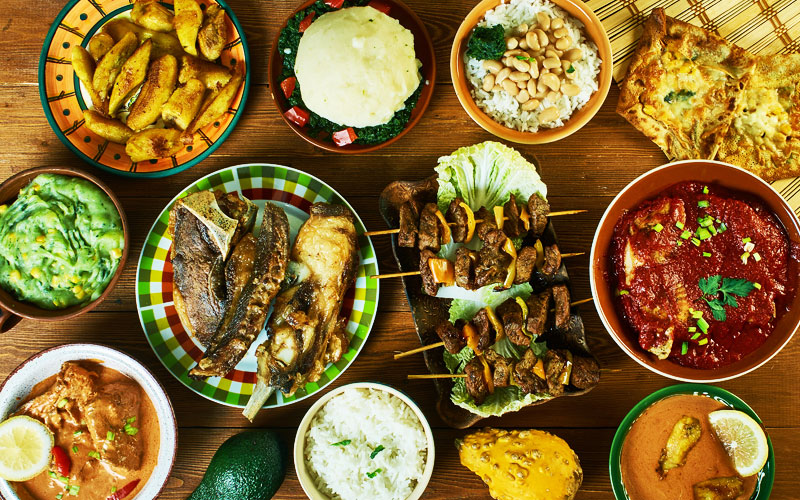
Tanzania Food Guide: What to Eat From Ugali to Zanzibar Seafood
Tanzania’s food culture is one of the most underappreciated aspects of travelling in East Africa. Most visitors arrive with minimal expectations about the food — they are here for the wildlife, not the cuisine — and leave genuinely surprised by what they encountered. Tanzanian cooking draws on African staple traditions, Arab and Indian spice routes, the Indian Ocean seafood culture of the Swahili coast, and the specific culinary identity of Zanzibar — a complex layering of influences that produces food ranging from deeply satisfying comfort staples to some of the best seafood in Africa. Understanding what to look for and where to find it transforms mealtimes from a logistical necessity to a genuine dimension of the Tanzania travel experience.
Food experiences differ significantly across Tanzania’s geography. A safari camp in the Serengeti serves food that is entirely different from what you eat at a roadside rest stop on the Arusha-Moshi highway, which is different again from the Zanzibari spice-roasted seafood available at Forodhani night market in Stone Town. This guide covers the key food traditions, dishes, and eating contexts you will encounter across Tanzania’s main travel zones, with practical advice on where to find the best versions of each.
Mainland Tanzania: Safari Camp and Local Food
What You Eat on Safari and in Arusha
Safari Lodge and Camp Cuisine
Tanzania’s safari lodges and camps serve food that is generally well-prepared and surprisingly ambitious given the remote locations of many properties. Breakfast at most lodges is a substantial buffet designed to fuel a full morning game drive — eggs prepared to order, fresh fruit, porridge, toast, juice, and strong coffee or chai tea are standard. Packed lunches for bush picnics are common for full-day game drives, and the best lodges prepare these with care: fresh sandwiches, fruit, a cold drink, and occasionally something more creative depending on the camp’s kitchen team. Evening dinners are typically three-course affairs served under canvas or in open dining areas, featuring combinations of grilled meat, roasted vegetables, stews, and desserts that draw on both African ingredients and international preparation techniques.
The quality varies considerably across accommodation tiers. Budget lodges and campsites produce functional rather than memorable food, while mid-range and upmarket properties employ trained chefs and source fresh produce daily from local markets. The best camp kitchens serve food that would earn genuine recognition in any context — Ruaha River Lodge’s kitchen, for example, produces dinners around a campfire that combine bush atmosphere with genuinely excellent cooking. If food quality matters to you, read recent reviews specifically mentioning meals at any lodge you are considering, as kitchen staff and standards change over time and general property quality does not always predict food quality.
Nyama Choma: Tanzania’s National Grill
Nyama choma — literally “grilled meat” in Swahili — is the quintessential social food of Tanzania and East Africa more broadly. Goat, beef, and chicken are marinated in salt, lemon, and minimal seasoning, then grilled over charcoal in a slow process that produces meat with a distinctive char and juicy interior. Cooks serve nyama choma with ugali — the stiff maize porridge that functions as the staple starch across Tanzania — and kachumbari, a simple fresh salsa of diced tomatoes, onions, and sometimes chilli. The combination is extraordinarily satisfying and deeply connected to the Tanzanian social experience. Nyama choma joints are where people gather on weekends, where celebrations happen, and where the most convivial local eating occurs.
Finding good nyama choma as a visitor requires knowing where to look. In Arusha, several long-established nyama choma restaurants near the Clock Tower and in the Swahili market area serve excellent quality grilled meat and are entirely comfortable for visitors. The ritual involves ordering by weight — typically a quarter or half kilogram per person — and eating with your hands at a communal table while the cook brings additional pieces from the grill. Going with a local guide or a confident hotel recommendation helps identify the best current establishments, as quality varies and the best places are often found through word of mouth rather than tourist signage.
Ugali and Beans: The Everyday Foundation
Understanding Tanzania’s Staple Food Culture
Ugali is the daily bread of Tanzania — a thick, stiff porridge made from maize flour and water that serves as the foundational starch for the majority of Tanzanian meals. Cooks prepare it until it holds its shape, shape it into a mound on the plate, and diners eat it by breaking off a piece with the right hand, forming it into a small ball with the fingers, and using it to scoop up accompanying stews, beans, or vegetables. The texture is firmer than mashed potato and more substantial than rice, and its relative blandness is intentional — it functions as a neutral base that carries the flavour of whatever accompanies it. Dismissing ugali as boring reflects a misunderstanding of its role. Eaten with well-prepared beans, a rich stew, or grilled meat and kachumbari, it is deeply satisfying.
Beans — maharagwe in Swahili — cooked in various preparations are the most common accompaniment to ugali across Tanzania. Red kidney beans, black-eyed peas, and pigeon peas are cooked with coconut milk on the coast, simmered with tomatoes and spices inland, or prepared simply with fat and salt for basic roadside meals. Sukuma wiki, a robust green vegetable similar to kale, sautéed with onion and sometimes tomato, is the other ubiquitous companion. These simple combinations — ugali, beans, sukuma wiki — represent the daily eating of the majority of Tanzanian households and, at their best, are deeply flavoured and nourishing. At roadside local restaurants, called hotelis, these dishes cost a fraction of safari lodge food prices and provide the most authentic window into everyday Tanzanian cuisine.
Zanzibari Cuisine: The Spice Island Food Culture
Seafood, Spices, and Swahili Coastal Cooking
Zanzibar’s Unique Culinary Identity
Zanzibar’s food culture is one of the most distinctive in East Africa, shaped by centuries of Arab, Indian, and African culinary exchange through the island’s historic spice trade. Cloves, cardamom, cinnamon, turmeric, ginger, and black pepper — all historically cultivated on Zanzibar — infuse the cooking with a complexity that sets it apart from mainland Tanzanian food. Coconut milk features prominently in both savoury and sweet preparations, and the Indian Ocean provides an abundance of fresh fish, prawns, crab, octopus, and lobster that form the heart of the island’s most celebrated dishes. The food at its best is nuanced, aromatic, and inseparably linked to the island’s geographic position at the crossroads of ocean trade routes.
Stone Town is the best place to immerse yourself in Zanzibari food culture. Forodhani Gardens night market on the Stone Town waterfront opens every evening and offers an extraordinary spread of Zanzibari street food at extremely low prices: Zanzibar pizza (a thin-dough street food stuffed with meat, egg, cheese, and vegetables), sugarcane juice, fresh coconut, octopus skewers, seafood prepared on open grills, and the famous urojo (Zanzibar mix) — a spiced soup dish layered with fried cassava, bhajia fritters, and coconut chutney that is one of the most complex and satisfying street foods in East Africa. Forodhani is crowded and atmospheric in the best possible way, and spending an evening grazing through the market stalls is one of Zanzibar’s most enjoyable activities.
Seafood on Zanzibar: What to Order and Where
Zanzibar’s seafood ranks among the finest available anywhere in Africa and the Indian Ocean region. The combination of Indian Ocean marine abundance, Arabic spice traditions, and Swahili coastal cooking techniques produces dishes that are genuinely exceptional. Grilled lobster with garlic butter on a beach restaurant table with the Indian Ocean in front of you is an experience that needs no hyperbole — the quality of the raw ingredient and the simplicity of the preparation create something memorable. Octopus prepared Zanzibar-style — marinated in coconut milk and spices, then grilled until slightly charred — is another signature dish that visitors consistently cite as a highlight of their Zanzibar experience.
The east coast village of Jambiani and the fishing village of Nungwi on the north coast both have excellent fresh seafood restaurants where local fishermen bring in the catch daily and kitchens prepare it to order. Prices at local restaurants in these fishing villages are substantially lower than at resort hotels on the same coastline, and the freshness and quality of the fish is often superior because the supply chain is shorter. Several Stone Town restaurants specialise in Zanzibari fine dining using these same fresh ingredients — the Emerson on Hurumzi rooftop restaurant is particularly celebrated for its Swahili spiced tasting menu served as the sun sets over the Indian Ocean.
Drinks and Practical Eating Advice
What to Drink and How to Eat Safely
Coffee, Tea, and the Kilimanjaro Chagga Coffee Culture
Tanzania is one of Africa’s finest coffee-producing countries, with high-altitude Arabica coffee grown on the slopes of Kilimanjaro by Chagga farmers enjoying a long-standing international reputation. The irony is that Tanzania exports most of its best coffee, and hotels and local restaurants serve an unremarkable instant in most cases. To taste genuinely good Tanzanian coffee, seek out specialty coffee shops in Arusha — a small but growing specialty coffee culture has taken hold in recent years — or sign up for a Chagga coffee farm tour on the Kilimanjaro slopes, where the full process from cherry to cup is demonstrated and the resulting cup is excellent. Kilimanjaro single-origin beans are widely available to purchase and represent one of Tanzania’s best food souvenirs.
Tanzanian chai — spiced milk tea prepared in the Indian tradition — is the everyday drink of most of the country and many roadside hotelis prepare it with excellent technique. The tea brews directly in milk with cardamom, ginger, and sometimes cloves, producing a rich and aromatic drink that is sweet, warming, and universally available. Cold drinks include Tanzanian-brewed Kilimanjaro and Safari lager beers, which are reliably decent and widely available, and fresh sugar cane juice or cold coconut water found at markets and roadside stalls across the country. Bottled water is the safe choice for drinking water throughout Tanzania — see the health section for details on water safety.
Food Safety and What to Eat Confidently
Fruit that you can peel yourself — bananas, mangoes, papayas, and pineapples — is safe and excellent throughout Tanzania. Cooked food served hot from a kitchen is generally reliable even at local restaurants. Avoid raw salads and vegetables washed in tap water at roadside stalls and budget restaurants, as establishments without robust kitchen hygiene carry higher risk. Safari lodges invariably prepare food to high hygiene standards with safe water, and you can eat without concern at any reputable lodge or camp. Street food judgment requires reading cleanliness signals — busy stalls with high turnover, visible fresh ingredients, and food cooked to order rather than sitting in open containers are safer choices than quiet stalls with food prepared hours earlier.
Zanzibar seafood at established restaurants is generally excellent and safe. The risks at beach restaurants relate more to fish stored too long in hot conditions than to preparation hygiene. Ordering grilled fish rather than raw preparations, and eating at restaurants with visible fresh catch rather than pre-cut preparations, reduces this risk. If you are cautious about stomach issues, starting your Tanzania trip with lodge food and local restaurant meals towards the end of the trip, once you are more attuned to the food environment, is a sensible approach that many repeat visitors follow.
Plan Your Safari
Food experiences in Tanzania are most enjoyable when your safari itinerary includes time for both camp cuisine and local food exploration. A good guide can recommend local eating in Arusha between park days, and Zanzibar extensions provide the natural setting for exploring Zanzibari seafood culture in Stone Town and along the coast. Allocating at least one evening in Stone Town specifically for Forodhani Gardens and a second evening at a proper Swahili seafood restaurant gives you the core of the Zanzibar food experience without requiring extensive planning.
African Wild Trekkers builds Tanzania safari and beach itineraries that include time for cultural and food experiences alongside wildlife game drives. Guides are happy to recommend their favourite local eating in every destination, and the team can arrange Chagga coffee farm visits and Zanzibar food tours as optional add-ons to any itinerary. All reservations are confirmed in writing before any deposit is requested.
Contact African Wild Trekkers at africanwildtrekkers.com/contact with your Tanzania travel dates and we will design your safari and food experience itinerary and confirm availability within 24 hours.