Elephant Herds and Peak Morning Activity
The Waterhole as the Heart of the African Savanna
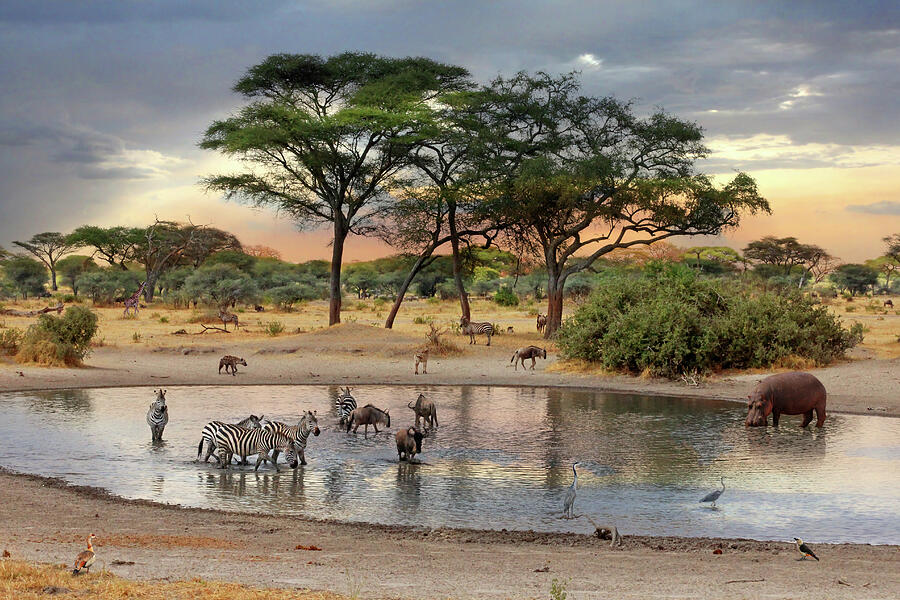
A waterhole in the African bush during the dry season functions as the gravitational center of an entire ecosystem, drawing every animal in the surrounding landscape to a single point with an urgency that increases as the weeks without rain extend and alternative water sources dry up one by one. The ecological mechanics behind this concentration are straightforward — every warm-blooded animal loses moisture through respiration, urination, and the evaporative cooling of perspiration and panting, and must replace that moisture regularly to survive — but the experiential reality of sitting beside a productive African waterhole during the late dry season exceeds the clinical description in ways that only direct observation can communicate. A waterhole at Etosha’s Okaukuejo camp in Namibia during September, where the surrounding plains are bone dry and every species in the park’s extraordinary mammal community converges on the same artificial water source, produces wildlife encounters of extraordinary quality and extraordinary intimacy that no active game drive can reliably replicate, because the animals come to you rather than requiring you to find them.
Understanding the timing of waterhole visits by different species — which animals drink at dawn, which at midday, which at dusk, and which exclusively after dark — allows a safari visitor to maximize the return on every hour spent watching a waterhole by knowing when to arrive, when to be most alert, and when the day’s peak action is most likely to unfold. This timing knowledge is not random or arbitrary; it reflects millions of years of predator-prey evolutionary pressure that has shaped each species’ waterhole behavior into the patterns that field guides, game wardens, and experienced safari naturalists have documented over decades of daily observation. The elephant that arrives at a Hwange waterhole every morning at precisely 9:15 AM, the family of cheetah that drinks at the Etosha pan only in the first forty-five minutes after sunrise, the male lion who visits the Kruger waterhole exclusively in the hour before dawn — these are individual-level patterns that guides who patrol the same areas daily eventually know as surely as the bus schedule in their home town, and sharing that knowledge with guests is part of what transforms a passive waterhole visit into an anticipated, understood, and deeply satisfying wildlife encounter.
Timing Waterhole Visits by Species and Time of Day
Dawn and Early Morning Arrivals
Predators at the Waterhole: Lions, Leopards, and Cheetahs
The hours immediately around dawn produce the highest probability of encountering Africa’s large predators at waterholes, because lions, leopards, and cheetahs that have been active through the night frequently visit water in the early morning hours before retiring to shade for the midday rest. A lion pride that spent the night hunting will typically visit a waterhole to drink within the first hour of first light — arriving with the blood still fresh on their muzzles in the more graphic encounters that wildlife photographers position themselves for in the predawn darkness — before moving to deep shade where they will sleep for most of the following nine or ten hours. This is the window that produces the dramatic lion-at-waterhole images that dominate safari photography publications and that field guides consistently identify as the highest-probability predator encounter time at any fixed water point. Arriving at a productive waterhole in total darkness, setting up a camera with appropriate low-light settings, and waiting in absolute silence for the first grey light to reveal what the night has deposited at the water’s edge is an experience that requires patience, cold tolerance, and controlled excitement — and rewards all three.
Cheetah visit waterholes in a distinctly different behavioral pattern from lion — typically arriving as family groups of a mother and sub-adult cubs, approaching the water in short bursts of forward movement between long pauses where they scan the surrounding landscape for other predators before committing to the exposed position of bending to drink. This nervousness at water is well-founded: cheetah are frequently displaced from kills and killed outright by lion and leopard, and their hyper-vigilance at open water reflects genuine vulnerability that their speed advantage — their only defensive asset — cannot deploy from a stationary drinking position. The result is that cheetah waterhole visits are brief, intensely focused affairs that rarely last more than three to five minutes before the family retreats quickly into cover — a behavioral pattern that makes the photographic challenge of capturing a relaxed cheetah drinking both genuinely difficult and uniquely rewarding when achieved. Early morning is the most reliable time for cheetah waterhole appearances, and the open grassland waterholes of Etosha, the Masai Mara’s seasonal pans, and the Kalahari’s gemsbok country are the destinations where these encounters are most consistently documented.
Elephant Herds and Peak Morning Activity
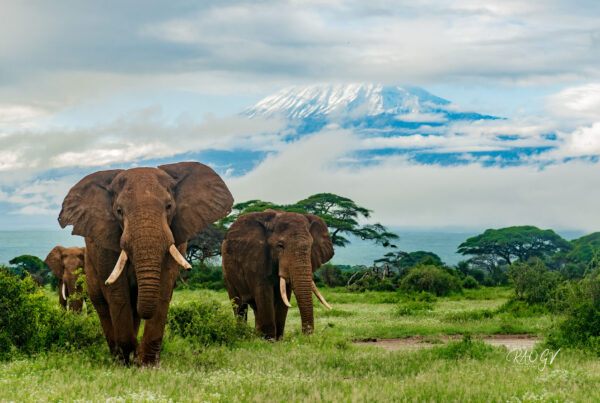
Elephant are the waterhole species that most safari visitors rank as the most reliably spectacular and emotionally affecting to watch at close range, and the morning hours between 7 AM and 10 AM represent the peak period for elephant waterhole activity across most African dry-season safari destinations. Adult elephants drink between 150 and 200 liters of water per day and typically visit water twice — once in the morning after overnight grazing and once in the late afternoon before the night’s feeding activity begins — creating two reliable daily windows for waterhole encounters with Africa’s largest land mammals. A breeding herd of twenty to forty elephants arriving at a waterhole in the early morning light creates a spectacle of sound, movement, and social interaction that is genuinely overwhelming in its complexity: matriarchs testing the water quality with extended trunks, calves plunging in up to their bellies with ears splayed, bulls sparring in the mud beside the main drinking area, young females resting their trunks on each other’s backs in the relaxed tactile reassurance that elephant family groups exchange constantly during periods of social contact. This is a multi-hour engagement rather than a brief encounter, as large herds often remain at productive waterholes for forty-five minutes to two hours depending on water availability and social dynamics.
The mud-wallowing behavior that frequently follows elephant drinking produces some of the most photographically extraordinary and behaviorally informative waterhole sequences available anywhere in African wildlife observation. After drinking, elephants typically move to the shallower muddy margins of the waterhole and use their trunks to coat themselves in thick mud that they then pack against their skin with a precision that belies the trunk’s sensitivity as a fine-motor tool — applying mud to the ears, the top of the head, and the sides of the body in the specific areas where thermoregulation and insect protection benefits are greatest. Young calves imitate this behavior with endearing incompetence, getting the mechanics roughly right but the application hopelessly unprecise, while older juveniles demonstrate intermediate skill that visibly improves across repeated waterhole visits over the months and years of their development. Watching this skill acquisition across a breeding herd that includes individuals of ten different age cohorts simultaneously is a masterclass in social learning and behavioral development that any natural history educator would struggle to replicate with any other species in any other environment.
Midday, Afternoon, and After-Dark Visitors
Buffalo, Rhino, and Midday Heat Seekers
Cape buffalo are among the most consistent midday and early afternoon waterhole visitors across Southern African savanna destinations, driven to water more frequently than most other species by the combination of their large body mass, the physiological heat load of dense black hides that absorb solar radiation efficiently, and their preference for drinking in the midday period when predator activity is at its lowest. Large buffalo herds arriving at Chobe waterholes, Etosha pans, or the Kruger’s Shisha dam in the late morning create an extraordinary sensory experience through their sheer number and collective sound — the rumble of hundreds of heavy bodies moving in unison, the bass lowing of calves calling for their mothers in the press of bodies at the water’s edge, and the dramatic visual sweep of hundreds of curved horns turning simultaneously as the herd collectively tracks a distant movement that their collective vigilance has detected before any individual could have responded alone. Buffalo at waterholes are also frequently accompanied by oxpecker birds picking ticks from their hides and egrets hunting the insects disturbed by their feet, adding layers of ecological interaction that transform a simple drinking visit into a demonstration of the African savanna’s web of species interdependency.
White rhino visit waterholes in Kruger, Hluhluwe-iMfolozi, and Etosha during the late afternoon period with a predictability that makes them one of the easiest Big Five species to plan specific encounters with at known water points. White rhino are grazers rather than browsers and spend much of their day on open grassland where their pale coloring makes them visible at considerable distance, typically moving to water in the period between 3 PM and sunset when the day’s heat begins to moderate and their digestion of afternoon grass drives fluid replacement. Watching a white rhino mother and calf at a waterhole as the afternoon light turns golden is an encounter made more poignant by the knowledge of how close both species came to extinction in the twentieth century and how dramatically conservation programs — particularly in South Africa’s Hluhluwe-iMfolozi, where the southern white rhino population was rescued from fewer than 100 individuals in the 1960s — have rebuilt their numbers to the meaningful population that exists today. Black rhino visit waterholes at night in most habitats, which is why night drives in areas with strong black rhino populations — Namibia’s Etosha being the most accessible example — occasionally produce extraordinary after-dark encounters at lit waterhole observation points that the park maintains specifically for this purpose.
Nocturnal Waterhole Visitors
The nocturnal period at a productive African waterhole reveals a completely different community of visitors that transforms the same geographic point from a daytime spectacle into an entirely different wildlife experience after dark. Etosha’s Okaukuejo waterhole is equipped with permanent floodlighting — high-pressure sodium lights that illuminate the water surface and surrounding area with a warm amber glow that wildlife has completely habituated to over decades of exposure — and the resulting after-dark observation experience is genuinely extraordinary, producing lion, leopard, black rhino, giraffe, springbok, zebra, and hyena encounters at close range from the safety of the elevated stone-walled observation area in a sequence that no game drive can reliably replicate in darkness without spotlight disturbance. Guests who camp at Okaukuejo and spend two or three hours at the waterhole after dinner — particularly from September through November when water competition is most intense — consistently describe it as among the most hypnotic and affecting wildlife experiences of their entire African travel career, producing encounters of such quality and such duration that the concept of a brief thrilling encounter is entirely replaced by a sustained, intimate, meditative observation that changes how they relate to wildlife permanently.
Aardvark, African wildcat, honey badger, brown hyena, bat-eared fox, and pangolin are all occasional nocturnal visitors to African waterholes that produce extremely rare and sought-after sightings for guides and guests patient enough to maintain waterhole watch through the small hours of the morning. These species are rarely encountered on standard game drives precisely because of their nocturnal habits and the low population densities that characterize most of these specialist or secretive mammals, and a waterhole hide or observation platform that provides a fixed, habituation-free observation point that does not move, create vehicle noise, or project light in the species’ direction represents the best available technology for encountering them on their own terms without the disturbance that spotlighting creates. The most dedicated waterhole watchers — photographers who commit to overnight observation sessions in purpose-built hides at productive waterholes in South Africa’s Zimanga Private Game Reserve, for example — document species lists at their specific waterhole that would require weeks of active game driving to approach elsewhere, demonstrating the waterhole as the single most productive wildlife observation point available when fully exploited across the complete twenty-four-hour cycle.
Plan Your Safari
African Wild Trekkers incorporates dedicated waterhole observation time into every safari itinerary where productive water points are accessible, because we know from guest feedback that some of the most memorable and photographically productive wildlife encounters of any trip happen at fixed water sources where patience and positioning replace the active searching that occupies most game drive hours. We advise specifically on which waterholes are most productive in each destination at different times of year, and which lodges provide the best access to permanent observation points near reliable water.
For guests with a specific interest in waterhole photography, we can design itineraries built around the most productive fixed water points across our operating destinations — Okaukuejo in Etosha, the Hwange pan network in Zimbabwe, the Chobe riverfront in Botswana, and Etosha’s network of perennial springs — and advise on the camera settings, hide positioning, and patience strategies that professional wildlife photographers use to make the most of these extraordinary concentrated wildlife opportunities.
Contact African Wild Trekkers at africanwildtrekkers.com/contact with your destination interests and travel dates and we will build a waterhole-centred safari itinerary that maximizes your time at the most productive water points within 24 hours.