Budget Safari Kenya 2026: How to See Africa’s Wildlife for Less
A budget safari Kenya 2026 is entirely achievable without sacrificing the wildlife encounters that make Kenya globally famous. The wildebeest river crossings, lion prides, cheetah hunts, and elephant herds that define East African safari happen across Kenya’s parks regardless of which accommodation tier you use. Budget Kenya safari means mid-range tented camps and lodges at $100–$250 per person per night — not sleeping rough or missing wildlife, but spending intelligently on what matters while reducing spend on accommodation features that do not improve the actual game drives. African Wild Trekkers designs budget safari Kenya 2026 itineraries across all price tiers and identifies the specific spending decisions that most dramatically reduce total trip cost without reducing wildlife encounter quality.
Best Parks for a Budget Kenya Safari
Tsavo: Best Value Wildlife in Kenya
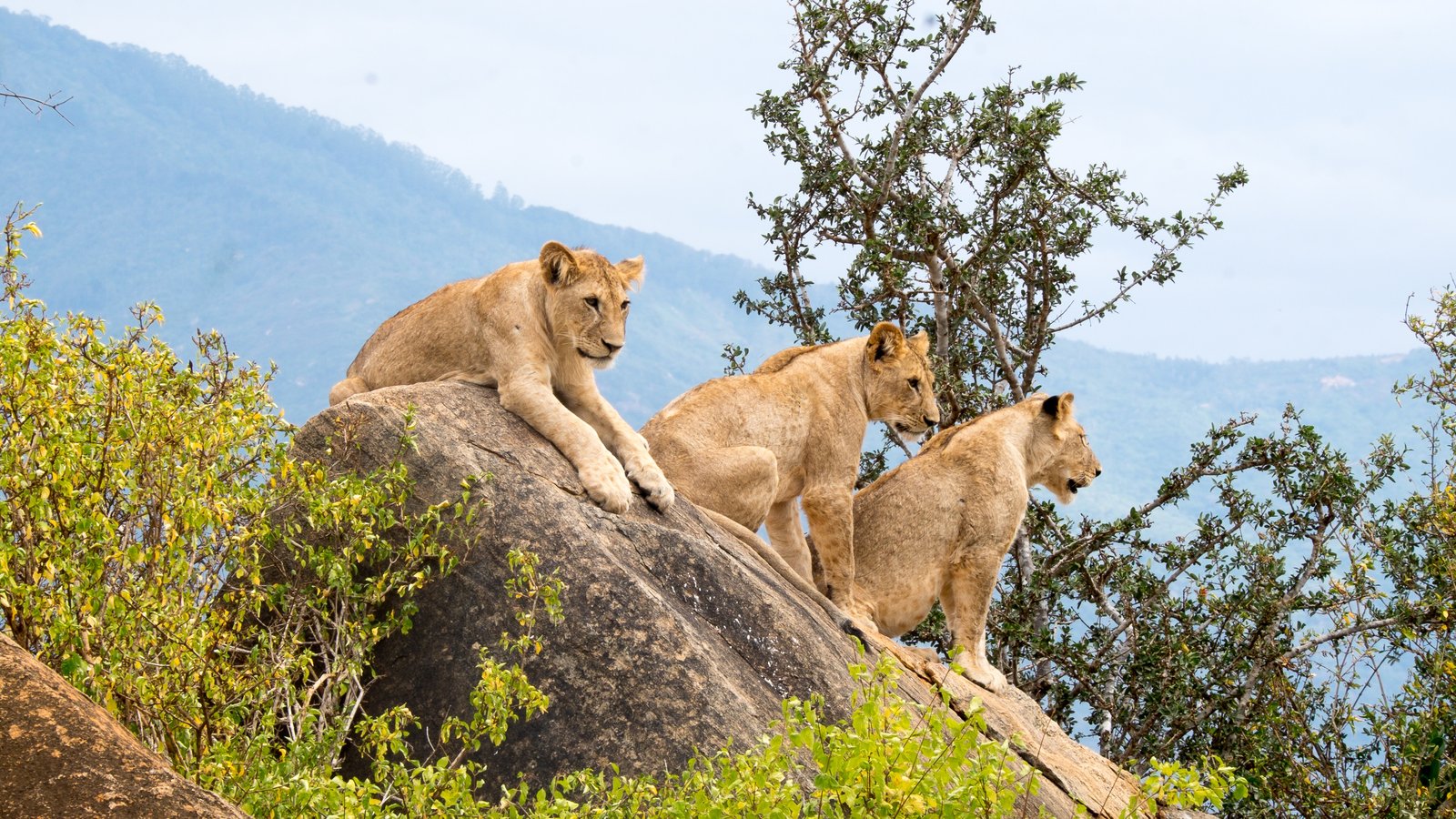
Tsavo East and West together form Kenya’s largest national park at 21,000 square kilometres and offer exceptional Big Five wildlife at $52 per person per day — significantly less than the Maasai Mara’s $200 per day rate. The lower entrance fee does not mean lower wildlife quality. Tsavo hosts some of Kenya’s largest elephant herds, healthy lion populations in both sections, leopard in the riverine woodland, and the famous Mudanda Rock waterhole in Tsavo East where hundreds of elephants gather at the natural rock pool during dry season. Tsavo’s red-soil landscape and giant fig trees along the Galana River create a distinctly Kenyan bush atmosphere that the Mara’s grassland aesthetic cannot replicate. Budget lodges inside Tsavo — Satao Camp in Tsavo East and Kilaguni Serena in Tsavo West — position guests inside the park for dawn drives at $100–$200 per person per night.
Tsavo’s accessibility from Mombasa makes it an excellent addition to a Kenya coast visit. The Mombasa to Tsavo East gate takes two hours on the A109 highway. A three-night Tsavo safari from a Mombasa or Diani Beach base costs significantly less than a Nairobi-based Maasai Mara itinerary with domestic flights. Self-drive in Tsavo is viable in a standard 4×4 rental — the Kenya Wildlife Service’s road network and online route maps allow independent travelers to navigate confidently without a professional guide, reducing the per-day cost further. Budget travelers combining a Mombasa flight from Nairobi ($40–$80 one-way), a Diani Beach guesthouse ($60–$100 per night), and a three-night self-drive Tsavo safari ($52 park fee plus $80 vehicle hire per day) achieve a safari component cost of approximately $130–$150 per person per day — well below the Maasai Mara equivalent.
Lake Nakuru and the Aberdares
Lake Nakuru National Park charges $53 per person per day and delivers remarkable wildlife density for its size — flamingo at the lake, white and black rhino in the sanctuary, Rothschild giraffe, leopard in the yellow fever tree woodland, and concentrated game in a fenced 188-square-kilometre reserve. The park’s compact dimensions make it fully explorable in two days from a Nakuru town guesthouse or a budget campsite outside the park fence, eliminating the need for expensive inside-the-park accommodation. Sharing a vehicle is the most effective budget strategy at Lake Nakuru. A group of four travelers in a single hired 4×4 pays $52 per person park fee plus $25 per person vehicle hire instead of $100 per person for a private guide vehicle. African Wild Trekkers matches budget travelers with other small groups on the same Nakuru dates when clients specifically request shared vehicle bookings.
The Aberdare National Park at $52 per person per day offers a radically different Kenya wildlife experience — dense highland rainforest on volcanic mountain slopes at 2,000 to 4,000 metres, with lion, leopard, and elephant in mist-shrouded surroundings unlike any other Kenya park. The Aberdare tree hotels — Treetops and The Ark — provide a unique format: arrive at 4 PM, have dinner, and watch a floodlit waterhole from elevated wooden platforms through the night while elephant, buffalo, black rhino, and bushbuck drink below. The Ark costs $200–$250 per person per night all-inclusive, including accommodation, entrance, dinner, and breakfast — exceptional value per wildlife encounter. Combining Nakuru (two nights) and an Aberdare tree hotel night creates a three-night Rift Valley highland circuit at $130–$180 per person per night delivering wildlife experiences unavailable at any other Kenya safari destination.
Budget Accommodation Strategies
Public Campsites vs Budget Tented Camps
Kenya’s national parks maintain public campsites inside park boundaries at $25–$30 per person per night — the most economical inside-the-park accommodation available. Public campsites exist in the Maasai Mara, Amboseli, Tsavo East and West, Samburu, and Lake Nakuru. Some Mara public campsites near the Mara River place campers within 50 metres of lion territory in ways the adjacent luxury lodges cannot match for immediacy. Self-catering at public campsites requires food supply from Narok or Naivasha towns before entering the park. Cooking equipment, firewood, and storage add logistical complexity that organized tour clients avoid entirely. Public campsite camping suits experienced independent Africa travelers with their own camping equipment, self-drive 4×4 confidence, and field cooking ability — achieving a remarkable safari at $70–$100 per person per day that no organized tour approaches.
Budget tented camps at $80–$150 per person per night represent the middle path between public campsites and mid-range lodges — permanent canvas tent structures with beds, running water, and shared dining that eliminate camping logistics while maintaining close-to-nature sleeping at a cost below the Kenya average lodge price. Operators including Basecamp Masai Mara and Mara Intrepids represent their destination’s most price-competitive organized accommodation with included game drives, professional guide, and full-board meals. The all-inclusive budget camp pricing often beats the true cost of self-drive once vehicle hire, fuel, food, park fees, and accommodation all add up separately. An all-inclusive budget camp at $120–$150 per person per day compares favorably to a self-drive equivalent of $130–$160 per person per day when calculated honestly.
Timing for Best Value
Shoulder season travel — May, June, January, February, and March — reduces accommodation costs at most Kenya safari properties by 20 to 40 percent relative to peak season rates in July through October and December. Wildlife quality does not drop proportionally. May and June produce excellent game drive conditions — lush green landscape, abundant newborn animals, and the northward migration movement through the Maasai Mara that precedes July’s dramatic river crossings. January and February deliver cheetah on open short-grass plains, Amboseli’s clearest Kilimanjaro mornings of the year, and reduced vehicle congestion at popular sighting points. April to May rains represent Kenya’s lowest demand period and lowest accommodation prices — some mid-range Mara lodges reduce rates to $150 per person per night — but heavy rain can make Mara public-vehicle roads genuinely muddy and difficult.
Group travel is the most effective single strategy for reducing budget Kenya safari costs. A group of four sharing a private vehicle reduces the per-person guide and vehicle cost from $100–$120 per day for a solo traveler to $25–$30 per person per day for the same guide quality and vehicle standard. Two couples traveling together rather than two individual bookings saves each person $200–$300 over a five-day safari without sacrificing any wildlife experience, privacy, or comfort. African Wild Trekkers structures group pricing for all accommodation and guide categories and calculates specific savings for each group size at each park. Joining a small-group departure — where two or three independent couples or families share an itinerary — delivers private-vehicle quality at shared vehicle pricing for travelers with flexible dates.
Plan Your Safari
Budget safari Kenya 2026 packages require the same advance booking discipline as luxury Kenya safaris — affordable accommodation fills as fast as premium lodges during peak season because more budget travelers compete for the same limited supply of well-positioned affordable options. African Wild Trekkers designs budget Kenya safari itineraries across all price tiers and confirms accommodation, vehicle, and park fees as a complete package before you travel.
Your budget Kenya safari package includes road or domestic flight transfers based on your budget preference, full-board tented camp or lodge accommodation, shared or private 4×4 game drive vehicle, experienced guide, and all national park entrance fees. We build the most wildlife-rich circuit for your specific budget rather than defaulting to a standard premium itinerary.
Contact African Wild Trekkers at africanwildtrekkers.com/contact with your budget per person and travel dates and we will design a complete budget safari Kenya 2026 itinerary within 24 hours.