African Wild Dog Kenya: Where to Find Africa’s Most Endangered Predator
African wild dog sightings in Kenya are among East Africa’s rarest and most exciting wildlife encounters for safari travelers.
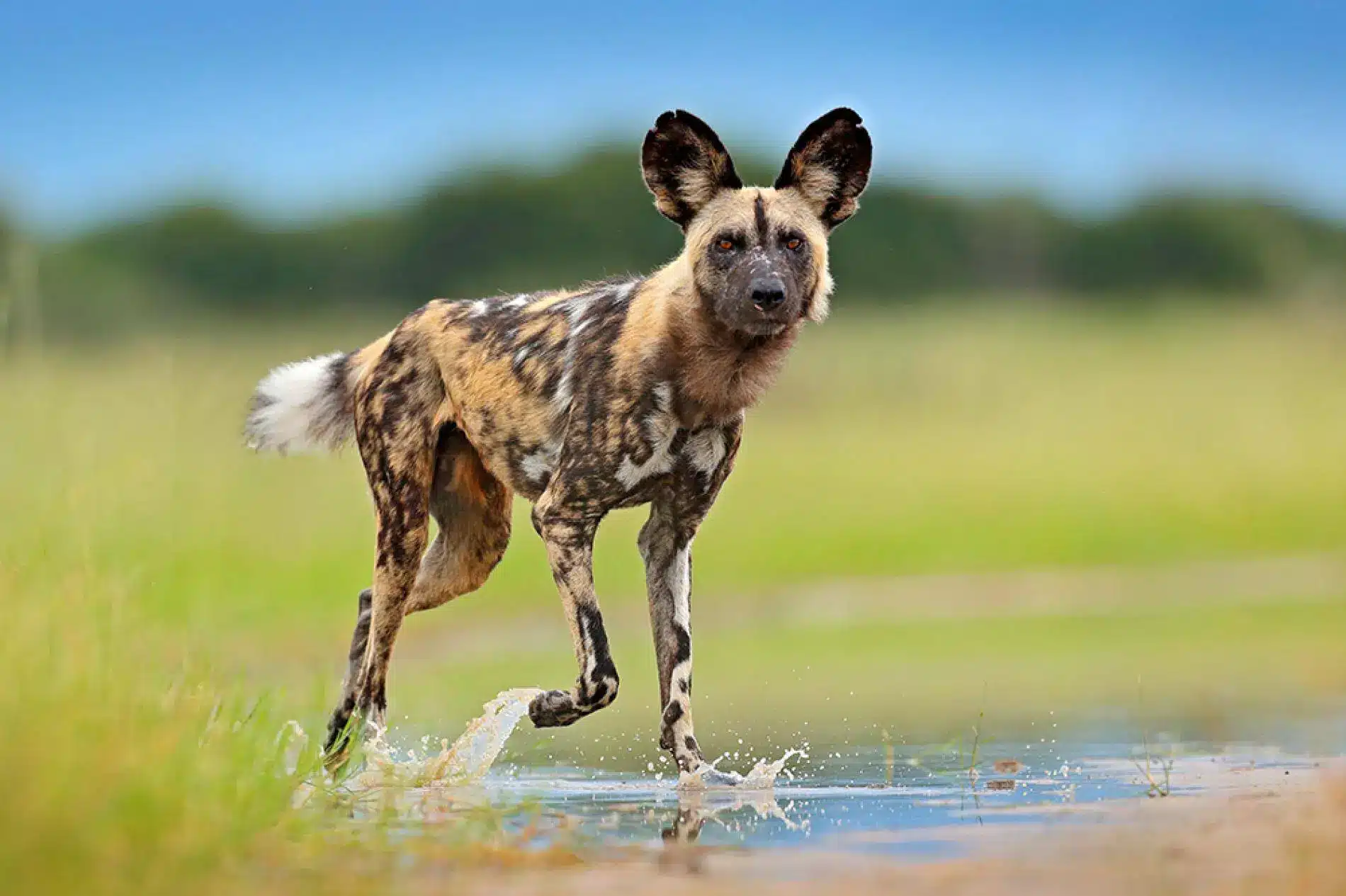
The painted wolf is Africa’s most endangered large carnivore. The continental population is under 6,600 individuals.
Kenya has about 450 to 500 wild dogs. They live in a few key protected ecosystems with suitable habitat.
Unlike lions or leopards, wild dogs need large, connected wilderness areas. They also require low human disturbance and abundant prey.
Laikipia Plateau hosts Kenya’s strongest and most reliable wild dog population. Conservancies support stable, monitored packs.
African Wild Trekkers includes Laikipia visits for travelers prioritizing African wild dog sightings.
Where to Find African Wild Dogs in Kenya
Laikipia Plateau: Kenya’s Best Wild Dog Destination
Laikipia offers Kenya’s most reliable African wild dog sightings. Packs move across interconnected private conservancies.
Key areas include Ol Pejeta, Lewa, Borana, and Segera. These landscapes support large predator territories.
Wild dogs need territories between 200 and 500 square kilometers. Laikipia conservancies provide this open, unfenced space.
Wild dogs hunt during daylight hours. They rely on cooperative chases across open terrain.
A wild dog hunt is highly dynamic and fast-paced. Packs coordinate movements to exhaust prey over long distances.
Denning season from June to August improves sightings significantly. Packs stay close to dens during pup-rearing.
Den sites are often abandoned burrows or rocky hillsides. These locations allow easier observation of family behavior.
Pups remain at the den for about ten weeks. Adults return regularly to feed and protect them.
This creates predictable viewing opportunities for visitors. Guides can track pack movements with higher accuracy.
Pups display playful and social behavior at den sites. This offers strong photographic opportunities.
African Wild Trekkers monitors current den locations. Clients receive updated wild dog tracking information before arrival.
Maasai Mara and Samburu Wild Dog Sightings
Wild dog sightings in the Maasai Mara are rare and unpredictable. Small packs occasionally pass through conservancies.
Naboisho and the Mara Triangle report most sightings. However, lion density limits wild dog stability.
Lions often kill wild dogs during territorial encounters. This forces packs to avoid high-lion-density zones.
When wild dogs appear in the Mara, sightings become major events. Camps coordinate immediate tracking responses.
Samburu offers occasional wild dog dispersal sightings. These are brief and opportunistic encounters.
Movements depend on seasonal dispersal routes. Packs may pass through once and not return for months.
Kenya Wildlife Service and conservation groups monitor populations. Their data supports safari planning decisions.
African Wild Trekkers uses updated tracking reports. This improves wild dog sighting probability for clients.
African Wild Dog Behavior and Pack Life
Pack Structure and Cooperative Hunting
Wild dog packs are family-based social groups. Only one dominant pair breeds within the pack.
Other members assist with pup rearing and hunting. Pack sizes typically range from 8 to 15 adults.
Some packs exceed 25 individuals. This occurs when multiple age groups remain together.
Wild dogs hunt using coordinated endurance chases. They maintain pressure over long distances.
Success rates reach 70 to 80 percent. This makes them Africa’s most efficient large predators.
Lions average around 30 percent success rates. Cheetahs reach about 50 percent success rates.
Wild dogs communicate using high-pitched vocalizations. These sounds are often called twittering calls.
Calls help coordinate group movement before hunts. They can be heard from several hundred meters.
Morning greeting rituals strengthen pack cohesion. These include licking, jumping, and vocal exchanges.
These behaviors are highly active and visually engaging. They are popular with wildlife photographers.
Conservation Challenges for Kenya’s Wild Dogs
Wild dogs face multiple conservation threats in Kenya. Human-wildlife conflict remains a major issue.
Livestock predation often leads to retaliation killings. This occurs near conservancy boundaries.
Road networks increase wildlife mortality risks. Wild dogs sometimes cross busy highways.
Snaring for bushmeat also affects prey species. Reduced prey impacts wild dog survival rates.
Laikipia conservancies address these challenges actively. They use patrols and wildlife-friendly ranching systems.
Community compensation programs reduce conflict incidents. These improve coexistence with livestock owners.
Wildlife corridors help reduce road mortality. Monitoring teams track pack movements continuously.
Wild dog numbers in Laikipia have increased. The population has grown from about 200 to over 450.
Climate change intensifies drought conditions across Kenya. This reduces prey availability for wild dogs.
Severe droughts force packs into farming areas. This increases conflict risk and mortality.
Recent conservation efforts have improved resilience. Monitoring and intervention programs support recovery.
Plan Your Safari
African wild dog sightings depend on real-time pack location data. African Wild Trekkers tracks this information continuously.
We recommend Laikipia for the highest sighting probability. It remains Kenya’s most reliable wild dog region.
Your safari includes conservancy accommodation in Ol Pejeta or Borana. It also includes expert guiding and private vehicles.
All conservancy fees and full-board meals are included. We coordinate northern Kenya extensions with Samburu.
Contact African Wild Trekkers at africanwildtrekkers.com/contact with your travel dates. We will confirm wild dog activity and build your itinerary within 24 hours.