Planning a Photographic Safari in Kenya
What Makes Kenya Exceptional for Wildlife Photography
Light, Landscape and Animal Habituation
Kenya combines three conditions that wildlife photographers prize above all others: extraordinary light quality, open terrain that allows clear sightlines to subjects, and animal populations so accustomed to vehicles that normal approach distances shrink to a fraction of what’s possible elsewhere in Africa. The equatorial light at dawn and dusk casts a warm, directional quality across the savanna that professional photographers travel specifically to capture. The golden hour at the Maasai Mara produces the saturated, rim-lit animal portraits that fill wildlife photography award shortlists year after year. Kenya’s decades of photographic safari development mean that the best specialist camps have refined their operations specifically around photography logistics — early departures before the light turns harsh, extended time at sightings without the vehicle moving on, raised roof hatches for elevated angles, and beanbag or window mount support for heavy telephoto lenses. The guides at dedicated photography camps understand that a photographer needs five minutes at a sighting rather than five seconds, and they structure their driving to accommodate this rather than treating it as an inconvenience.
Kenya’s Most Photogenic Subjects and Locations
Maasai Mara’s big cats rank among the world’s most photographed wildlife subjects — for reasons any photographer who has visited immediately understands. A cheetah accelerating through grass at 110 kilometres per hour across unobstructed terrain, a leopard descending a sausage tree with a kill in its jaws, or a lion pride with cubs playing on a termite mound in soft morning light — these are the images that define wildlife photography at its most compelling, and that the Mara reliably delivers to photographers with the right camps and guides. The conservancy areas surrounding the reserve allow off-road positioning that the national park prohibits, transforming adequate sightings into exceptional photographic opportunities by eliminating the constraint of the gravel road between the vehicle and the subject. Amboseli’s elephants against Kilimanjaro represent Kenya’s most iconic single photographic composition — a family of African elephants crossing the open flood plain with the mountain’s snow-capped peak rising above the treeline. When the mountain is clear, which it is most reliably early in the morning before clouds build, this composition produces images that appear on magazine covers with a frequency that never diminishes the experience of capturing it yourself.
Top Photography Camps and Specialists
Best Camps for Photographic Safaris in the Mara
Angama Mara on the Mara escarpment above the conservancy offers elevated landscape photography positions that no ground-level camp can replicate, with a view across the Mara Triangle that frames wildlife against the vast horizon of the ecosystem below. The camp operates private drives in its concession area and works with visiting photographers through a dedicated photography programme that includes specialist guide briefings, customised departure times, and vehicle modifications for camera support. Mahali Mzuri in Mara North Conservancy positions guests within a concession where off-road driving is standard and the area’s strong predator population produces big cat encounters that specialist wildlife photographers seek. The conservancy’s vehicle limits mean that even during peak migration season, a sighting at Mahali Mzuri rarely attracts more than two or three vehicles — a stark contrast to the Mara’s main reserve where popular sightings can draw fifteen or twenty vehicles. Governors’ Il Moran on the Mara River bank combines exceptional migration-season crossing access with the ability to position vehicles below the river bank for eye-level photography of animals coming down — an angle that most vehicles behind the bank barrier cannot achieve.
Specialist Photography Guides and Operators
Kenya’s most accomplished wildlife photographers work as freelance field guides who attach to specific camps for extended seasons, building intimate knowledge of individual animals in their territory and developing the patience and anticipation skills that transform ordinary sightings into extraordinary images. These specialists differ from standard guiding in their willingness to wait — sometimes for an hour or more at a single sighting — while a predator completes a behavioural sequence that will produce a decisive moment worth capturing. Finding a specialist guide means asking specific questions before booking: which animals do they personally track, how do they structure drives around photography rather than coverage, and what evidence from their own photography or their guests’ images can they share? Photography workshops operating within Kenya’s conservancy system combine field driving with structured image review sessions each evening, allowing participants to analyse the day’s images with expert input and apply those lessons to the following morning’s opportunities. Operators like Hemingways, &Beyond, and specialist photography tour companies run structured Kenya programmes that combine expert field guiding with technical instruction — a format that suits serious photographers who want to return home with images that reflect genuine skill rather than luck.
Photography Equipment and Vehicle Setup
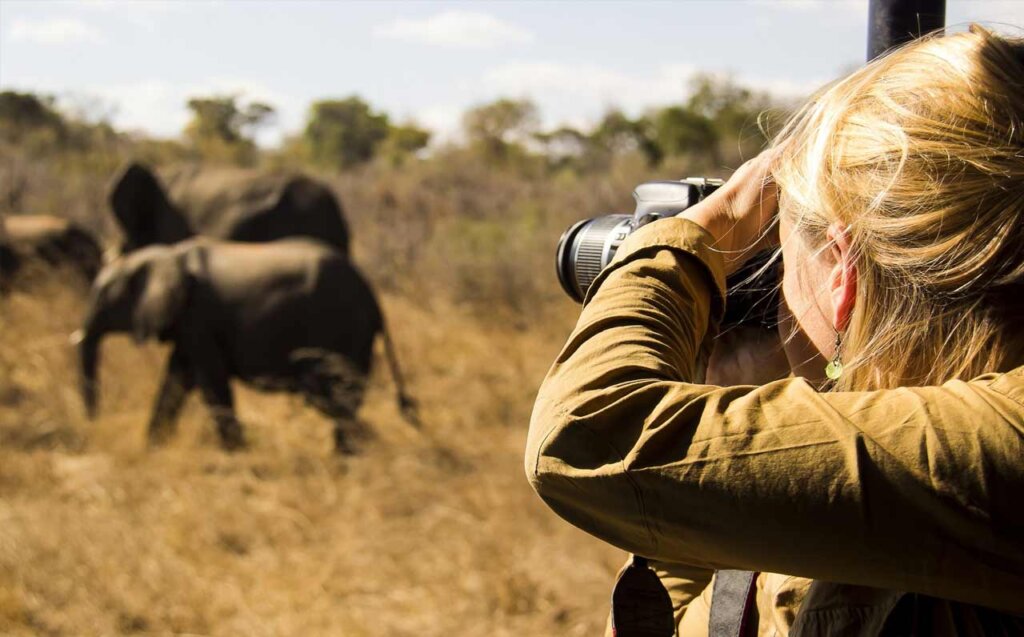
A focal length of 500mm or 600mm provides the working range for most African wildlife photography — close enough for frame-filling portraits of large mammals at normal vehicle distances and sufficient reach for birds perched at treeline. Mirror-less camera systems from Sony, Nikon, and Canon now dominate professional wildlife photography for their silent shutters, exceptional autofocus tracking, and high-frame-rate burst capabilities that capture decisive moments in fast action sequences. Bringing a 70–200mm or 100–400mm zoom alongside a prime telephoto covers both tight portraits and wider environmental images without requiring lens changes mid-sighting. Changes during active behaviour inevitably cost the best frame. Beanbags or window mounts eliminate camera shake from vehicle vibrations far more effectively than any in-body stabilisation system. A quality beanbag costs less than fifty dollars and travels in hand luggage without weight penalties, making it the highest-value photographic accessory for safari use. Memory cards and batteries should come in surplus — morning and afternoon drives of three to four hours each can consume hundreds of gigabytes of raw files during active predator encounters. Remote conservancy camp power supplies may not provide reliable charging during multi-day stays without generator access.
Photographic Safari Itineraries for 2026
Recommended Itinerary Options
Seven-Day Maasai Mara Photography Focus
A seven-day photography itinerary based entirely in the Mara ecosystem suits photographers targeting big cats, migration, and the Mara’s exceptional landscape opportunities without the transit time of a multi-park circuit. Flying into Ol Kiombo or Keekorok airstrip from Nairobi eliminates a six-hour road journey and delivers guests to the conservancy in time for the afternoon drive on arrival day. Three nights in Mara North Conservancy followed by four nights in the Mara Triangle creates a contrast between conservancy off-road flexibility and Triangle river-crossing access that covers the ecosystem’s photographic range. Seven days in one ecosystem allows developing familiarity with specific individual animals — a cheetah coalition, a pride with cubs, a leopard’s tree — that transforms each subsequent encounter from discovery into relationship. Dawn drives departing at 06:00 and returning for breakfast at 09:30 capture the best light of the day before heat shimmer degrades image sharpness. Afternoon drives departing at 16:00 capture the second golden hour as the sun approaches the western horizon for an hour before dark.
Twelve-Day Multi-Destination Photography Circuit
A twelve-day circuit combining Maasai Mara, Amboseli, and Samburu covers Kenya’s three most distinct photographic ecosystems and three very different palettes of subjects, light, and landscape. The Mara’s open savanna and big cats transition to Amboseli’s elephant and mountain compositions before the northern circuit delivers Samburu’s unique species — reticulated giraffe, Grevy’s zebra, and gerenuk — against the stark ochre and grey of the Northern Frontier District. Each ecosystem requires different photographic approaches and different equipment configurations, and the contrast between destinations prevents the creative stagnation that can affect photographers who spend all their time in a single landscape. Internal flights between each destination save road travel time and keep the itinerary’s energy focused on photography rather than logistics. Four nights in the Mara, three nights in Amboseli, and three nights in Samburu allocate enough time in each ecosystem for multiple attempts at each destination’s signature images. March and September both offer excellent conditions across all three parks — March’s post-rain greenery suits Amboseli’s landscape photography while September’s dry animal concentration around water suits both Samburu and the Mara’s migration season simultaneously.
Plan Your Safari
A photographic safari works best when camp selection, guide specialist knowledge, vehicle configuration, and timing align around your specific photographic goals — whether those are big cat portraits, migration panoramics, or elephant-mountain compositions. Getting these elements right requires understanding both the photography and the logistics, which African Wild Trekkers combines through experience with dedicated photography guests across Kenya’s best camps and seasons.
The package covers specialist guide allocation, vehicle roof hatch modification for standing photography, beanbag support at all vehicles, camp selection with photography-specific concession access, park fees, conservancy levies, and internal airstrip transfers. Evening image review sessions with specialist input are arranged at camps that support this format, and flexible drive scheduling accommodates extended time at active sightings without pressure to return at fixed times.
Contact African Wild Trekkers at africanwildtrekkers.com/contact with your photography goals and travel dates and we will design your Kenya photographic safari itinerary within 24 hours.