Lake Natron Tanzania: The Saltiest Lake in Africa and the Flamingo Breeding Ground
Lake Natron in Tanzania’s Arusha region is one of East Africa’s most extreme and visually extraordinary landscapes. The shallow soda lake reaches pH levels of 10.5 and surface temperatures of up to 60 degrees Celsius. Its caustic mineral composition mummifies any animal that dies in its shallows. Yet this extreme chemistry draws the world’s largest breeding colony of lesser flamingos to Natron year after year. The lake hosts the most important single breeding site on earth for a species whose total world population numbers approximately four million individuals. This guide covers everything you need to know about Lake Natron before visiting.
The Geology and Chemistry of Lake Natron
Why Natron Is What It Is
The Volcanic and Tectonic Origins of the Lake
Lake Natron occupies a depression in the East African Rift Valley at approximately 610 metres above sea level. Two sources supply its water: the Ewaso Ng’iro River flowing in from the Kenyan highlands to the north, and numerous alkaline hot springs that discharge mineral-laden water directly into the basin. The hot springs draw their chemistry from volcanic activity associated with Ol Doinyo Lengai, the active carbonatite volcano rising 2,962 metres above the lake’s southern shore. Carbonatite lava — unlike the basaltic lava of most other volcanoes — is rich in sodium and calcium carbonate. The weathering of Lengai’s deposits delivers a continuous chemical load of these minerals into Natron’s water through surface runoff and groundwater seepage.
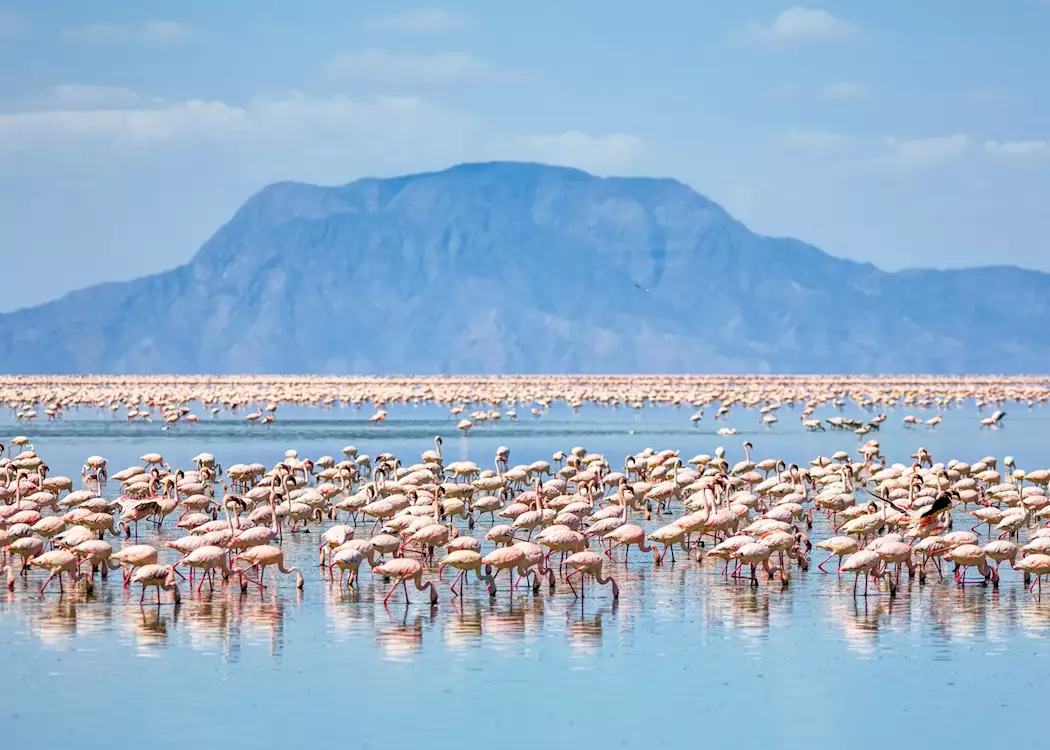
The lake’s shallow basin and high evaporation rate in the semi-arid Rift Valley climate concentrate these minerals into a super-saturated solution. The result is not simply a salty lake. It is a chemically reactive environment where natron (sodium sesquicarbonate) crystallises on the lake floor and shoreline. The formations range from pink salt flats to white crusted structures that resemble abstract sculpture. Red and orange algae colour the shallower water. White and pink salt crust covers the exposed flats. The red-tinged flamingo flocks reflect in the lake’s still surface at dawn. Lake Natron has become one of Africa’s most recognisable landscape photographs, even among people who have never heard of the lake itself.
Why Animals That Enter the Lake Calcify
The most dramatic aspect of Lake Natron is its effect on animals that die in or near the shallows. The lake’s high pH and mineral concentration do not kill animals that come to drink at its margins. Many species, including African elephants and buffalo, drink safely from the lake’s freshwater inflow zones where river water dilutes the soda content. Animals that die in the lake — from exhaustion, disorientation, or predation — are rapidly encased in sodium carbonate minerals that crystallise around them in the shallow water. Natural mineral casts preserve the animal’s form. Wildlife photographer Nick Brandt documented these calcified forms — birds frozen mid-posture, a bat preserved as if at rest — in a widely published series of images.
These calcified forms result from natural deaths rather than any ongoing threat to living animals that approach carefully. The lake is most dangerous to animals that attempt to fly across it in challenging wind conditions or that fail to navigate to the freshwater inflow zones for drinking. The flamingos themselves avoid the lake’s most caustic sections entirely. They feed and nest in areas where the chemistry is within their physiological tolerance and fly to fresher water sources in the Rift Valley for drinking. African Wild Trekkers provides a full pre-visit briefing on Lake Natron’s chemistry to ensure every client understands the lake’s properties accurately before they arrive.
The Flamingo Breeding Season at Lake Natron
When and How the Colony Forms
Breeding Season Timing and Conditions
The lesser flamingo’s breeding season at Lake Natron does not follow a fixed annual calendar. It depends on the lake’s water level and salinity conditions, which vary year to year based on rainfall across the catchment. Breeding typically begins when water levels fall to expose the central soda pans as nest platforms above the lethal chemical zones. In years of average rainfall this occurs roughly between August and December. Chicks then grow strong enough to walk and eventually fly by February or March when the next season’s rains begin to refill the lake. In years of unusually high rainfall, the lake remains too full for nest platform exposure and breeding may be delayed or absent entirely.
Even in non-breeding years, Lake Natron maintains a large resident flamingo population that uses the lake for feeding and roosting. The blue-green algae and salt-adapted shrimps in the shallower zones provide the protein and carotenoid pigments that give lesser flamingos their pink coloration. The resident population feeds continuously throughout the year regardless of breeding season status. A Lake Natron visit during a non-breeding period still delivers the pink lake shore and flamingo flocks that define the lake’s visual identity. Breeding season simply concentrates birds on the nesting platforms rather than distributing them along the feeding margins. African Wild Trekkers checks current flamingo colony status with partners on the ground before confirming any Lake Natron booking and advises clients honestly on what to expect.
Wildlife Beyond Flamingos at Lake Natron
The Broader Natron Ecosystem
Maasai Pastoral Land and Wildlife Corridor
Lake Natron sits within a broader Maasai pastoral landscape that forms part of an important wildlife corridor between the Serengeti and Amboseli ecosystems. Zebra, wildebeest, and elephants move through the Natron area seasonally. The lake’s shoreline attracts large numbers of waterbirds beyond the flamingos — greater flamingos, various herons and egrets, several plover and sandpiper species, the African skimmer, and the water thick-knee all use the fresher inflow zones and adjacent marshes. Ospreys appear occasionally above the freshwater section on early mornings. The martial eagle and bateleur are regular raptors over the surrounding dry bush.
Maasai communities around Lake Natron in the Loliondo area have developed community-owned tourism infrastructure while maintaining their pastoral lifestyle. The infrastructure offers cultural interactions — Maasai village visits, beadwork demonstrations, and guided walks on traditional grazing land — as part of the Lake Natron experience. African Wild Trekkers includes a Maasai community visit in all Lake Natron itineraries as a cultural counterpart to the wildlife and geological elements. The community tourism fees from these visits contribute directly to the village’s income. This provides an economic incentive for the Maasai to maintain the wildlife corridor that their pastoral land management has sustained for generations.
Natron’s Wider Conservation Significance
Lake Natron’s role as the world’s most important lesser flamingo breeding site gives it a conservation significance that extends far beyond its size or position in Tanzania’s tourism network. Any significant change to the lake’s chemistry, water level, or predator access to the breeding island through human-induced catchment changes would have global consequences for a species whose entire breeding success depends on Natron’s continued suitability. Tanzania’s government has recognised this significance and the lake receives specific protection status. Proposals for soda ash mining — which would industrialise the lake and eliminate its flamingo breeding function — have faced rejection at multiple planning stages following international conservation pressure.
The Ramsar Convention on Wetlands has designated Lake Natron as a Ramsar Site of international importance. The designation recognises the flamingo colony’s global significance and the lake’s role in the East African waterbird system. It provides additional international pressure against any future proposals to alter the lake’s natural functioning. African Wild Trekkers explains Lake Natron’s conservation context to visiting clients because understanding why the lake is protected and what threatens it transforms the flamingo viewing from spectacle into genuine engagement. Engaged visitors return home as the most effective advocates for the destinations they have come to care about.
Plan Your Safari
Lake Natron requires a deliberate detour from Tanzania’s standard northern circuit, but the investment in travel time rewards visitors with one of Africa’s most extraordinary wildlife and landscape experiences. African Wild Trekkers incorporates Lake Natron into extended northern Tanzania itineraries as a one-to-two night addition, managing road logistics, camp bookings, flamingo viewing guide arrangements, and Ol Doinyo Lengai climb coordination as a single package. The team advises on current flamingo colony status and the optimal timing for combining Natron with the Serengeti and Ngorongoro components of a northern circuit safari.
Every Lake Natron booking includes the Arusha or Karatu transfer, camp accommodation and full board, flamingo viewing and geological interpretation, the Engare Sero ancient footprint site visit, and optional Ol Doinyo Lengai climb coordination. All reservations are confirmed in writing before any deposit is requested. The team provides a full pre-departure briefing on the lake’s chemistry, the flamingo colony’s seasonal status, and the access logistics for each element of the Natron visit.
Contact African Wild Trekkers at africanwildtrekkers.com/contact with your Tanzania travel dates and we will advise on the Lake Natron extension and build a personalised itinerary including the flamingo colony within 24 hours.