Maasai People Tanzania: Cultural Village Visits and What Travellers Should Know
The Maasai are among East Africa’s most recognisable peoples. Travellers spot them instantly — red shuka cloth, elaborate beadwork, the tall warrior bearing, and the cattle that define their pastoral identity. In Tanzania, the Maasai occupy large sections of the northern Rift Valley and the highlands of the Ngorongoro Conservation Area, and their territory overlaps significantly with the safari circuit. A Maasai cultural village visit is one of Tanzania’s most accessible cultural experiences, but quality varies widely — from genuinely educational community encounters to staged tourist shows. This guide helps you understand the difference and how to find the former.
Maasai Society and Culture: What You Are Entering
Understanding Who the Maasai Are
The Pastoral Foundation of Maasai Identity
The Maasai are a semi-nomadic pastoralist people whose society has organised around cattle since at least the seventeenth century, when they migrated south from the Nile region into present-day Kenya and Tanzania. Cattle form the foundation of Maasai wealth, social status, and ceremonial life. A man’s cattle count defines his standing in the community. Men exchange cattle at marriage, slaughter them for ceremonies, and offer them as compensation for social transgressions. The Maasai do not traditionally cultivate crops, and the movement of herds between seasonal grazing grounds drives the semi-nomadic pattern their territorial management reflects. Today’s Maasai in Tanzania combine elements of sedentary life — children attending government schools, communities buying maize during drought years — with the pastoral traditions that remain central to their identity and economy.
The Maasai age-set system structures society into cohorts defined by age and social role. Junior warriors (moran) are young men between approximately fifteen and thirty who have undergone initiation through circumcision and taken on the red ochre of the warrior age-set. They shoulder responsibility for cattle herding and community defence. Senior warriors transition into elder status, gaining the authority to make community decisions in the council of elders. Women move through age-sets defined by their role in the boma household, producing beadwork jewellery and managing the domestic economy while the men handle livestock. This structured social order makes Maasai society more complex than a single village visit can reveal, but understanding its outlines before arriving makes every encounter more informative.
The Ngorongoro Conservation Area Maasai
The Maasai communities living within the Ngorongoro Conservation Area exist in a unique political and economic context. When the NCA was established in 1959, the Maasai who occupied the crater and surrounding highlands moved off the crater floor and gained guaranteed grazing rights in the broader conservation area under a shared-use arrangement. This arrangement has been the source of ongoing tension between the NCA authority and the Maasai communities. Periodic proposals to restrict or relocate herding populations have met Maasai resistance as violations of the original agreement. Visiting Maasai communities in the NCA carries this political context, and understanding it adds a dimension that purely touristic encounters miss.
The NCA Maasai interact with international tourists more than most other Tanzania Maasai communities. This contact has produced community members who speak excellent English, understand safari visitor expectations, and have adapted their village visit presentations accordingly. The quality of NCA Maasai village visits is generally high — the communities are comfortable with questions, the guides are informative, and the beadwork market at the end of most visits offers competitively priced, genuinely hand-crafted work. African Wild Trekkers selects specific NCA boma partnerships that prioritise education over performance and community income over theatrical staging.
What Happens on a Maasai Cultural Village Visit
The Visit Structure and What to Expect
A Standard Maasai Boma Visit
A well-structured Maasai boma visit typically begins with the warrior welcome — a jumping dance (adumu) that is both a traditional warrior display and, in the tourist context, a demonstration for visitors. Young men in full warrior dress compete for height in a group jumping display that is genuinely athletic and visually striking. After the welcome, a community guide leads the group through the boma’s layout — the central cattle enclosure, the surrounding houses, and the mud, dung, and stick construction of the dwellings. Inside a typical house, the guide demonstrates the sleeping arrangements, the cooking fire, and the storage systems within a structure that might measure three by four metres and house a family of five or six.
The guide’s explanation covers the age-set system, the role of cattle in the economy, the circumcision ceremony that marks the transition to warrior status, the marriage customs including bride price in cattle, and the healing traditions that the elders maintain. A good guide answers questions honestly about the tensions between traditional practice and modern Tanzania — school attendance competing with cattle herding responsibilities, the decline of traditional medicine, and young people who leave the boma for Arusha and Moshi. These honest conversations about the pressures on Maasai tradition are often the most valuable part of a village visit. They are accessible only when the guide trusts the visitors enough to go beyond the performance script.
The Beadwork Market and How to Buy
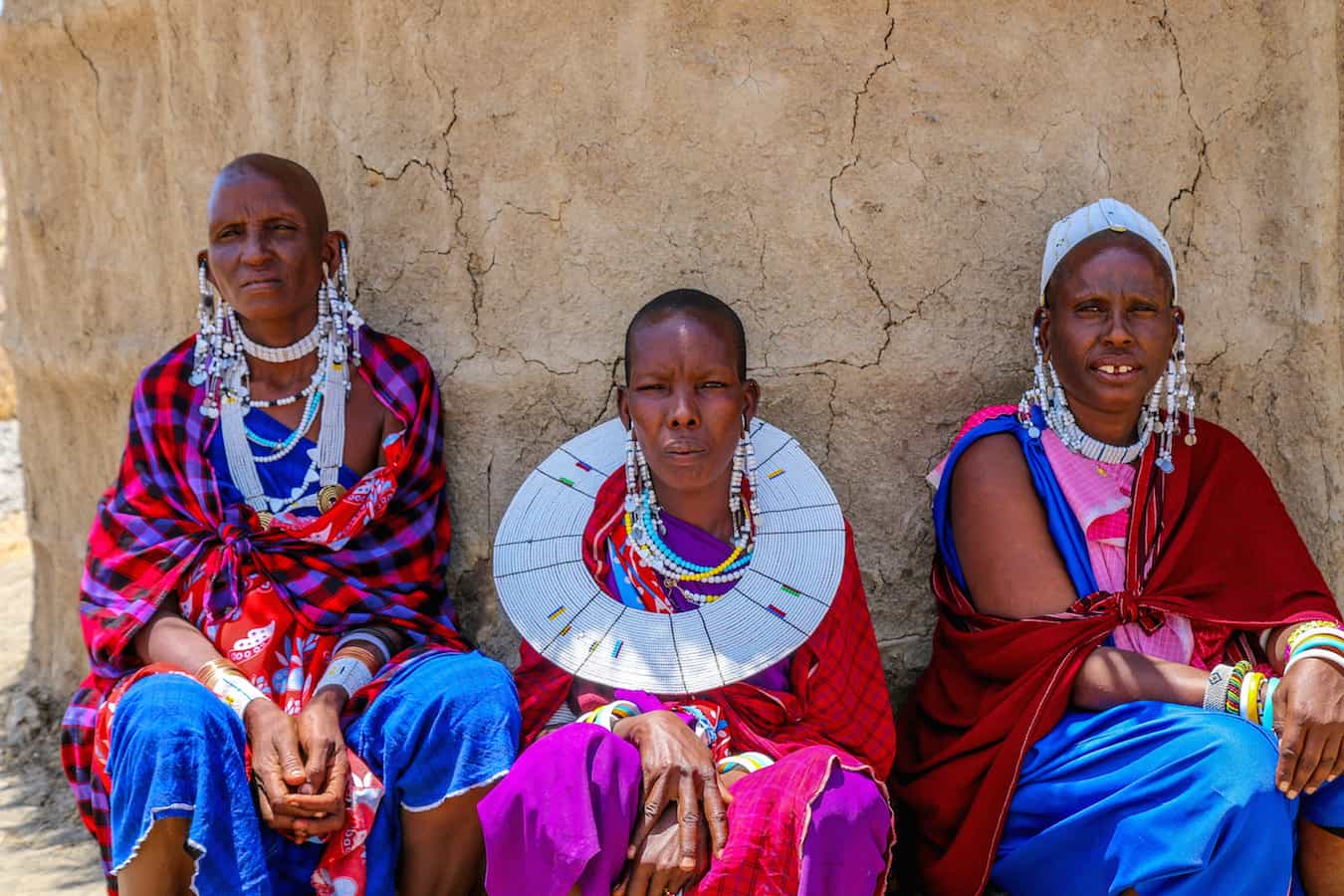
Most Maasai boma visits end with a beadwork market where community women sell handmade jewellery, blankets, and craft items. Maasai beadwork is genuinely skilled — the colour coding of bead combinations carries specific social meanings, and experienced beadworkers produce pieces of real quality and cultural depth. Prices are negotiable, and gentle negotiation is both culturally appropriate and expected. A full necklace of elaborate beadwork that took several days to produce is worth more than a few dollars, and most Maasai women price their work at rates that reflect this. Bringing small USD bills for the market is advisable, as change availability is limited and large bills create transaction friction.
The beadwork at Maasai boma visits is community-made rather than imported from factories, which distinguishes it from the mass-produced items sold in Arusha’s tourist shops. Buying directly at the boma ensures income reaches the people who made the item rather than passing through intermediaries. African Wild Trekkers advises clients before the boma visit to bring USD 20 to USD 50 for the market if they want to buy, and to approach the beadwork with genuine interest in the craft’s meaning rather than treating it as a souvenir hunt.
How to Engage Respectfully
Etiquette and Cultural Sensitivity
Photography and Permission
Photography at Maasai boma visits requires explicit negotiation, and most communities have developed a clear system. The entrance fee for the visit covers group photography during the public parts. Individual portraits require asking the specific person’s permission. The warrior jumping dance and group demonstrations are generally photographable as part of the visit structure. Photographing children, women in domestic spaces, or elders in private areas requires direct permission. Most Maasai are comfortable with photography within the agreed parameters, and some community members actively enjoy the interaction that photography requests create. Pointing a camera at someone without asking and then moving on is the behaviour that creates resentment — asking permission creates a different dynamic that benefits everyone.
Children at Maasai boma visits are often charming and eager for attention. The instinct to photograph or interact extensively with them is understandable. Responsible cultural tourism guidelines recommend keeping child photography to a minimum and avoiding candy or money gifts that create problematic incentives. The best way to interact with Maasai children is through the structured activities the guide facilitates rather than through independent approaches that bypass the community’s own management of the visit. African Wild Trekkers includes photography etiquette guidance in the pre-visit briefing for all Maasai cultural visits.
Plan Your Safari
A Maasai cultural village visit in Tanzania is most rewarding when it is genuine rather than staged, when the guide speaks honestly about both tradition and change, and when visitors approach it with respect and genuine curiosity. African Wild Trekkers selects community visit partnerships based on the authenticity of the experience and the community’s own control of how the visit is conducted. The team includes Maasai cultural visits in northern circuit itineraries as a meaningful complement to the wildlife programme rather than as a separate tourism product.
Every Maasai cultural visit arranged by African Wild Trekkers includes the community entrance fee paid directly to the boma, a guide briefing before the visit covering cultural context and respectful engagement, and sufficient time to engage meaningfully rather than passing through in twenty minutes. The team advises on appropriate dress for the visit — the Maasai’s own dress standards are formal by Western safari standards, and arriving in shorts and a sleeveless top to a community whose men wear full warrior dress is a mismatch worth avoiding. All visit logistics are confirmed as part of the overall Tanzania itinerary.
Contact African Wild Trekkers at africanwildtrekkers.com/contact with your Tanzania travel dates and we will include a Maasai cultural visit in your personalised northern circuit itinerary within 24 hours.