Tanzania Group Safaris vs Private Tours: Which Gives You More?
Every Tanzania safari traveller faces the same early decision: join a group tour with other guests, or book a private tour for your party alone. Both models are well-established in Tanzania’s safari industry and both can deliver exceptional experiences. The right choice depends on your priorities, travel style, budget, and the composition of your party. A budget traveller joining their first Tanzania safari on a group tour and a couple celebrating a milestone anniversary on a private fly-in itinerary are both having a Tanzania safari, but the nature of those experiences differs in ways that matter significantly to how you feel about the trip afterwards.
This comparison covers the practical differences between group and private safari in concrete terms: cost, vehicle configuration, flexibility, wildlife viewing quality, social dynamics, and the kind of traveller each model suits best. Understanding these differences before booking helps you choose the model that matches your actual priorities rather than the one that appears better in a brochure.
Cost: The Most Obvious Difference
What Group and Private Safari Costs Actually Include
Group Tour Pricing and What You Share
Group safaris in Tanzania cost less per person than private tours because the core expenses — vehicle, guide, fuel, park fees for the vehicle — are shared across multiple passengers. A standard group safari vehicle in Tanzania is a Land Cruiser configured for up to six passengers. When that vehicle carries six people rather than two, the per-person vehicle cost drops to roughly one-third. This is the fundamental economic argument for group safari: you access essentially the same parks, the same game drives, and similar accommodation to a private safari at a meaningfully lower cost per person.
However, group safari pricing is not simply private price divided by six. Group tours typically use more standardised accommodation — lodges and camps with fixed group rates rather than the most exclusive options — and operate on fixed itineraries that cannot adjust for individual preferences or current wildlife conditions. The savings are real but come with constraints that represent genuine value trade-offs. Budget group safaris departing from Arusha on fixed northern circuit routes can cost as little as USD 150 to 300 per person per day including accommodation and game drives. Mid-range group tours with better accommodation typically run USD 300 to 500 per day. These are substantially lower than most private safari equivalents at the same accommodation tier.
Private Tour Pricing and What You Get for the Premium
Private safari in Tanzania means the vehicle and guide serve your party exclusively — whether that is one person, a couple, or a family. The full cost of the vehicle, guide, and all park fees falls on your group alone, which is why private safari per-person pricing is higher, particularly for solo travellers or couples. For a couple on a private safari, the per-person vehicle cost is three times higher than for a group of six. This premium is not a markup — it reflects the genuine economics of exclusive vehicle use. What you receive in return is the guide’s undivided attention, complete control over timing and routing within park regulations, and freedom from the compromises that group dynamics inevitably require.
The private premium also tends to correlate with accommodation choice. Private safari operators in Tanzania typically work with a wider range of accommodation options including exclusive-use camps, private conservancy lodges, and seasonal luxury tented camps that operate outside the standard lodge network. These properties add to the cost but also add meaningfully to the experience, offering activities — night drives, walking safaris, fly-camping — that standard lodges and group camps do not permit. When comparing group and private costs, clarify exactly what accommodation level each option includes rather than comparing headline prices that may reflect very different lodging standards.
Wildlife Viewing Quality: Where the Models Diverge Most
How Vehicle Configuration Affects What You See
Seating, Roof Hatches, and Photography
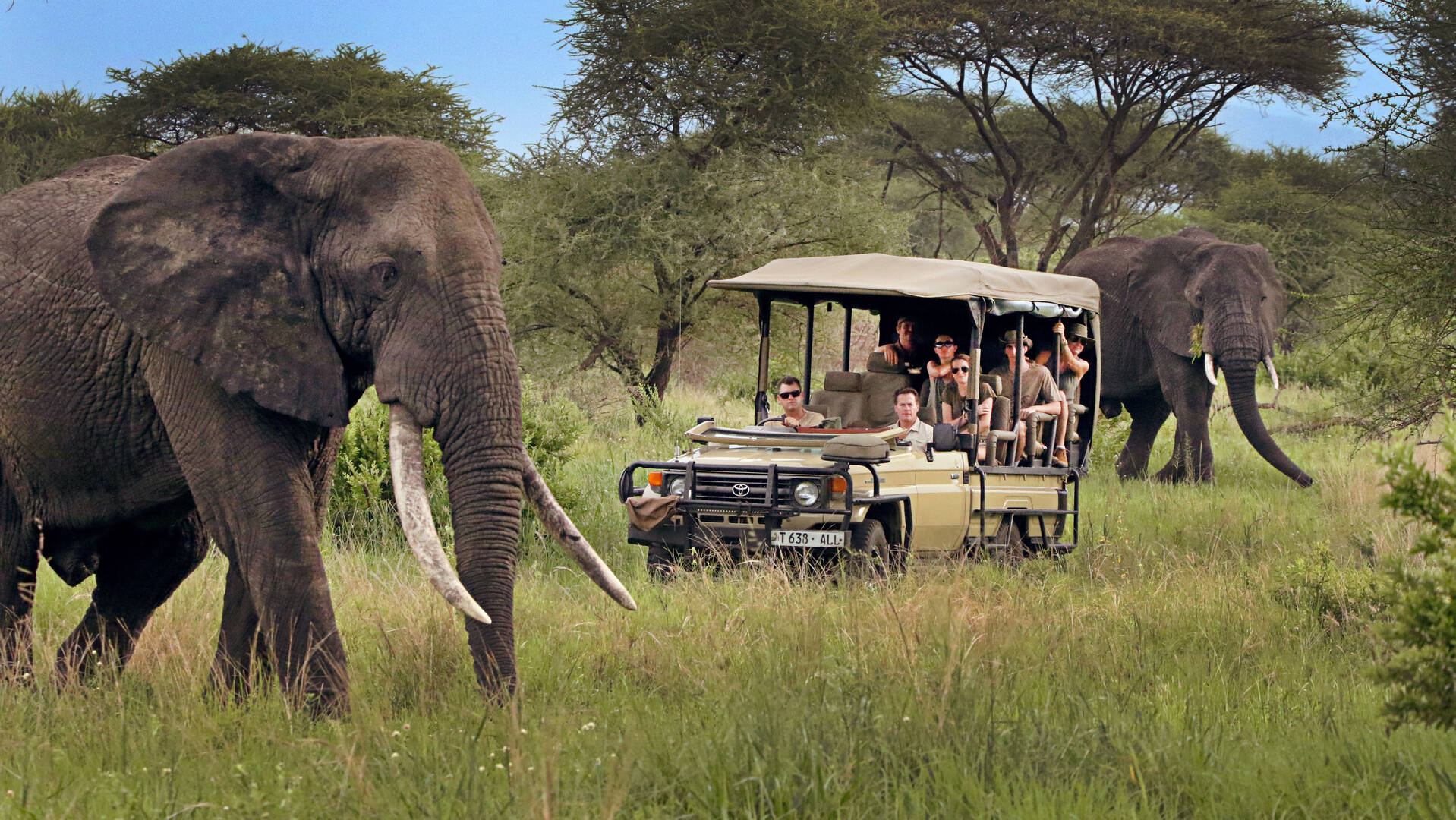
A standard Tanzania group safari vehicle carries up to six passengers plus the guide and driver, though some operators run larger groups in vehicles with extended seating. The seating configuration directly affects wildlife viewing quality. In a six-seat Land Cruiser with a single roof hatch, the two passengers seated under the hatch get an unobstructed standing view, while the four seated behind must photograph through side windows or compete for roof access at sightings. On a private safari, every passenger can stand under the open roof at every sighting regardless of how long they wish to stay. This distinction matters most to photographers but affects enjoyment for all passengers at close sightings of lion kills, leopards in trees, or cheetah hunts where angles and timing are everything.
Group vehicles also contain multiple passengers with different interests and attention spans. At any given sighting, some group members will want to stay longer and some will be ready to move on — the guide must balance these competing preferences and cannot satisfy all of them simultaneously. On a private safari, you stay as long as your party wishes, leave when you are ready, and never compromise a sighting for someone else’s schedule. This freedom compounds across dozens of sightings over a multi-day safari and translates into a measurably different experience of wildlife quality, particularly for serious observers or photographers.
Guide Communication and Real-Time Sighting Information
Tanzania safari guides communicate constantly over radio or phone networks, sharing real-time information about wildlife locations, recent sightings, and current conditions on specific tracks. On a private safari, your guide uses this network exclusively for your benefit — positioning the vehicle for the best angle at a lion kill, intercepting a moving cheetah family, or reaching a leopard’s tree before other vehicles arrive. On a group tour, the guide uses the same network but applies it within the constraints of the group itinerary and timing. If the guide radio network reports a wild dog pack three kilometres off the planned circuit, a private guide can immediately reroute to intercept. A group guide must consider whether the detour fits the group’s schedule and consensus.
This difference in guide responsiveness is one of the most practically significant distinctions between group and private safari. It explains why private safari guests often report sighting quality that exceeds what group guests experience in the same parks during the same period. The animals are the same, but the ability to act immediately on real-time intelligence — rather than within itinerary constraints — creates a different level of access to what is actually happening in the park at any given moment.
Flexibility: Fixed Routes vs Tailored Itineraries
How Rigid Group Itineraries Compare to Private Customisation
Group Safari Itinerary Constraints
Group tour itineraries in Tanzania follow fixed routes determined by the operator’s scheduling, accommodation blocks, and the logistics of moving a group efficiently between destinations. If the operator’s standard northern circuit runs Tarangire, Serengeti, Ngorongoro over five days, that is the itinerary for everyone in the group regardless of individual preferences. You cannot add an extra day in the Serengeti because the migration is particularly active, skip Tarangire because you visited it last time, or divert to Ruaha because wild dogs are there this week. The itinerary is set, the accommodation is pre-booked, and the group moves as a unit through the agreed schedule.
For first-time visitors who have not yet formed strong preferences about specific parks or activities, this rigidity is a relatively minor constraint. The northern circuit covers the highlights efficiently and the fixed schedule removes decision-making pressure. For repeat visitors, photographers with specific targets, birdwatchers with a species list, families with children whose needs determine pacing, or couples with a specific anniversary experience in mind, the fixed itinerary creates frictions that accumulate into meaningful dissatisfaction over the course of a trip.
Private Safari Customisation Possibilities
A private Tanzania safari itinerary can take any combination of parks, activities, accommodation styles, and travel dates that suits your interests and budget. You can prioritise chimpanzees at Mahale and wild dogs at Selous over a standard northern circuit, combine Kilimanjaro with specific post-climb recovery time before starting game drives, add a Zanzibar extension of any length, include walking safaris in parks that permit them, and adjust each park’s duration based on what you are actually finding rather than what the calendar originally specified. This responsiveness to conditions and preferences is the defining advantage of private safari and is what most private safari guests cite when explaining why they paid the premium.
The customisation also extends to daily rhythm within each destination. Private safari guests typically establish a personal game drive schedule with their guide — early morning departures, afternoon drive timing, optional midday outings during calving season or when big cats are active at unusual hours — rather than following the lodge’s standard group schedule. Starting a game drive at 5:30 a.m. to catch a cheetah hunt at first light, or extending an evening drive by 30 minutes to observe a hippo pool emergence, reflects the individual responsiveness that private safari enables and group itineraries structurally cannot match.
Social Dynamics and Who Each Model Suits
Matching the Model to Your Travel Style
Who Thrives on Group Safari
Group safari suits solo travellers who enjoy meeting like-minded people in shared experiences. The vehicle becomes a social group that shares sightings, meals, and the collective excitement of wildlife encounters, and many solo travellers form lasting friendships on group safari tours. It also suits budget-conscious travellers for whom the cost savings are the primary criterion, travellers who have no strong preferences about specific parks or activities, and first-time Tanzania visitors who want the simplicity of an arranged group experience without the decisions that a private itinerary requires.
Younger travellers, backpackers, and those on gap years frequently find that group safari provides exactly the right combination of adventure, social interaction, and manageable cost. The group atmosphere at shared campsites and lodges adds energy that some travellers actively prefer over the quieter private experience. The sense of shared discovery — everyone in the vehicle reacting together to a sudden leopard sighting — has its own particular joy that is genuinely different from the more contained private safari experience.
Who Thrives on Private Safari
Private safari suits couples who want an intimate experience without sharing vehicle space with strangers, families with children whose behaviour and energy levels benefit from a controlled private environment, groups of friends who already travel together and want the experience to be about their own group dynamic, and any traveller whose specific interests — photography, birding, walking safaris, specific species targets — require the flexibility that only a private vehicle and exclusive guide attention can provide. It also suits travellers who have already done a group safari and want a fundamentally different experience on a return visit.
Anniversary and honeymoon travellers almost universally choose private safari, both for the intimacy and for the ability to include romantic elements — sundowner drinks at a scenic location, a bush breakfast at a beautiful spot, an evening at a private camp with only a handful of other guests — that group tour logistics simply cannot arrange. The private safari experience at its best is precisely tailored to the specific party in the vehicle, and this specificity is the most compelling argument for the model among travellers who prioritise quality and personalisation over cost optimisation.
Plan Your Safari
The right choice between group and private safari depends entirely on your priorities — there is no objectively better answer. Budget travellers, solo visitors, and first-time Tanzania safari guests often find that a well-run group tour delivers excellent value and a memorable introduction to East African wildlife. Couples, families, photographers, specialist interest travellers, and those on milestone trips typically find that the private safari premium delivers returns that make it worth every additional cost.
African Wild Trekkers runs private and semi-private Tanzania safari itineraries tailored to individual parties, with flexible vehicle configurations, accommodation from mid-range to ultra-luxury, and itineraries built around your specific parks and activity priorities. The team does not operate large-group tours, which allows complete focus on the quality and customisation that defines genuine private safari. All reservations are confirmed in writing before any deposit is requested.
Contact African Wild Trekkers at africanwildtrekkers.com/contact with your Tanzania travel dates and party details and we will design your private itinerary and confirm pricing within 24 hours.