Tanzania Safari Plus South Africa: The Full Continent Safari in 21 Days
Africa’s two most celebrated safari countries — Tanzania and South Africa — sit at opposite ends of the continent and represent entirely different expressions of the African wildlife experience. Tanzania’s Serengeti is the open savannah migration spectacle: vast, wild, and operating at a scale that dwarfs all comparison. South Africa’s Kruger National Park is the southern continent’s equivalent in terms of Big Five density, but with the added dimensions of private game reserves, guided walking safaris, and the dramatic contrasts of a country that moves from wilderness to world-class cities and coastline within a day’s drive.
Combining both in a single 21-day itinerary creates an Africa experience of extraordinary range—not just in terms of wildlife, but in terms of landscape, culture, and the very character of what Africa looks and feels like in its two most different expressions.
The 21-day Tanzania and South Africa combination is one of the most popular multi-country Africa itineraries for travelers who want to maximize the variety of their African experience on a single extended trip. The logistics are more complex than a single-country safari but entirely manageable with an experienced operator coordinating both legs, and the breadth of experience delivered across three weeks justifies every logistical consideration. This guide outlines how to structure the 21 days, what each leg delivers, and the practical decisions that make the difference between a rushed and a deeply satisfying full-continent safari.
Tanzania: The First Leg
Serengeti, Ngorongoro, and the Northern Circuit
What Tanzania Contributes to the Combination
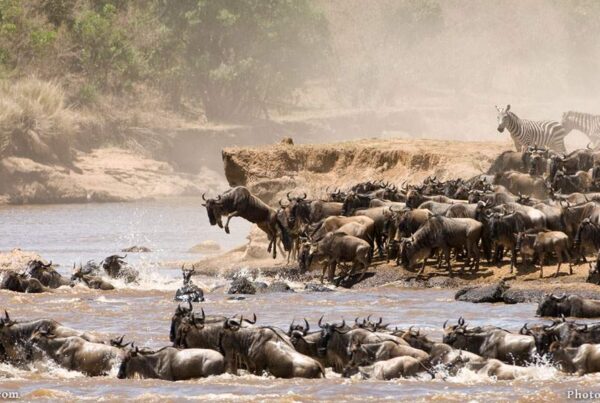
Tanzania should be the opening leg of the 21-day combination for most travelers, and the northern circuit is the right structure for a 10-day first leg. Starting with Tanzania allows you to experience the most dramatic open-savannah wildlife spectacle first—the scale of the Serengeti, the density of predators, and the potential of the wildebeest migration provide an introduction to African wildlife that establishes the bar for everything that follows.
South Africa, which typically provides more variety in terms of activities and environments rather than sheer wildlife volume, functions well as the second leg, where the experience expands from pure wildlife into a more complex combination of game drives, cities, coasts, and cultural diversity.
A Tanzania first leg of 10 to 11 days gives time for three key northern circuit parks—Tarangire for elephant and baobab landscape, the Serengeti for migration and predator watching, and Ngorongoro Crater for the enclosed Big Five experience—without rushing between destinations. Internal charter flights between Serengeti airstrips eliminate the long road transfers that would otherwise consume a day of safari time per park change.
The ten days in Tanzania end with a flight from Kilimanjaro Airport or Dar es Salaam to Johannesburg, which is the natural gateway for the South Africa leg regardless of whether the itinerary proceeds to Kruger, Cape Town, or both.
Timing the Tanzania Leg Within the 21-Day Structure
The timing of the Tanzania leg within the full 21-day itinerary has significant implications for what you experience in both countries. A July through September Tanzania leg aligns the trip with the Mara River migration crossings in the northern Serengeti and with South Africa’s dry season in Kruger—both countries at their best simultaneously.
This window is peak season for both countries and requires booking 12 to 18 months in advance for the best accommodation at either end. November through January offers an alternative timing with Tanzania’s calving season around Ndutu (December-February) and South Africa’s green season when birding is exceptional and newborn animals are visible throughout Kruger—a different but equally compelling experience at lower prices with more accommodation availability.
Avoid splitting the Tanzania and South Africa legs across different seasons—a Tanzania trip in March (long rains) combined with South Africa in August misses the best of Tanzania while South Africa is in its optimal window. The most satisfying version of this combination aligns peak conditions in both countries with a single seasonal window, which the July-September dry season does most reliably across the full 21 days.
South Africa: The Second Leg
Kruger, Cape Town, and the Garden Route
Kruger National Park and Private Game Reserves
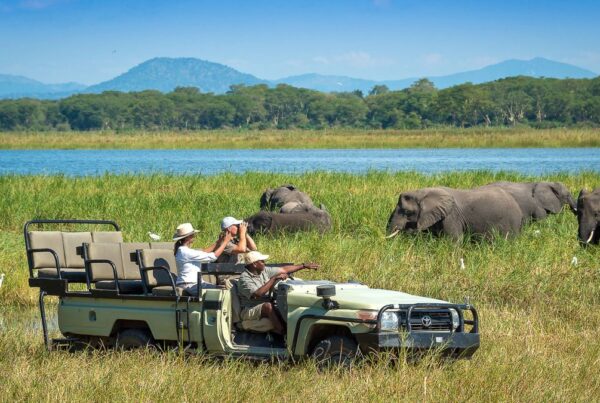
South Africa’s Kruger National Park and the private game reserves bordering it on its western boundary—Sabi Sand, Thornybush, Timbavati, and others—offer a different but equally compelling Big Five safari experience from Tanzania. The Big Five in Kruger are present in exceptional numbers, but what distinguishes the South African safari experience from Tanzania’s is the range of activities available in the private reserves: night drives, walking safaris with armed rangers, and game tracking on foot at very close range to predators.
These activities are not available in the same form in Tanzania’s national parks, and they add a dimension of ground-level engagement that complements the vehicle-based observing of the Tanzania leg.
Leopard sightings in Sabi Sand Game Reserve, adjacent to Kruger, are among the most reliable in Africa—the reserve’s habituated leopards appear on almost every safari drive, and close encounters lasting 30 to 60 minutes are routine rather than exceptional. This contrasts with the Tanzanian experience, where leopards require skill and luck to find. After Tanzania, where most visitors encounter leopards only once or twice if at all, the Sabi Sand leopard experience feels extraordinary and rounds out the Big Five in a way that some Tanzania-only itineraries leave incomplete.
Allocating 4 to 5 nights to a private Sabi Sand or Thornybush lodge provides the best private reserve experience within the 21-day South Africa leg budget.
Cape Town and the Garden Route: Beyond Wildlife
South Africa’s addition of Cape Town and the Garden Route to a 21-day Africa itinerary transforms it from a pure wildlife safari into a full country experience that Tanzania, as a primarily wildlife destination, cannot provide. Cape Town is one of the world’s most spectacularly beautiful cities—Table Mountain, the Cape Peninsula, Boulders Beach’s penguin colony, the Winelands, Robben Island, and one of Africa’s most vibrant food and culture scenes are all accessible within a two-hour drive from the city center.
After the bush intensity of both Tanzania and Kruger, the Cape Town segment of a 21-day Africa itinerary functions as an urban decompression that most travelers genuinely welcome, providing world-class restaurants, great wine, and the visual drama of a city built between a mountain and an ocean in equal measure.
The Garden Route—the coastal road east of Cape Town through the Karoo and Tsitsikamma forest—adds wild coast scenery, whale watching opportunities (June through November), and the charming towns of Knysna and Plettenberg Bay that are some of South Africa’s most appealing domestic destinations. A four-day Garden Route drive after Cape Town before flying home from George or Port Elizabeth creates a natural journey structure that sees the South African coast and country rather than just flying directly in and out of Johannesburg.
The 21-day structure that works best for the Tanzania-South Africa combination allocates 10 days for Tanzania, 5 days for Kruger or Sabi Sand, 4 days for Cape Town, and 2 days for the Garden Route, ending with a return flight from Cape Town International Airport.
Logistics: Connecting Tanzania and South Africa
Flights, Visas, and Practical Coordination
Tanzania to South Africa Flight Options
The connecting flight between Tanzania and South Africa for most itineraries routes through Johannesburg OR Tambo International Airport, which serves as South Africa’s main hub and the natural gateway for both Kruger (four-hour drive east) and Cape Town (two-hour domestic flight south). South African Airways and other carriers operate direct flights between Kilimanjaro Airport and Johannesburg, and the journey takes approximately four hours.
Dar es Salaam to Johannesburg is also well-served with direct flights. The Johannesburg connection works seamlessly for itineraries that proceed directly to Kruger—a driver can meet you at arrivals and have you in a Sabi Sand lodge by afternoon of the same day if flights time well.
Tanzania and South Africa both require standard tourist visas for many nationalities, and the Tanzania e-visa and South Africa visa-on-arrival or pre-arranged visa should both be confirmed well before travel. South Africa does not require a separate entry visa for most Western passport holders for stays under 90 days, but confirming this specifically for your nationality before travel avoids any complications at the border.
Your Tanzania operator should advise on current entry requirements for both countries based on your passport nationality as part of the itinerary preparation process.
Plan Your Safari
The 21-day Tanzania and South Africa combination requires coordinated booking of multiple components across two countries—Tanzania safari camps, connecting flights, Kruger private reserve lodges, Cape Town hotels, and Garden Route accommodation—all of which need to align around fixed international arrival and departure dates. This coordination is most effectively managed through an operator with active relationships in both countries rather than attempting to self-book across two completely different tourism systems independently.
Budget planning should account for the full range of experiences across both countries, including park fees, activity costs, and the very different accommodation pricing structures between Tanzania’s safari camps and South Africa’s private game reserve lodges.
African Wild Trekkers coordinates complete Tanzania and South Africa combination itineraries, managing the Tanzania safari leg in full and working with established South Africa partners for the Kruger, Cape Town, and Garden Route components. A single integrated itinerary document covers all bookings, transfers, and contacts across the full 21 days. All reservations are confirmed in writing before any deposit is requested.
Contact African Wild Trekkers at africanwildtrekkers.com/contact with your preferred travel dates, and we will design your Tanzania and South Africa combination and confirm all availability within 24 hours.