Warthog Facts: Pumba Is Real & Here’s What You Need to Know
The Real Pumba
The Lion King made the warthog famous worldwide. However, the real animal is even more fascinating than Pumbaa suggests.
The common warthog, Phacochoerus africanus, is Africa’s most widespread warthog species. It is one of the savanna’s most entertaining animals.
Many travelers overlook warthogs because they focus on the Big Five. Yet, experienced guides often recommend watching them closely.
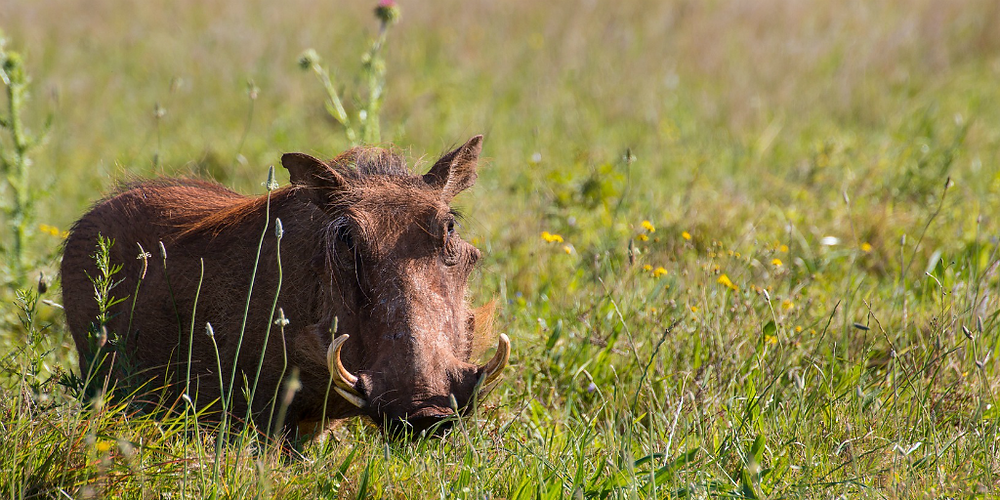
Warthogs kneel on their padded front knees while feeding on short grass. This unusual posture is rarely seen among other pigs.
They also enter burrows backward, keeping their tusks facing possible threats. Furthermore, they run with their tails raised like small antennas.
This behavior may help young piglets follow their mothers through tall grass. Their sounds are equally impressive, including grunts, squeals, and warning calls.
Warthog Biology and Adaptations
The common warthog is a medium-sized pig. Adults weigh between 50 and 150 kilograms.
Males are usually larger than females. They have broad faces, facial skin pads, and impressive curved tusks.
These tusks serve several purposes. They are used during male fights, predator defense, and digging for roots.
The warthog has a strong, low body with short legs and a large head. This design supports both fast running and constant digging.
One of the most recognizable behaviors is kneeling while grazing. Thick calloused pads protect the front knees from repeated contact with hard ground.
The warthog moves forward while resting on these pads. It usually uses this technique when feeding on very short grass.
However, it stands normally when searching for roots and underground foods.
Burrows, Running, and Social Behaviour
Warthogs rely heavily on burrows for safety and shelter. However, they rarely dig their own homes.
Instead, most burrows are taken from aardvarks and adjusted when needed.
Entering backward provides an important advantage. The warthog can watch the entrance while keeping its tusks ready.
As a result, predators such as leopards and young lions face a difficult challenge when attacking.
The famous raised-tail running style is especially common among families. Piglets follow their mother closely, and the tail may help them keep track.
Warthogs can reach speeds of about 55 kilometers per hour. Therefore, running is their first defense against danger.
They use their tusks mainly when trapped or defending themselves near burrows.
Warthog Piglets and Predators
Warthog piglets are among Africa’s most charming young animals. They are small, active, and quickly learn survival skills.
Females usually give birth to two to four piglets inside protected burrows.
After three to four weeks, the young begin joining their mother during feeding trips.
When danger appears, the family runs home in a straight line. The mother leads while piglets follow with raised tails.
This scene is often considered one of the most memorable moments on safari.
However, young warthogs face many predators. Eagles, jackals, caracals, servals, leopards, cheetahs, and lions may hunt them.
Adults are harder targets. Their speed, strength, and tusks make them dangerous prey.
Leopards are among the main predators of adult warthogs. Hunting them successfully requires experience and patience.
Where to See Warthogs
Warthogs are found across most East and Southern African savannas. They can be seen in the Masai Mara, Serengeti, Amboseli, Ngorongoro, Kruger, Chobe, and Hwange.
No special planning is needed to find them. Instead, careful observation creates the best experiences.
Parks with many aardvark burrows often show more burrow behavior. Additionally, areas with young families provide excellent viewing between February and May.
Uganda’s Queen Elizabeth National Park and Kenya’s Amboseli offer relaxed warthog sightings.
At Amboseli, watching warthogs graze with Mount Kilimanjaro in the background creates a classic African image.
Kruger National Park also offers excellent encounters, especially during afternoon hours.
Plan Your Safari
Warthog sightings happen in almost every East or Southern African safari.
However, the best experiences come from slowing down and observing their behavior.
African Wild Trekkers creates safaris that allow time for every wildlife encounter. We focus on both famous predators and overlooked species like warthogs.
Contact African Wild Trekkers through africanwildtrekkers.com/contact to design a safari that reveals Africa’s complete wildlife story.