Zebra Herd Behaviour: The Social Life Behind Africa’s Most Recognisable Pattern
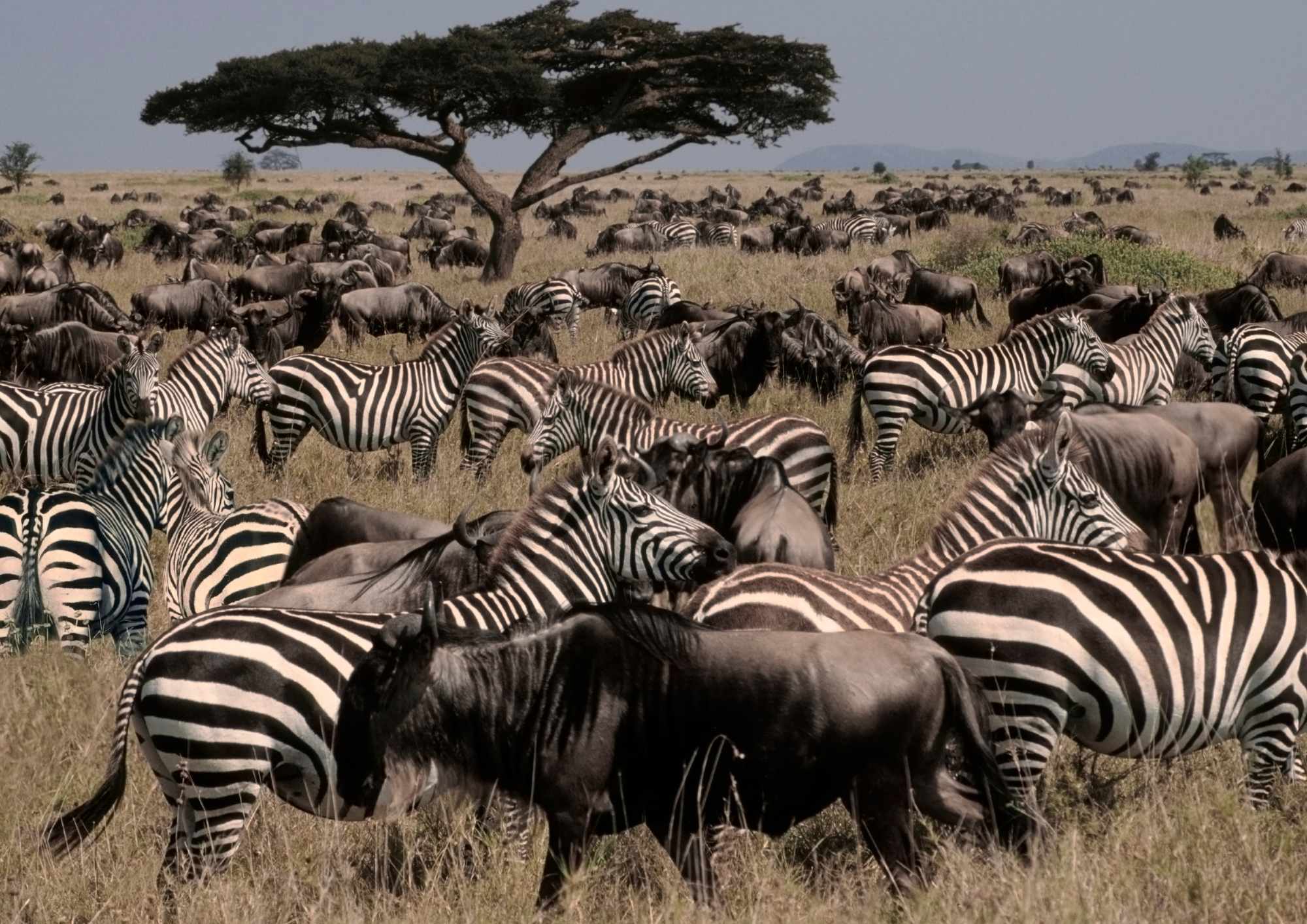
A zebra herd on the Serengeti plain appears to be a disorganised mass of identical striped animals moving in loose coordination. This appearance is deeply misleading. The herd consists of discrete family units — each unit a dominant stallion, one to six mares, and their offspring — that maintain internal cohesion even within large mixed aggregations of hundreds or thousands of animals. Every interaction within the herd reflects a social structure of considerable sophistication that decades of Serengeti research have studied in detail.
The Family Unit: The Core Social Group
The plains zebra’s basic social unit is the family: one dominant stallion, one to six adult mares, and their foals of various ages. The family holds stable over years — mares bond to each other and to the stallion, not simply to the herd as a whole. When the herd disperses after a night or a storm, the family reconverges within minutes. When a predator pursues the herd, family members move together. The stallion positions himself between the predator and his mares.
Mares maintain a dominance hierarchy within the family. The alpha mare typically leads family movements and takes first access to water and mineral licks. Her foals benefit from her status — better resource access and less aggression from other family members than foals of lower-ranking mares experience. The stallion does not rank in the female hierarchy. His role is defence and mate access, not daily resource competition.
The Stallion’s Role: Exclusion and Defence
The dominant stallion defends his mares — not a geographic territory. A rival’s approach triggers a head-low threat walk toward the intruder. If the rival holds his ground, herding begins — the stallion circles his mares, driving them away from the rival while simultaneously threatening with kick and bite displays.
Stallion fights are violent. Two stallions competing over a female or a disputed family membership bite at the neck, chest, and hindquarters, and kick with powerful hindlegs. Severe bite wounds that penetrate to the bone occur regularly. Kicks occasionally break bones. These fights are among the most physically damaging intraspecific contests in East Africa’s herbivore community.
The Stripe Question
Zebra stripes have generated scientific debate for over a century. The current best-supported hypothesis is that stripes deter biting flies — particularly tsetse flies and tabanid flies. Experimental evidence from horse studies showed that uniformly coloured horses attracted significantly more biting flies than striped ones. Stripes probably disrupt the polarised light pattern that biting flies use to locate mammal hosts. In East Africa’s tsetse-dense ecosystems, this fly deterrence carries significant fitness benefits — reducing blood loss, disease transmission, and energy expenditure on defensive behaviour.
Mutual Grooming
Zebra mutual grooming is one of the most easily observed and most socially significant behaviours in the herd. Two individuals stand head-to-tail, using teeth and lips to groom the other’s neck, mane, withers, and back. This grooming removes parasites and dander from areas the individual cannot reach on itself. The social bond it reinforces matters equally — the pairs that groom most frequently are the most closely allied within the family unit, and grooming relationships predict coalition behaviour in other contexts.
Plan Your Safari
The Serengeti and Maasai Mara produce the most accessible plains zebra behaviour watching in East Africa. Migration herds contain thousands of family units — seek smaller groups of 10 to 30 individuals where specific families are visible as discrete subgroups. Amboseli’s highly habituated zebra herds and flat open habitat allow observation of family interactions at ground level with exceptional clarity. Samburu and Buffalo Springs hold Grevy’s zebra — a related but very different social system worth comparing directly to the plains zebra family structure.
African Wild Trekkers designs East Africa safari itineraries that include dedicated observation time at zebra herds for visitors interested in social behaviour. Contact us to plan a safari that reveals the complexity behind the stripes.