Elephant Bull Musth: The Most Dramatic Physiological State in African Wildlife
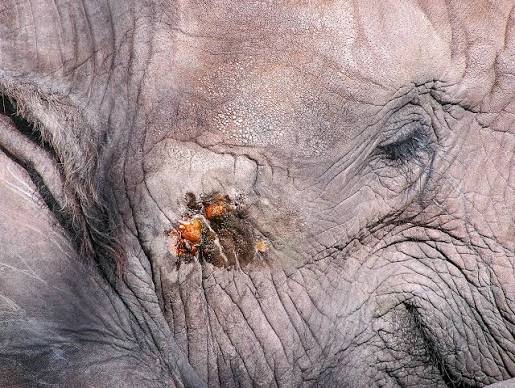
A large bull elephant walks across open savanna. Dark liquid streams down both sides of his face from the temporal glands behind his eyes. His feet drip a continuous trickle of urine. He carries his head unusually high. Every other elephant nearby including bulls that would normally compete with him steps back as he passes. This is musth: a periodic hormonal state that drives testosterone to five or ten times normal levels, transforms behaviour entirely, and signals reproductive readiness to every elephant in the landscape.
What Is Musth?
Musth is a recurring physiological state in adult male African and Asian elephants. Testosterone surges to extraordinary levels. Aggression and persistence increase dramatically. The temporal glands behind the eyes produce a dark secretion that streams down the face. The word comes from Urdu and Persian for intoxicated. Musth fluid contains complex compounds that communicate the bull’s status and identity through smell. Females actively seek out musth bulls as mates.
Scientists long assumed musth occurred only in Asian elephants. Cynthia Moss’s long-term Amboseli research in the 1970s and 1980s definitively documented it in African bulls. The Amboseli Elephant Research Project’s decades of individual-level monitoring established the physiological, behavioural, and social dimensions of musth in a wild African population for the first time.
Duration and Age Relationship
Young bulls aged 20 to 25 experience musth episodes lasting a few days to a week. As bulls age, musth episodes lengthen. Bulls in their 30s and 40s remain in musth for weeks to months per year. The oldest, largest bulls over 50 years old can sustain musth for five to six months annually. Longer musth periods coincide with maximum reproductive success. Older bulls in extended musth dominate reproduction across the population.
Each bull enters and exits musth at roughly the same time each year, though the precise timing shifts gradually with age. Bulls of different ages from the same population have staggered musth periods — this staggering reduces the number of simultaneously competing musth bulls at any moment.
Behavioural Changes in Musth
A musth bull walks with a characteristic high-head posture. He covers more ground per day, ranging widely in search of receptive females. Aggression toward other elephants and toward vehicles increases significantly. He produces the low-frequency musth rumble a long, resonant call made with the mouth closed, felt as a vibration before the ears fully register it and females respond from several kilometres away.
Non-musth bulls defer almost universally to musth bulls, regardless of size. A smaller musth bull displaces a larger non-musth bull from a receptive female. Hormonal state temporarily overrides the size-based hierarchy. The physiological commitment of musth signals such strong genetic quality that females consistently choose musth bulls over non-musth bulls.
Safety Around Musth Bulls
Musth bulls require more cautious vehicle approach than non-musth bulls. Elevated aggression and reduced predictability make extended close approach risky. Experienced guides maintain greater distances from musth bulls and leave quickly if a bull shows interest in the vehicle. Temporal gland secretion and urine dribble are the reliable field indicators. Any bull displaying these signs near a vehicle deserves careful, respectful distance.
Plan Your Safari
Amboseli National Park in Kenya offers the finest musth bull encounters in East Africa. Decades of Amboseli Elephant Research Project work mean every bull in the population is named, aged, and known — your guide identifies the specific individual, gives his age, and describes his musth history. This biographical detail transforms a dramatic but anonymous observation into a genuinely personal wildlife encounter.
African Wild Trekkers includes Amboseli in Kenya elephant safari itineraries. Contact us to plan a safari placing you with known, individually studied elephants in one of East Africa’s most productive wildlife areas.