Bush Walk Guide Africa: What to Expect on a Guided Walking Safari in East Africa
A bush walk changes how you read the African landscape. Inside a vehicle, you spot large animals at distance. On foot, however, you engage the same landscape through a different set of senses. The smell of crushed grass, the sound of wind shifting direction, and the feel of soil underfoot all carry meaning. Your guide reads these signals continuously. As a result, you build a real-time picture of animal movement around you. No vehicle delivers this level of connection to the bush.
The Role of the Armed Ranger
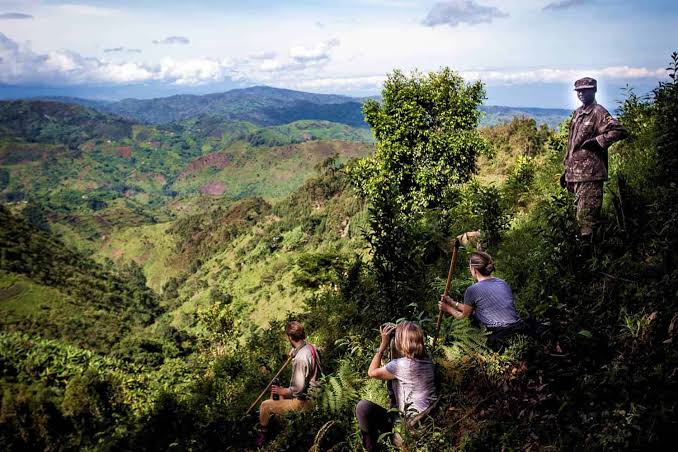
Every walking safari in East Africa uses two leaders. An armed ranger takes point and handles group safety. Meanwhile, a professional guide works alongside guests, reading tracks and explaining signs. Rangers train specifically for close wildlife encounters. They understand threat signals and the correct responses for each species. This two-person structure is legally required across Kenya, Tanzania, and Uganda for walks in dangerous-animal areas. As a result, the guide focuses entirely on interpretation rather than splitting attention between education and safety.
Rangers brief guests thoroughly before each walk. The briefing covers walking formation, silent hand signals, and response protocols for different animal types. Additionally, it covers the key rule of walking safaris: the ranger’s instruction is immediate and absolute. No explanation comes with a stop or retreat signal. Understanding this rule in advance allows guests to respond without hesitation.
Pace, Distance, and Duration
Walking safaris move slowly. A two-hour morning walk covers only 3 to 5 kilometres. This pace is deliberate. Moving faster reduces the quality of observation that makes walking valuable. At a slow pace, the guide spots fresh tracks, reads broken stems, and hears alarm calls from birds responding to hidden movement. Fast movement, by contrast, eliminates these observations entirely.
Morning walks start at first light. Temperatures are cool, wildlife is active, and overnight tracks are still fresh. Afternoon walks begin around 16:00 when activity increases again before dusk. Full-day walks with a bush lunch suit guests seeking maximum immersion. Distance typically ranges from 3 to 15 kilometres depending on the walk type and guest fitness.
What Walking Safaris Reveal
Walking reveals detail that vehicle safaris miss completely. Fresh lion tracks pressed into damp soil show claw marks and inter-toe spacing. These signs reveal the animal’s size, gait, and direction. Moreover, a broken termite mound with fresh claw marks identifies a feeding aardvark from the previous six hours. Dung beetles rolling balls across an open path demonstrate nutrient cycling invisible from any vehicle.
Walking also delivers proximity to large herbivores on different terms than vehicle encounters allow. A buffalo herd grazing at 40 metres, aware of the walking group downwind, continues feeding while making constant threat assessments. The guide reads the herd’s body language throughout. This shared awareness — predator and prey both visible, each assessing the other — is the essential drama of the African walking safari.
Plan Your Safari
Walking safaris operate in designated areas within Kenya’s Maasai Mara conservancies, Tanzania’s Selous-Nyerere Game Reserve, Ruaha National Park, and Uganda’s Queen Elizabeth National Park. Fitness requirements are modest a moderate pace for 2 to 3 hours is sufficient. Closed shoes with ankle support, neutral clothing, and a wide-brimmed hat are essential. Binoculars add significantly to the experience.
African Wild Trekkers designs East Africa walking safari itineraries with experienced, licensed ranger-guide teams in the best walking areas. Contact us to add walking safari components to your Kenya or Tanzania itinerary.