Swamp Canoe Uganda: Paddling Through Papyrus Wetlands for Shoebills and Water Wildlife
The shoebill stork is the reason most serious birders visit Uganda. This enormous, prehistoric-looking bird stands 120 centimetres tall and carries a shoe-shaped bill 23 centimetres long. Its stare unsettles many observers. The shoebill stands completely motionless for hours, waiting for a lungfish to surface. Then it strikes — the bill slams shut on the target with a sound audible from 30 metres. Watching a shoebill hunt from a traditional dugout canoe at 5 metres, in the silent papyrus channels of Mabamba Bay, is a wildlife encounter that ranks among East Africa’s most extraordinary by any measure. Nothing else quite resembles it.
The Papyrus Swamp Environment
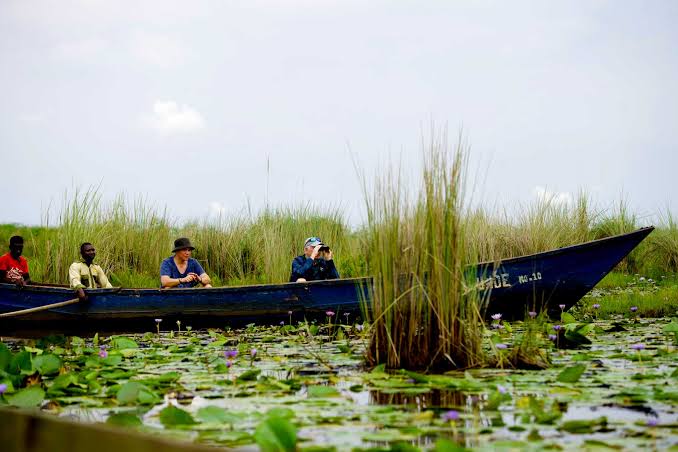
Uganda’s papyrus swamps form dense, impenetrable-seeming reed beds from a distance. Traditional dugout canoes navigate channels within the papyrus that cut through the reed mat and open into wider lagoons hidden from outside. The interior of a papyrus swamp channel carries a specific quality of light and sound. Papyrus heads 4 metres above the water surface filter green-gold light down into the channel. The dense reed walls deaden sound, creating a capsule of quietness despite the activity happening in the vegetation on all sides. Sitatunga antelopes semi-aquatic and almost entirely restricted to papyrus habitat move through the reed bed at the canoe’s eye level, their broad hooves preventing them from sinking into the floating mat.
Mabamba Bay: Uganda’s Premier Shoebill Location
Mabamba Bay Wetland, 35 kilometres west of Entebbe on the northern shore of Lake Victoria, is Uganda’s most reliable and accessible shoebill location. The bay’s papyrus system harbours a resident shoebill population of 10 to 15 individuals spread across the wetland. Local fishermen-turned-guides navigate traditional dugout canoes through the papyrus channels to locate shoebills in their regular territories. A morning canoe circuit of 2 to 3 hours typically produces one to three shoebill encounters at very close range. The shoebill’s characteristic forward strike the entire body collapsing toward the water — is visible at 5 to 8 metres from a stationary canoe.
Furthermore, the canoe ride itself delivers exceptional bird diversity before the shoebill appears. Malachite kingfisher, pygmy kingfisher, African jacana, white-backed duck, lesser jacana, purple gallinule, and African fish eagle all appear at close range from the low, slow canoe approach. By the time the first shoebill comes into view, guests already have a half-page list of notable wetland species from the approach alone.
Other Uganda Swamp Canoe Locations
Bigodi Wetland Sanctuary near Kibale Forest provides sitatunga, de Brazza’s monkey, and outstanding bird diversity on a boardwalk trail rather than by canoe. The Kazinga Channel’s papyrus margins are explored by motorboat. Lake Mburo National Park’s lake margins provide shorter canoe or boat options in the south-west circuit. Each location delivers a different wetland community.
Plan Your Safari
Mabamba Bay sits 35 kilometres from Entebbe Airport — accessible as an independent half-day excursion at the start or end of any Uganda safari. Most Uganda itineraries begin in Entebbe and travel west. A Mabamba dawn canoe before the first full safari day adds a shoebill encounter without adding significant travel time. The Murchison Falls area provides a second shoebill canoe opportunity on the Albert Nile swamp margins, combinable with the park’s full wildlife circuit.
African Wild Trekkers includes Mabamba Bay shoebill canoe experiences in Uganda safari itineraries. Contact us to plan a Uganda safari that combines this extraordinary wetland encounter with gorilla tracking and savanna wildlife.