Night Game Drive Kenya: Exploring the Maasai Mara After Dark
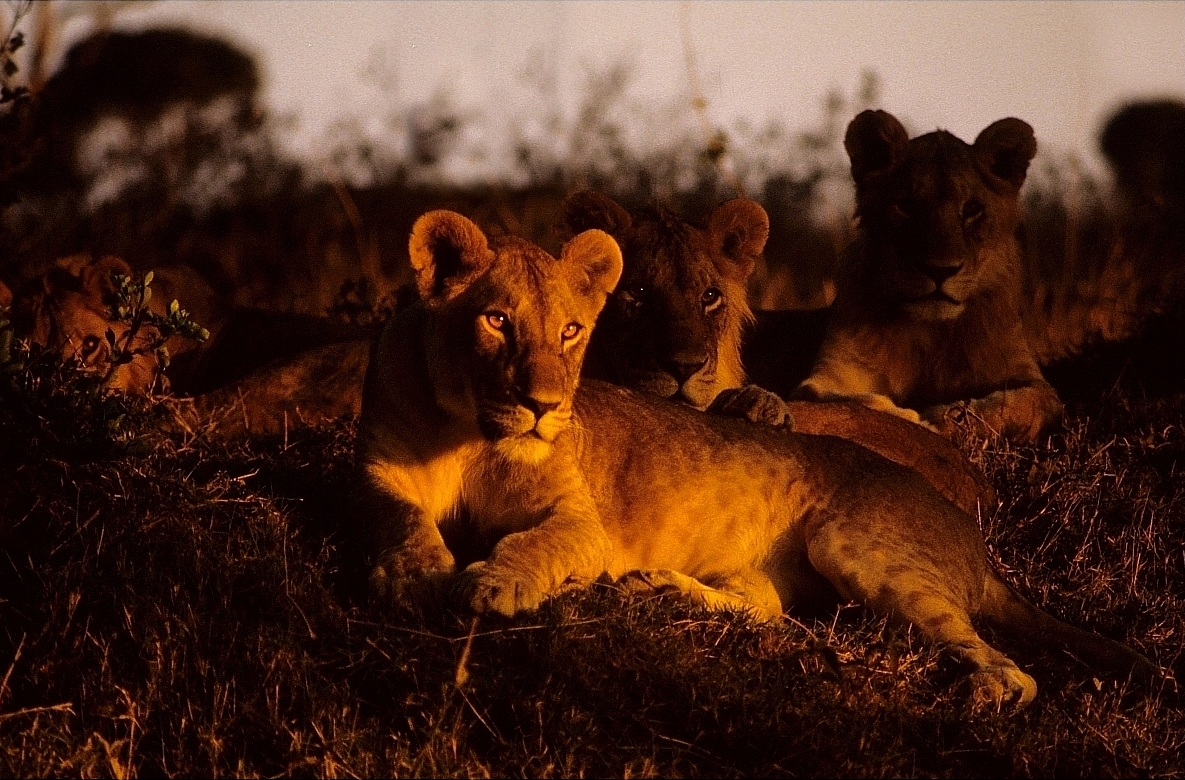
A night game drive Kenya experience reveals a completely different cast of wildlife characters than the daytime game drive produces — the nocturnal species that spend their daylight hours sleeping, hiding, or simply resting out of vehicle range come alive after sunset and create encounters with cats, civets, genets, aardvarks, and bush babies that the standard morning-and-afternoon game drive format never accesses. Kenya’s main national parks — Maasai Mara National Reserve, Amboseli, Tsavo, and Samburu — do not permit night game drives within their boundaries under current Kenya Wildlife Service regulations, but the private conservancies surrounding the Maasai Mara and the Laikipia Plateau’s privately managed wildlife areas operate after-dark drives as a standard evening activity for lodge guests. The night game drive’s specific equipment — a powerful spotlight operated by the camp spotter who sweeps the surrounding scrub for eye-shine — detects nocturnal species that daylight drives cannot find regardless of how long the vehicle waits at a specific location, and the spotter’s trained eye distinguishes the amber eye-shine of a leopard from the green eye-shine of a serval cat and the red reflection of a spring hare at 200 meters in the dark. African Wild Trekkers confirms night game drive availability at the specific Maasai Mara conservancy camps it books and ensures clients who specifically request the nocturnal wildlife experience are placed at properties where after-dark drives are a standard operating program rather than an occasionally permitted special request.
Nocturnal Wildlife on Kenya Night Game Drives
Cats and Predators After Dark
The leopard is the night game drive’s most sought-after sighting in the Maasai Mara conservancies — the cat that spent the day in a specific fig tree will emerge at dusk, descend to drink from the nearest water source, and begin patrolling its territory in the darkness in behaviors entirely different from the static tree-rest observation the morning drive produced. The conservancy guide’s knowledge of each resident leopard’s territorial circuit — which rock boundary it marks at what time, which riverine forest section it hunts most successfully after dark, and which specific tree stump it uses as a night-time visual survey point — directs the spotlight to the locations where the leopard is likely to be rather than sweeping randomly across the scrub in hope of a random reflection. A leopard caught in the spotlight at ground level at night presents a visual and behavioral complexity unavailable during the day — the fully dilated eye in low light, the deliberate ground patrol posture, and the freeze-and-assess response when the vehicle approaches all create an encounter character that the daytime tree-resting observation lacks entirely. African Wild Trekkers guides specifically discuss night leopard encounter technique with clients before the evening drive departs — the approach speed, the spotlight timing, and the vehicle positioning that keeps the beam from directly blinding the animal while maintaining sufficient light for photography.
The serval cat is the night game drive’s most frequently encountered feline species in the Maasai Mara conservancies — a medium-sized spotted cat with enormous ears that hunts rodents in the long grass by hearing alone, pouncing on prey detected through sound rather than sight. Servals are genuinely active throughout the night in the grass zones between the acacia woodland and the open plain, and the spotlight regularly picks up the distinctive large-ear profile and spotted coat at 50 to 80 meters in the shorter grass areas of the conservancy. The caracal — a larger, rufous-colored cat with distinctive black ear tufts — appears less frequently but reliably enough in rocky kopje areas and dense bush terrain that Mara conservancy guides include kopje sweeps specifically in the night drive route to locate this secretive species. The civets and genets — smaller carnivores that occupy the mesocarnivore ecological niche between the rodent-eaters and the large cats — are ubiquitous on Mara night drives near the camp area, attracted by the food preparation activities that generate scent attractants around the dining and kitchen areas, and these encounters at very close range between the vehicle and a curious genet produce some of the night drive’s most detailed and intimate wildlife photography.
Other Nocturnal Wildlife in the Maasai Mara
The aardvark is one of the night game drive’s most improbable and exciting sightings — a large, pig-like mammal with a tubular snout and massive digging claws that spends every daylight hour underground in its burrow system and emerges after dark to hunt termite mounds across the savanna in a solitary, focused nightly foraging circuit. Aardvarks are difficult to approach closely because their hearing is acute and they detect the vehicle at distances that allow them to change direction before the spotlight beam reaches them, but patient and slow vehicle pursuit on the conservation’s quieter tracks occasionally produces extended observations of this extraordinary animal at close range. Spring hares — large bipedal rodents that move across the grassland in three-meter jumps on their large back legs — create one of the night game drive’s most disorienting visual surprises when the spotlight catches them mid-jump against the dark grassland, and the red eye-shine and kangaroo-like leaping movement make first-time observers genuinely uncertain about what species they are seeing before the guide identifies the animal. Bat-eared foxes hunt termites on the short-grass plains after dark, their enormous ears rotating independently to locate the underground vibrations that indicate termite activity below the surface, and the family groups of two to five foxes that hunt together in the same grassland section provide extended watching opportunities at close approach distances.
The night game drive’s bird encounters are as distinctive as the mammal sightings — owls, nightjars, and the African wood owl all call throughout the Mara night and respond to the guide’s recorded call playback with territorial approaches that bring them into spotlight range for identification. The Verreaux’s eagle-owl — one of Africa’s largest owl species, with diagnostic pink eyelids and a deep booming call — occasionally descends to the vehicle’s spotlight level when the guide broadcasts the call near its known roost trees, providing close owl observation that standard daytime game drive birding cannot replicate. Pearl-spotted owlet and African scops owl are among the more commonly encountered night drive owl species in the Mara’s acacia woodland, and the guide’s ability to distinguish species calls allows targeted playback approaches to each owl type rather than a generalized broadcast that produces an unpredictable response. African Wild Trekkers guides brief clients on the night drive bird etiquette before departure — playback should be brief (30 seconds maximum) and should cease immediately when the target species responds and approaches, to avoid disrupting nesting behavior or unnecessarily stressing the territorial response system that the playback exploits.
Practical Information for Kenya Night Game Drives
Equipment and Dress for After-Dark Safaris
Night game drive equipment requirements differ significantly from daytime safari preparation — a red-filter head torch is essential for reading the field guide, checking camera settings, and signaling the guide without destroying night-adapted vision the way a white-light torch would. Camera settings for night game drive photography require a significantly different approach from daytime safari photography — ISO 6400 minimum, aperture at the maximum f/2.8 or f/4 that the lens allows, and either the vehicle’s spotlight or a dedicated speedlight flash as the primary light source. Photography with a speedlight on a night game drive requires a diffuser on the flash head to prevent the harsh direct light from creating flat, overlit images that lose the atmospheric quality of the nocturnal wildlife encounter, and a radio trigger that fires the flash remotely rather than requiring a hot shoe connection that limits body positioning. Dress warmly for night drives regardless of the daytime temperature — the Maasai Mara evenings in July and August drop to 12°C or below after dark, and the open vehicle in moving air creates wind-chill that makes the midday temperature reading irrelevant to the actual comfort experienced in the game drive vehicle after sunset. A fleece and windproof jacket, plus a blanket that well-prepared camps supply with each night drive vehicle, covers the temperature range across the approximately two-hour night drive duration that most Mara conservancy programs offer.
Kenya night game drive timing typically runs from 7 PM to 9 PM or 7 PM to 9:30 PM — the two hours immediately after full dark when nocturnal species transition from their dusk emergence period to their peak activity phase. This timing allows the night drive vehicle to return to camp before 10 PM for a late dinner and comfortable sleep before the following morning’s 6 AM departure, making the night drive addition to the safari schedule exhausting only for travelers who treat every activity as mandatory and do not rest during the midday break. Night drives are optional rather than required elements of any Mara conservancy program, and travelers who arrive tired from travel, who require early sleep for medical reasons, or who find the nighttime game drive format less rewarding than the daytime game drive should not feel obligated to participate on every night. African Wild Trekkers advises clients to attempt the night drive on at least one evening per conservancy stay, because the nocturnal wildlife encounter’s distinctive character is impossible to predict from description alone and most travelers who hesitate about the night drive before trying it describe it subsequently as one of their safari highlights.
Which Kenya Parks Permit Night Drives
Kenya Wildlife Service regulations prohibit night game drives within all national parks — Maasai Mara National Reserve, Amboseli, Tsavo East and West, Samburu National Reserve, Lake Nakuru, Aberdare, and all other KWS-managed parks require all vehicles to be outside the park gate by the official closing time (typically 6:30 PM in most parks). This regulation exists to protect both wildlife from extended vehicle disturbance and visitors from the safety complications of after-dark navigation in areas where vehicles have no right-of-way over wildlife on unlit roads. Private conservancies adjacent to national parks operate under their own land management rules rather than KWS regulations, and the Maasai Mara’s surrounding conservancies — Mara North, Olare Motorogi, Naboisho, Mara Triangle, and Olderkesi — all permit night drives by their resident lodge vehicles within the conservancy boundary. The Laikipia Plateau’s private conservancies — Ol Pejeta, Lewa, Borana, Ol Malo, and Segera — also permit night game drives, and the Laikipia format frequently includes a spotlight-equipped vehicle with a specialist guide whose specific expertise in the conservancy’s nocturnal species adds a depth of encounter interpretation that the Maasai Mara’s more visitor-familiar format sometimes lacks in specialist detail. African Wild Trekkers confirms night drive access specifically for each conservancy when placing clients at Mara or Laikipia properties rather than assuming all conservancy accommodation automatically includes the after-dark program.
The distinction between national park and private conservancy night drive access is one of the strongest practical arguments for booking Maasai Mara accommodation inside a private conservancy rather than within the main National Reserve boundary — the main reserve’s night access prohibition eliminates the nocturnal wildlife experience entirely, while the conservancy’s after-dark program adds a complete additional wildlife observation category to the safari’s daily schedule. Travelers who discover after booking a main reserve public camp that night drives are unavailable frequently find this one of their Kenya safari’s most significant logistics regrets, because the nocturnal species list in the Mara ecosystem — leopard, serval, caracal, aardvark, civets, spring hares, and the full owl assemblage — represents wildlife that no amount of additional daytime game drive hours in the main reserve can substitute for. African Wild Trekkers makes conservancy night drive access a standard client briefing point during the initial booking consultation so every client understands what the conservancy premium delivers beyond the wildlife density and vehicle limit benefits that most clients already understand.
Plan Your Safari
Night game drive Kenya experiences require booking accommodation in a private Maasai Mara conservancy or Laikipia conservancy camp rather than in the main national park — African Wild Trekkers confirms night drive program availability at each specific property rather than assuming it as a standard conservancy feature. We place all clients requesting nocturnal wildlife experiences at camps where the after-dark program is established and operating regularly.
Your Kenya safari package with night game drive includes private Maasai Mara conservancy camp, conservation fee, private 4×4 daytime game drive vehicle with experienced guide, night game drive vehicle with spotlight and spotter, full-board meals, Wilson Airport domestic flight, and all conservancy fees. We provide a night photography brief and equipment list in your pre-travel pack.
Contact African Wild Trekkers at africanwildtrekkers.com/contact with your travel dates and nocturnal wildlife interests and we will confirm night drive availability and send a complete Kenya itinerary within 24 hours.