Night Dive Tanzania: Exploring Zanzibar and Pemba’s Reefs After Dark
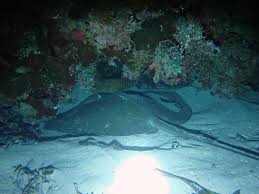
A night dive transforms a familiar reef into a completely different ecosystem. The fish that dominate the reef during daylight hours — parrotfish, wrasse, surgeonfish — retreat into reef crevices and produce a mucus cocoon that seals them from olfactory predator detection while they sleep. In their place, the nocturnal community emerges. Lionfish hunt the open reef face with their pectoral fins spread as prey-herding wings. Moray eels leave their daytime crevices and actively forage across the reef. Octopuses jet across open sand flats between reef patches. Crinoids — feathery filter feeders that fold away during daylight — open their feeding arms and become the most colourful reef objects in the torchlight. The reef at night is not the reef visited during the day. It is a different shift, working the same landscape with different species, different behaviours, and an atmosphere that torchlight and darkness make genuinely dramatic.
What Night Dives Reveal
Torchlight on a coral reef at night produces colour saturation impossible in daylight. Water absorbs red wavelengths progressively below 5 metres during daylight dives — the reef appears blue-green even at shallow depths. At night, a white torch beam delivers the full colour spectrum to 20 metres of depth. Corals appear in their actual orange, red, and yellow tones. Nudibranchs — the small, brilliantly coloured sea slugs that daytime divers barely notice — glow in extraordinary pattern detail in torchlight. Fluorescent corals and organisms, stimulated by the torch’s UV component, emit vivid green and orange fluorescence invisible under natural daylight conditions. Furthermore, the bioluminescence of plankton — each microscopic organism producing a flash of blue light when disturbed — creates a surrounding light show whenever the diver moves a hand or fin through the dark water.
Zanzibar Night Dive Sites
Zanzibar’s northern tip, around Nungwi and Kendwa, carries the most reliable night dive access on the island. The coral gardens at Mnemba Atoll — 5 kilometres off the north-east coast — produce exceptional night diving on the outer reef wall, where visibility frequently exceeds 20 metres and the reef wall descends below 30 metres against a current that brings pelagic species into range. Mnemba’s resident turtle population, which rests on the reef at night, provides the most common and spectacular night dive encounter at the site. The outer reef slope carries sleeping turtles in every 2 to 3-metre crevice along a 200-metre transect. Additionally, the Zanzibar Channel dive sites near Stone Town offer night diving on shallow, intact coral gardens accessible by short boat trip from the town’s waterfront.
Night Diving Safety and Equipment
Night diving requires standard PADI Open Water certification or equivalent and a minimum of 10 to 15 completed dives before the first night experience. The equipment additions beyond standard scuba gear are minimal — a primary torch, a backup torch, and a chemical light stick attached to the tank valve for surface identification. The primary torch should carry at least 100 minutes of burn time at full brightness to cover a standard 50 to 60 minute dive. Dive operators in Zanzibar provide all equipment including specialist torches for guests who do not carry their own. However, experienced night divers consistently recommend a personal primary torch — familiarity with the torch’s control placement and beam character in complete darkness reduces stress significantly.
Plan Your Safari
Night dives operate from dive centres at Nungwi and Kendwa on Zanzibar’s northern tip, Paje and Jambiani on the eastern coast, and from the exclusive camps on Pemba Island. Zanzibar’s dive season runs year-round with two peak seasons — July through September and December through February — when winds are consistent and visibility is highest. Pemba Island’s night diving, accessible from fly-in camps, provides the most remote and wildlife-dense night reef experience in Tanzania. Adding two nights in Zanzibar with a night dive at the end of any Tanzania northern circuit safari costs minimal travel time and delivers an aquatic wildlife encounter completely different from the savanna experience.
African Wild Trekkers designs Tanzania safari itineraries incorporating Zanzibar and Pemba Island marine extensions. Contact us to plan a Tanzania safari that combines the Serengeti’s land wildlife with the coast’s extraordinary nocturnal marine fauna.