Yellow-fronted Canary: East Africa’s Most Musical Small Seed-Eater
The yellow-fronted canary is one of East Africa’s most common and most melodious small birds. Its song is a rich, varied warbling that carries through garden and woodland habitats throughout the day. The species belongs to the canary and seedeater family. It is closely related to the domestic canary that has been bred from wild African seed-eaters.
The species is widespread and common across East Africa’s open woodland, garden, and cultivated habitats. It is one of the birds that most often surprises first-time visitors to the region. Observers who expect Africa’s small birds to be drab discover the yellow-fronted canary’s vivid combination of yellow, green, and grey at close range in camp gardens and along roadsides throughout the region.
Identification
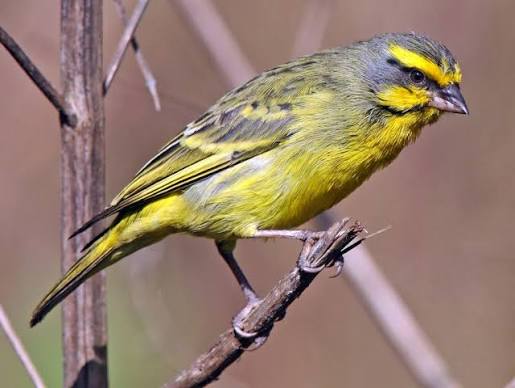
The yellow-fronted canary shows a bright yellow forehead and supercilium. The underparts are bright yellow with a greenish wash on the flanks. The back is olive-green with dark streaking. The wings are brown with pale feather edges. The bill is short and conical, adapted for cracking open grass seeds.
The grey cheek patch is the most useful single identification feature. The grey cheek contrasts with the surrounding yellow and green plumage and immediately distinguishes the yellow-fronted canary from the closely related brimstone canary, which shows a uniform yellow-green face without the grey cheek element.
The female is slightly duller than the male but retains the same basic colour pattern. Females show less intense yellow on the forehead and underparts. The grey cheek is present but less clearly defined than in the male. Both sexes share the characteristic conical bill shape that identifies the species as a seed-eater rather than an insectivore or nectar feeder.
Song and Behaviour
The yellow-fronted canary’s song is one of East Africa’s most pleasant garden bird sounds. The male sings from exposed perches throughout the day, producing a varied sequence of clear, melodious notes interspersed with trills and warbles. The song continues for extended periods without obvious pause and represents one of the longest sustained song bouts of any small bird in the region.
The species is social outside the breeding season, moving in flocks of 5 to 20 individuals through seeding grassland and garden areas. Feeding flocks work their way through grass seed heads systematically, hanging from the stems to access seeds that straight-perched feeding cannot reach. This acrobatic seed-eating behaviour is active and entertaining to watch at close range.
Furthermore, the yellow-fronted canary often joins mixed-species flocks with other small seed-eaters and insectivores. These mixed flocks move through the savanna and garden habitats together, providing foraging benefits through the collective detection of both food and predators that group movement enables.
Distribution and Habitat
The yellow-fronted canary is present across a broad range of East Africa from coastal habitats to highland areas up to approximately 2,500 metres altitude. The species inhabits open woodland, savanna, garden vegetation, and cultivated areas wherever grass seeds and small fruiting plants provide adequate food resources.
Kenya’s highland areas from the Rift Valley to the central highlands carry abundant yellow-fronted canary populations. Tanzania’s woodland zones throughout the northern and southern circuits and Uganda’s varied woodland environments from forest edge to open savanna all hold the species in accessible numbers.
The species is particularly common in lodge and camp garden environments where grass is allowed to set seed and where ornamental plants provide supplementary food. Any camp garden with a mixture of grass, shrubs, and trees in East Africa reliably attracts yellow-fronted canaries to within metres of outdoor seating areas.
Plan Your Birding Safari
Yellow-fronted canary sightings require no specialist effort on an East Africa safari. The species visits camp gardens, appears along roadsides, and sings from exposed perches throughout the region’s woodland and garden habitats without requiring any dedicated search.
Listening for the male’s prolonged melodious song from a camp garden in the early morning provides the most enjoyable introduction to this species for first-time East Africa visitors encountering a bird that sounds like a domestic canary singing from a wild perch.
African Wild Trekkers designs East Africa safari itineraries where the full diversity of the region’s small seed-eating birds is part of the daily camp and garden bird experience. Contact us to plan a safari that celebrates East Africa’s extraordinary small bird diversity alongside the main wildlife highlights.