Lake Bunyonyi Rowing Uganda: Paddling the Islands of Uganda’s Most Beautiful Lake
Lake Bunyonyi earns the title of Uganda’s most beautiful lake without serious competition. Thirty-seven islands scatter across the dark blue highland water. The Kigezi hills rise steeply from every shoreline. Tea plantations and forest patches cover the slopes in alternating bands of green. The lake sits at 1,962 metres above sea level, keeping temperatures cool and the air clear throughout the day. Rowing across these waters in a traditional dugout canoe guided by a local paddler provides a direct connection to the lake’s island communities, its birdlife, and its extraordinary Highland scenery. Moreover, it delivers a pace of travel that matches the lake’s unhurried character perfectly.
Dugout Canoe Tradition
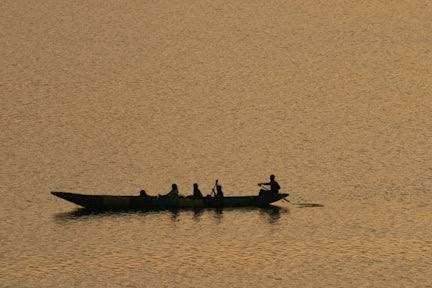
Lake Bunyonyi’s fishing communities have used hardwood dugout canoes for generations. Local craftsmen carve these boats from single large tree trunks typically African mahogany or a similar dense hardwood. The carving process takes several days and produces a boat shaped precisely for the lake’s conditions. Bunyonyi’s dugouts are narrow, stable, and low in the water well suited to the calm channels between islands. Local paddlers kneel in the stern and use a single-bladed paddle to steer and propel the canoe with quiet efficiency. Additionally, the boats carry fishing nets, agricultural produce between island communities, and school children crossing the lake each morning and afternoon.
Guests join local paddlers for guided island circuits of 1 to 3 hours. The paddler navigates the route, identifies birds, and explains island history along the way. The experience requires no previous paddling skill. However, guests who want to try the paddle themselves find the technique straightforward in calm water near the islands. The low freeboard and narrow hull make standing impossible, but seated paddling from the bow position is comfortable and effective.
Island Communities and History
Each of Bunyonyi’s islands carries a distinct history within the Bakiga community that has farmed these highlands for centuries. Punishment Island, near the western shore, was historically used by the Bakiga community to abandon unmarried pregnant people a practice that ended in the early twentieth century. Today it stands empty, but its history forms a significant cultural narrative that local guides explain with nuance and context. Bwama Island holds a former leprosy treatment hospital established in 1929, now converted to a school. Njuyeera Island, the largest of the group, carries active farming communities accessible by canoe from the mainland.
Birds of the Lake and Shore
Lake Bunyonyi’s birdlife rewards any rowing circuit with a rich species list. African fish eagle calls from perches on shoreline trees throughout the morning. Long-tailed cormorants dry their wings on rocks just above the waterline. Pied kingfishers hover above the shallows and plunge for small fish with precise vertical dives. Grey crowned cranes Uganda’s national bird feed in the marshy lake margins in small groups. Furthermore, papyrus warblers call from dense reed beds at the lake edges, and the grey-headed kingfisher flashes through shoreline vegetation at dawn and dusk. A 2-hour rowing circuit typically produces 20 to 30 bird species without any specialist effort.
Plan Your Safari
Lake Bunyonyi sits in Uganda’s south-west, 8 kilometres from Kabale town. It connects naturally to the Bwindi Impenetrable Forest gorilla trekking circuit most Uganda itineraries combining gorillas with the south-west pass through or near Bunyonyi. A half-day or full-day rowing excursion fits between the gorilla tracking day and the drive to the next destination without adding significant travel time. Lakeside camps and lodges on Bunyonyi’s shores arrange rowing excursions with local guides directly.
African Wild Trekkers designs Uganda safari itineraries combining Bwindi gorilla tracking with Lake Bunyonyi highland experiences. Contact us to plan a Uganda circuit that includes the lake’s island paddling alongside the forest wildlife of the south-west.