Red Colobus Uganda: The Endangered Primate of Kibale’s Forest Canopy
The Ugandan red colobus is the chimpanzee’s preferred prey. Chimpanzee hunting parties at Kibale Forest target red colobus troops almost exclusively among the available primate species. This predation pressure shapes every aspect of red colobus group behaviour troop size, alarm systems, male coalition behaviour, and canopy zone use all reflect the constant threat of a chimpanzee hunt from below. Watching red colobus respond to a chimpanzee hunting party in Kibale’s canopy is one of East Africa’s most dramatic primate encounters and one of the few places on earth where the daily predator-prey relationship between two primate species plays out in a forest visitors can walk through.
What Is the Ugandan Red Colobus?
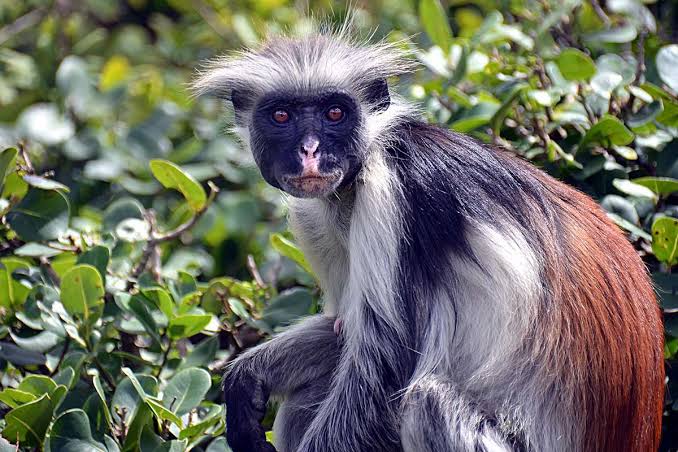
The Ugandan red colobus, Piliocolobus tephrosceles, is listed as Endangered on the IUCN Red List. Adults weigh between 5 and 12 kilograms. Body length reaches 45 to 67 centimetres with a long tail of 52 to 80 centimetres. The coat is a complex mixture of colours dark red-brown on the limbs and tail, grey-brown on the back, and white to pale grey on the underparts and face. A dark cap covers the crown. The face is pink-grey and relatively flat compared to cercopithecine monkeys. The species carries no thumb on the hand the colobus family name derives from the Greek for mutilated, referring to this absent thumb.
Chimpanzee Predation and Group Defence
Chimpanzee hunting parties at Kibale Forest pursue red colobus with coordinated strategies. One or more chimps climb into the canopy to flush colobus downward while others wait below. The hunt drives colobus into positions where escape routes narrow. Adult male colobus respond to hunting parties by mobbing — charging toward the chimps as a male coalition, producing alarm calls, and attempting to drive the hunters away. This male defence coalition reduces hunt success on large, well-defended troops. Smaller troops and isolated individuals face higher capture risk. The predation pressure directly selects for larger red colobus troop sizes bigger troops produce more effective male defence coalitions.
Leaf Diet and Forest Dependence
Red colobus eat leaves, leaf buds, flowers, and unripe fruit. Like the black and white colobus, they process leaves in an enlarged forestomach chamber that ferments the tough cellulose. Young leaves dominate the diet they carry higher protein and lower tannin levels than mature leaves. A red colobus troop moves through the canopy seeking the newest leaf growth, tracking the seasonal leaf flush across different tree species. This leaf-tracking behaviour drives the large home ranges that red colobus troops occupy compared to fruit-specialist primates in the same forest.
Endangered Status
Uganda’s red colobus faces pressure from habitat loss forest clearing around Kibale’s boundaries reduces available forest area. Hunting for bushmeat in unprotected areas outside the national park removes individuals from the wider population. Inside Kibale, the population is protected and relatively stable, but the species’ dependence on closed-canopy mature forest makes any further habitat loss immediately significant. The Kibale population represents one of the most important conservation populations for the species.
Plan Your Safari
Uganda’s Kibale National Park offers the finest red colobus viewing in Africa. The Kanyanchu chimpanzee tracking circuit passes through the core of the Kibale red colobus population. Troops of 30 to 80 individuals occupy the canopy directly above the walking trails. Dawn is the most active observation period red colobus feed intensively in the early morning canopy before retreating to shade rest during the midday heat. If a chimpanzee hunting party begins during the walk, the red colobus troop’s alarm system rapid sharp calls and male coalition mobbing of the chimps provides one of the forest’s most intense and memorable wildlife sequences.
African Wild Trekkers designs Uganda primate safari itineraries with Kibale chimpanzee tracking at the centre. Contact us to plan a Uganda forest safari that includes red colobus, chimps, gorillas, and the full range of East Africa’s forest primate community.