Tanzania and Uganda: Gorillas, Migration and Mountains in 14 Days
Tanzania and Uganda together create an East Africa safari itinerary that spans the two most dramatic wildlife encounters on the continent—mountain gorilla trekking in the Bwindi Impenetrable Forest and the Great Wildebeest Migration in the Serengeti. Optionally capping the circuit with a Kilimanjaro climb delivers an experience that moves from dense equatorial jungle to open savanna plains and then to an arctic summit environment within a single two-week trip. Few itineraries in the world pack this much genuine adventure into fourteen days. This guide explains exactly how to structure it.
Why Tanzania and Uganda Complement Each Other
Primates, Plains Game, and Peak Experiences
Uganda’s Wildlife Case
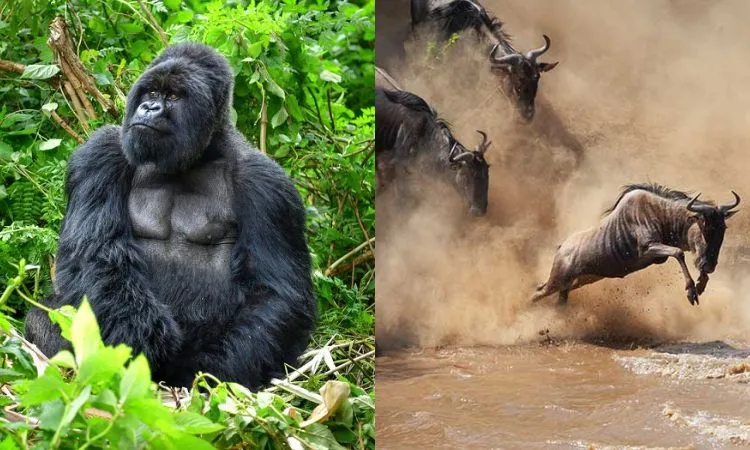
Uganda is the most biodiverse country in Africa by square kilometer, holding an extraordinary range of primates, birds, and large mammals across a relatively compact geographic footprint. Bwindi Impenetrable National Park in the southwest holds approximately half of the world’s remaining mountain gorillas, shared across the Virunga massif with Rwanda and the DRC. Gorilla trekking permits in Uganda cost USD 800 per person per trek in 2026—significantly less than Rwanda’s USD 1,500—making Uganda the more accessible option for budget-conscious travelers who still want the mountain gorilla experience. Uganda also offers chimpanzee trekking at Kibale Forest National Park, where the tracking success rate is among the highest in East Africa.
Beyond primates, Uganda adds tree-climbing lions in Queen Elizabeth National Park—a behavior observed in only two locations in the world, the other being Lake Manyara in Tanzania. Murchison Falls National Park on the Nile delivers exceptional elephant and buffalo game viewing combined with a dramatic river cruise to the base of the falls, where the Nile compresses through a seven-meter gap in the rock. Uganda’s bird list exceeds 1,050 recorded species, making it a paradise for birding enthusiasts who combine a gorilla trek with a forest bird walk in Bwindi or Kibale. The combination of Uganda and Tanzania therefore extends both the mammal list and the primate encounters well beyond what Tanzania alone delivers.
Tanzania’s Unique Contribution to the Circuit
Tanzania adds the open-plains experience that Uganda’s forest circuit entirely lacks. After days in the dense green of Bwindi or Kibale, arriving in the Serengeti and standing in a 4×4 with the roof open over 14,000 square kilometers of golden grass creates a dramatic sensory shift that most travelers describe as one of the trip’s highlights. The scale of Tanzania’s parks, the density of its predators, and the spectacle of the migration in motion are impossible to replicate elsewhere. Ngorongoro Crater adds a third completely different landscape and the opportunity to see black rhinos, which Uganda’s parks do not offer.
Tanzania also adds Zanzibar and Kilimanjaro as optional components that no Uganda itinerary can match. The choice of how to end the Tanzania leg—with a beach recovery on Zanzibar or a mountain climb on Kilimanjaro—depends on the individual traveler’s priorities and fitness. Zanzibar makes the most natural closing chapter for a gorilla-and-migration circuit by delivering complete physical rest after demanding days of trekking and early drives. Kilimanjaro suits travelers who came to East Africa specifically for the physical challenge and want the continent’s highest summit as the trip’s climax.
Building the 14-Day Tanzania-Uganda Itinerary
The Standard Two-Country Routing
Days One to Five: Uganda Primates and Parks
The Uganda leg works best across five days: arrival in Entebbe followed by a scenic drive or short flight to Bwindi or Kibale for two to three nights of gorilla or chimpanzee trekking, then a transit day to Queen Elizabeth National Park or Murchison Falls before flying out of Entebbe to connect to Kilimanjaro or Dar es Salaam. Bwindi and Kilimanjaro are not connected by direct flight, so the routing involves an Entebbe connection and a transit of three to five hours, including the connection time. Flying between Uganda and Tanzania eliminates a full day of overland travel and makes the five-day Uganda segment feel comfortably paced rather than rushed.
Gorilla trekking in Bwindi is the itinerary’s physical centerpiece for most travelers. The trek begins at the national park gate at 0800 after a briefing from the park ranger, moves through forest on tracks that range from gentle to steep and scrambling, and ends when the tracker team signals that the gorillas are located. The hour spent with the family follows strict protocols designed to maintain the gorillas’ habituation without causing stress—no loud voices, no flash photography, and no eating or drinking in the gorillas’ presence. Uganda’s multiple habituated families mean that permit availability is marginally better than Rwanda’s, though advance booking is still essential for peak months.
Days Six to Fourteen: Tanzania Safari and Optional Kilimanjaro
Nine days in Tanzania across the combined circuit allow three full days in the Serengeti, one full day at Ngorongoro Crater, one night in Tarangire en route, and then either three nights in Zanzibar or three nights for the start of a Kilimanjaro acclimatization trek. Three days in the Serengeti is the minimum needed to feel the park’s scale—driving between the southern Ndutu area, the central Seronera corridor, and the northern Lobo section takes time, and wildlife in each section behaves differently.
Two full game drives per day in the Serengeti across three days adds up to approximately thirty hours of wildlife viewing, which is transformative.
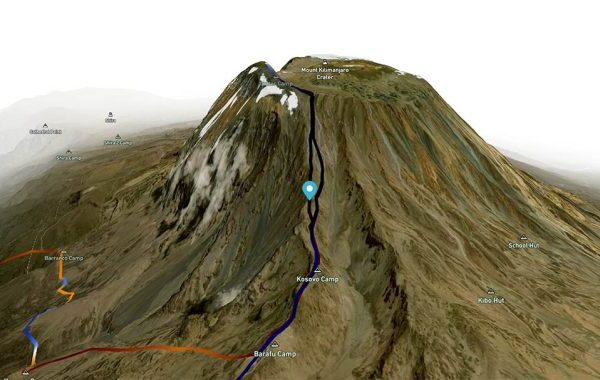
The Kilimanjaro option requires the full seven to eight days on the mountain, which cannot fit into the nine Tanzania days without shortening the safari component. Most travelers doing both the Uganda primate circuit and Kilimanjaro in a single trip need eighteen to twenty-one days total, and the itinerary works best as Uganda first, the Tanzania safari second, and Kilimanjaro as the closing chapter before the Zanzibar beach recovery at the end. African Wild Trekkers builds extended Tanzania-Uganda-Kilimanjaro itineraries for clients who have the time and fitness for the full circuit.
Uganda Gorilla Permits and Logistics
Booking and Border Practicalities
Uganda Gorilla Permit Process
The Uganda Wildlife Authority issues mountain gorilla trekking permits for Bwindi Impenetrable Forest at USD 800 per person per trek in 2026. The permits cover a single gorilla family visit of one hour, and each of Bwindi’s multiple habituated families receives a limited number of visitors per day. Booking six to twelve months in advance is recommended for the June-September peak season and for the Christmas-New Year window.
Uganda typically has slightly better permit availability than Rwanda due to the larger number of habituated families across Bwindi’s four gorilla trekking sectors—Buhoma, Ruhija, Rushaga, and Nkuringo—but availability tightens quickly during school holiday periods in the European and North American markets.
The USD 800 permit is non-refundable in the standard cancellation scenario. Travel insurance covering non-refundable permits and including medical evacuation to Kampala or Nairobi is essential for any Uganda trekking itinerary. African Wild Trekkers manages Uganda permit applications on behalf of clients simultaneously with Tanzania camp bookings, ensuring both components are confirmed before any client payment is processed.
The team has established permit booking relationships with the Uganda Wildlife Authority through its licensed tour operating partners and advises on which Bwindi sector best suits your specific dates and physical capability.
Flights and Border Logistics Between Uganda and Tanzania
The most practical routing between Uganda and Tanzania for the combined safari itinerary flies from Entebbe to Nairobi and then connects to Kilimanjaro International Airport. Multiple carriers operate this connection daily, with total journey time, including the Nairobi transit, typically running three to five hours.
Direct Entebbe-to-Dar es Salaam flights exist on some schedules but are less frequent and may involve longer connection times than the Nairobi hub route. African Wild Trekkers selects the best connection for each client’s specific travel dates and coordinates the Tanzania arrival transfer from the airport directly to the first camp or Arusha hotel.
Tanzania and Uganda maintain open travel arrangements for most nationalities, and travelers who already hold a Uganda visa on arrival or East Africa Tourist Visa should still obtain a separate Tanzania e-visa before departure. Uganda is one of the three countries the East Africa Tourist Visa covers alongside Kenya and Rwanda, but Tanzania is not part of that arrangement as of 2026.
African Wild Trekkers confirms visa requirements for both countries explicitly during the booking process and flags the Tanzania e-visa application deadline well in advance of departure.
Costs and Budgeting for Tanzania-Uganda
What the Combined Circuit Costs
Breaking Down the Budget
A fourteen-day Tanzania-Uganda combined safari at a mid-range accommodation level will cost approximately USD 8,000 to USD 12,000 per person in 2026, including Uganda gorilla permits, Tanzania park fees, accommodation, guiding, and all internal flights but excluding international flights to and from East Africa.
The Uganda gorilla permit at USD 800 represents a single large fixed cost, while Tanzania park fees add approximately USD 350 to USD 500 depending on which parks are included. Mid-range lodge accommodation in Uganda runs USD 250 to USD 400 per person per night, while Tanzania mid-range camps run USD 400 to USD 600 per person per night, including meals.
The luxury tier pushes total costs to USD 15,000 to USD 25,000 per person for the fourteen-day circuit, with exclusive lodges in Bwindi and the Serengeti commanding the highest rates. The budget tier—using Uganda’s Forest Camp Bwindi for the gorilla segment and Tanzania camping circuits for the Serengeti and Ngorongoro—can reduce total costs to USD 4,000 to USD 6,000 per person for the same fourteen days.
with the Uganda permit as the largest fixed cost that does not change with accommodation tier. African Wild Trekkers quotes across all tiers and matches the itinerary to any reasonable budget once the gorilla permit and park fees are accounted for.
Value Comparison: Uganda Versus Rwanda for Gorilla Trekking
The USD 700 difference between Uganda’s USD 800 permit and Rwanda’s USD 1,500 permit is the primary financial consideration for travelers choosing which country to add to their Tanzania circuit. Uganda delivers the same mountain gorilla experience at a lower cost, with more diversity in the surrounding wildlife activities (Kibale chimpanzees, Queen Elizabeth tree-climbing lions, and Murchison Falls boat cruise) than Rwanda’s Volcanoes National Park alone offers.
Rwanda’s advantages are a shorter distance from Kigali to the gorilla sector, a newer and more streamlined tourism infrastructure, and a slightly more predictable trek duration due to the compact geography of the Virunga sector.
For travelers on a fourteen-day combined circuit choosing purely on wildlife value per dollar, Uganda offers more activity options at a lower permit cost. For travelers who prioritize ease of logistics and the shortest possible travel times between the airport and the gorilla habitat, Rwanda’s compactness is a genuine advantage.
African Wild Trekkers advises clients on this comparison directly during the booking consultation and builds itineraries around either country based on the client’s specific budget and priorities.
Plan Your Safari
A Tanzania-Uganda combined itinerary brings together the two most extraordinary wildlife experiences in East Africa — mountain gorilla trekking and the wildebeest migration — within a two-week circuit that also allows a Kilimanjaro or Zanzibar finale.
African Wild Trekkers manages all cross-border logistics, gorilla permits, Tanzania camp reservations, and internal flights as a single coordinated package across both countries.
Every Tanzania-Uganda booking includes pre-departure documentation for both countries: gorilla trekking briefing, Uganda border logistics, Tanzania park entry procedures, and Zanzibar transfer confirmation in a single organized document. The team is reachable throughout the trip in both Uganda and Tanzania and has on-the-ground contacts in each country to resolve any situation that arises. Clients travel knowing that every transition is already planned and confirmed.
Contact African Wild Trekkers at africanwildtrekkers.com/contact with your Tanzania-Uganda travel dates and group size, and we will build a personalized two-country itinerary with gorilla permits and Serengeti camp bookings within 24 hours.