Why Combine Ngorongoro and Maasai Mara?
Two of Africa’s Greatest Wildlife Arenas
Ngorongoro Crater: The Eighth Wonder
Ngorongoro Crater Overview
Ngorongoro Crater lies in northern Tanzania and forms the world’s largest intact volcanic caldera. The crater floor covers 260 square kilometers and supports dense resident wildlife populations year-round. Its steep walls trap animals inside, creating one of Africa’s highest wildlife densities.
As a result, visitors often see the Big Five in a single morning drive. Black rhinos thrive here due to strong protection and open grassland visibility. The Lerai Forest shelters large-tusked elephants with some of Africa’s rarest ivory genetics.
Maasai Mara Overview
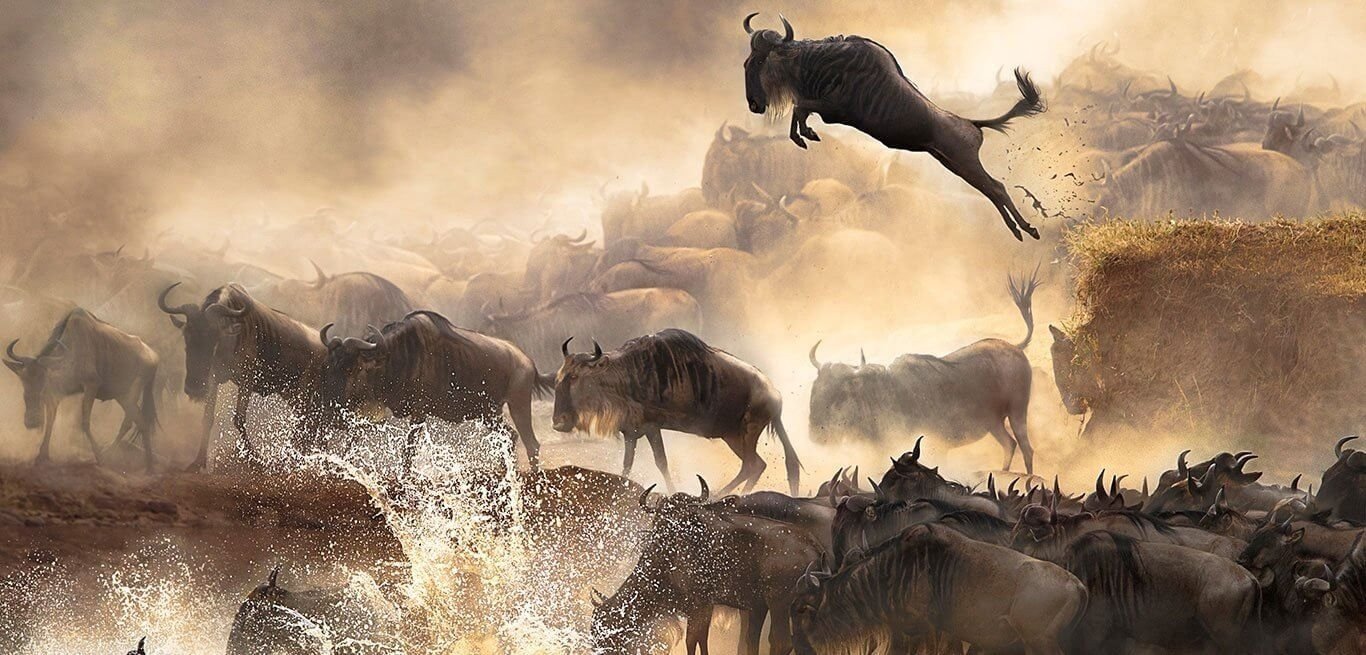
Maasai Mara National Reserve sits in southwest Kenya as part of the Serengeti ecosystem. It hosts the world-famous wildebeest migration between July and October.
During this period, over one million wildebeest cross the Mara River in dramatic scenes. Outside migration season, the Mara still supports exceptional resident big cat populations. Lions, leopards, and cheetahs remain highly visible across open plains and riverine areas.
The Mara Triangle enforces strict vehicle limits and strong anti-poaching regulations. In contrast, private conservancies allow night drives, walking safaris, and off-road tracking. Together, they create one of Africa’s most diverse safari systems.
Planning the Combined Itinerary
Crossing the Border Between Tanzania and Kenya
The Namanga border connects Tanzania and Kenya for overland safari routes.
Crossing usually takes one to two hours when travel documents are ready. Most travelers move from Arusha through Namanga toward Nairobi or the Maasai Mara.
Alternatively, flights between Kilimanjaro and Mara airstrips save time and reduce travel fatigue.
Visa requirements differ between countries and must be prepared in advance. Tanzania requires a separate visa, while Kenya uses an electronic travel authorization system. The East Africa Tourist Visa excludes Tanzania and does not apply here. African Wild Trekkers confirms visa requirements based on each traveler’s nationality before departure.
Optimal Timing for Both Destinations
The best safari timing depends heavily on the migration calendar. From July to October, the Maasai Mara hosts peak river crossing activity. Ngorongoro Crater remains excellent year-round due to resident wildlife populations.
Therefore, combining both destinations during this period delivers outstanding results. June through October also provides dry conditions and excellent visibility across both regions. February offers another strong window due to the Serengeti calving season nearby. However, April and May often bring heavy rains that affect road conditions.
Recommended Camp Combinations
A ten to fourteen-day itinerary works best for both destinations. Three nights suit Ngorongoro, while five to seven nights suit the Maasai Mara. Crater rim lodges provide dramatic views and early descent access. They include properties such as Ngorongoro Crater Lodge with high-end facilities. Outer conservation area lodges offer a more immersive bush experience. They also provide better value compared to crater rim properties.
In the Maasai Mara, conservancy camps allow exclusive wildlife experiences. They also support night drives, walking safaris, and off-road tracking. African Wild Trekkers matches camps based on budget, style, and activity preferences.
Game Viewing Highlights Across Both Parks
Big Five Opportunities
Combining Ngorongoro and Maasai Mara creates a strong Big Five itinerary. Ngorongoro delivers reliable rhinos, elephants, buffalo, and dense predator sightings. The Maasai Mara excels in lions, leopards, and cheetahs on open plains. Together, both destinations almost guarantee Big Five sightings within one trip.
Hippos and crocodiles are also commonly seen in both ecosystems. During migration, the Mara River becomes a major predator hotspot.
Birdlife and Specialist Species
Ngorongoro Crater supports diverse birdlife across grasslands, forests, and wetlands. Species include flamingos, martial eagles, kori bustards, and crowned cranes. Oxpeckers frequently ride buffalo and rhinos in close viewing conditions. The Mara also supports rich birdlife along rivers and open savannas.
African fish eagles, rollers, and bee-eaters are commonly seen throughout. Migratory birds increase diversity between November and April each year.
Plan Your Safari
A combined Ngorongoro and Maasai Mara safari requires careful cross-border planning. Logistics include visas, flights, park fees, and coordinated camp bookings. African Wild Trekkers manages the entire itinerary as a single seamless package. This ensures smooth movement between Tanzania and Kenya without travel gaps.
The package includes park fees, accommodation, guiding, transfers, and flight coordination. It also balances travel time with maximum wildlife viewing opportunities each day.
Contact African Wild Trekkers at africanwildtrekkers.com/contact with your travel details for planning within 24 hours.