When to Visit Amboseli National Park
How Seasons Affect Amboseli’s Elephant Viewing
The Dry Season Advantage: June Through October
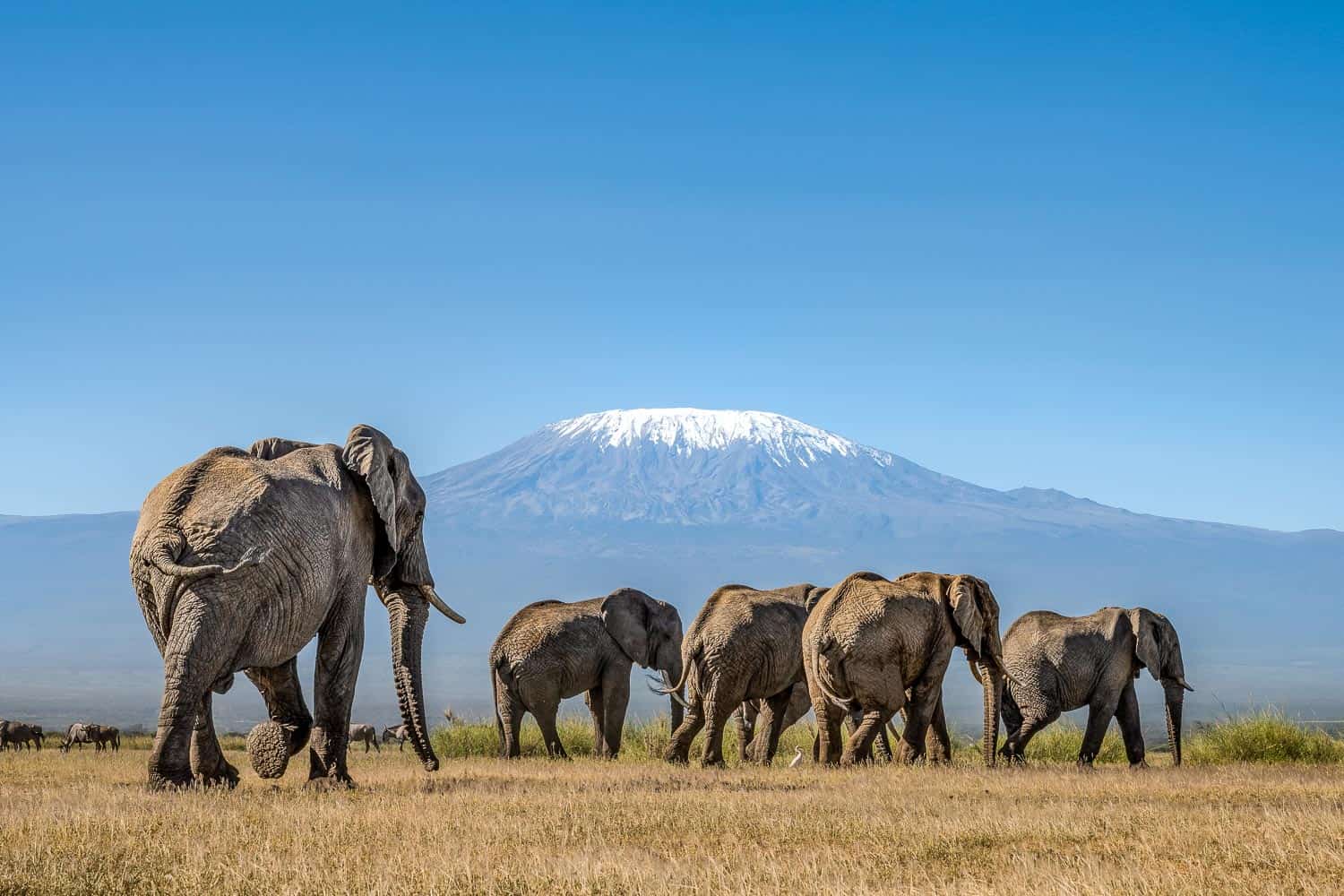
Amboseli’s dry season from June through October represents the park’s peak game viewing period for several reinforcing reasons. Rainfall drops to near zero across much of the park between July and September, concentrating elephants and other wildlife around the permanent swamps of Enkiama and Longinye. These swamps are fed year-round by underground springs from Kilimanjaro’s snowmelt. Elephants from multiple family groups converge here daily in numbers that can exceed 600 individuals in a single afternoon. This creates the closest modern equivalent to historical elephant concentrations recorded in the 1970s before poaching reduced populations. The swamps become the park’s main wildlife hub, and two to three hours at the swamp edges in late afternoon deliver unmatched elephant-density viewing in Kenya.
Dry season vegetation across Amboseli’s plains becomes sparse and open, which some visitors find stark but photographers value highly. The lack of tall grass creates long sightlines across flat terrain. Elephant families moving across the plains remain visible from several kilometers away. Guides can track herds continuously from morning movement to evening return to water. Kilimanjaro visibility also peaks during this season, especially in June and July. Early mornings often deliver clear mountain views before cloud build-up begins. July is widely considered the best month for Amboseli elephant photography in most normal weather years.
The Green Season: November Through May
Amboseli’s rainy seasons include short rains from October to December and long rains from March to May. These transform the park dramatically from dry plains to lush grassland. The open areas turn green quickly after rainfall and support larger zebra and wildebeest distributions. Elephants disperse more widely because water becomes available across the park. This reduces swamp concentration sightings but increases overall range-based encounters.
The long rains from March to May are the most challenging period for access. Heavy rainfall can turn black cotton soil tracks into difficult mud sections. Even four-wheel-drive vehicles struggle in extreme conditions. Kilimanjaro visibility often drops for extended periods due to cloud cover. However, birdlife peaks during this season with migratory species arriving on temporary wetlands. Flamingos, pelicans, and wading birds expand the park’s bird list to over 450 species. Wildlife remains visible, but movement requires more patience and flexible routing.
Month-by-Month Amboseli Calendar
January, February and March
January combines short rains’ aftermath with improving conditions and strong Kilimanjaro visibility. Migratory birds from Europe arrive in large numbers during this period. Elephant families range widely due to dispersed water availability. February typically becomes drier with clearer skies and better mountain visibility. It is a strong transitional photography month.
March marks the start of the long rains in most years. Afternoon thunderstorms develop over Kilimanjaro and spread across the park. Conditions become progressively wetter and more variable. Elephant calving peaks during this broader wet season window. Newborn calves appear frequently in family groups across the plains.
April, May and June
April and May represent peak long-rain conditions. Roads can become difficult, and visitor numbers drop significantly. The landscape becomes intensely green with flowering vegetation across the park. Photography shifts toward landscape-heavy compositions rather than dry-season minimalism. After storms, lighting conditions can be especially strong for atmospheric images.
June marks the transition into dry season. Rainfall decreases and tracks begin to firm. Kilimanjaro visibility improves steadily through the month. Early June often combines green landscapes with improving wildlife concentration. This creates a balanced viewing period before peak season arrival.
July Through December
July to September represents peak Amboseli season. Elephant concentrations at swamps reach maximum density. Predator activity increases due to predictable prey movement. Kilimanjaro views are most consistent during early mornings. October introduces short rains and gradual dispersal of wildlife.
November and December bring lighter rains and improved bird diversity. Flamingo populations increase around seasonal water areas. December includes a short peak holiday pricing period. Early December remains a strong value window before festive demand rises.
Practical Amboseli Planning Information
Getting There and What to Book
Amboseli lies approximately 240 kilometers southeast of Nairobi near the Tanzania border. Road access takes around four hours via Emali Junction. The final section includes variable murram road conditions depending on rainfall. Flights from Wilson Airport take about 45 minutes and provide faster access. This option is preferred for multi-park itineraries or short stays.
Accommodation ranges from mid-range lodges to luxury tented camps. Ol Tukai, Serena Safari Lodge, and Tortilis Camp are established options. Conservancy camps outside the park allow off-road driving and night game drives. Swamp-edge location is the most important factor in camp selection. Proximity to the Enkiama and Longinye swamps determines daily elephant viewing quality.
Plan Your Safari
Amboseli timing depends strongly on seasonal priorities such as elephant density, landscape conditions, and Kilimanjaro visibility. African Wild Trekkers matches travel dates with optimal seasonal windows and selects camps based on real-time swamp activity reports.
The package includes swamp-edge accommodation, guided game drives, park fees, internal flights, and expert briefings on elephant movements and mountain visibility. Multi-park combinations with Maasai Mara, Tsavo, or Laikipia are arranged through coordinated flight routing.
Contact African Wild Trekkers at africanwildtrekkers.com/contact with your travel dates and priorities, and we will design your Amboseli safari within 24 hours.