Cheetah Coalition Males: The Brotherhood That Rules the Open Plains
A single male cheetah holds a small territory and hunts alone. A coalition of three brothers holds a territory ten times larger and hunts prey twice the size. The difference in lifetime reproductive success between a solitary male and a coalition member is dramatic. Male cheetah coalitions represent one of the most effective social strategies in African carnivore biology.
What Is a Cheetah Coalition?
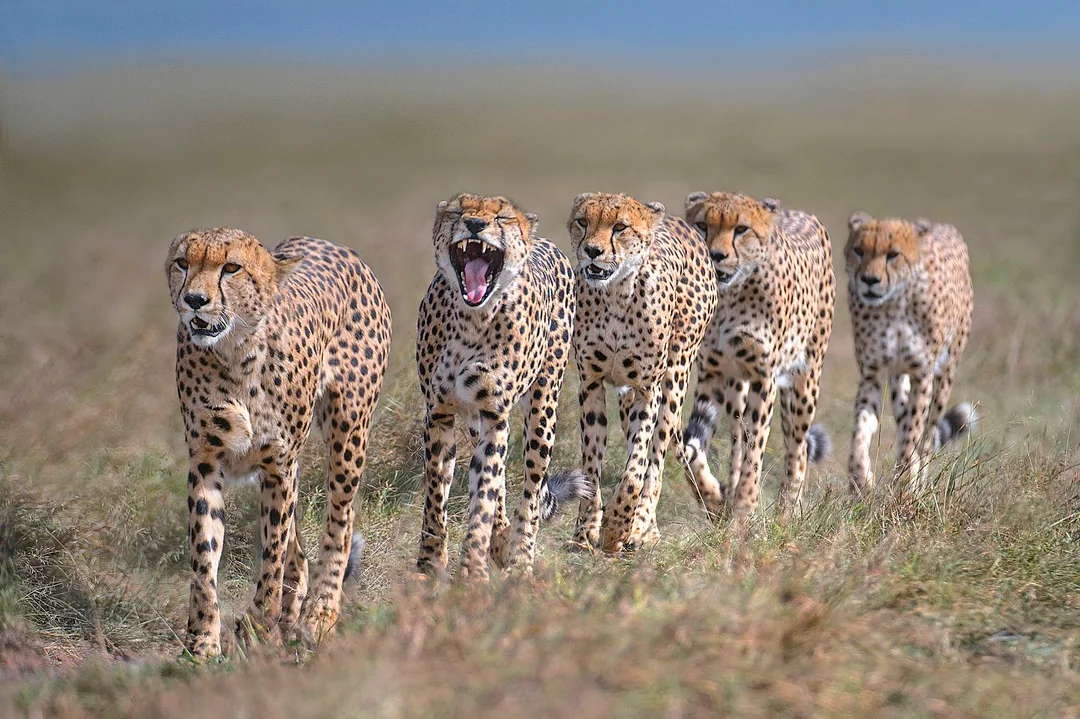
A cheetah coalition is a permanent group of two to four male cheetahs that live, hunt, and hold territory together. Coalition members are almost always siblings — brothers born in the same litter. Unrelated males occasionally form coalitions after meeting during the nomadic phase following dispersal, but sibling coalitions are more stable and more common.
Female cheetahs are solitary. They raise cubs alone and hold ranges rather than territories. Male cheetahs, by contrast, actively defend fixed territories. Coalition males hold these territories against rival males through scent marking, calling, and direct confrontation. A coalition’s combined size and coordination make it more effective at territorial defense than any single male.
How Coalitions Form and Develop
Brothers disperse from their mother together between eighteen months and two years old. They enter a nomadic phase as a group. This nomadic period lasts one to two years. The brothers hunt together, rest together, and groom each other through this period. The bond deepens through shared hardship. By the time the coalition establishes a territory, the members operate with a coordination that only years of cooperation produce.
Coalition males groom each other extensively — far more than any other cheetah social unit. This grooming reinforces social bonds and reduces tension over food. At kills, coalition members eat side by side from the same carcass. Conflict over food is rare in well-established coalitions. When it does occur, it is brief and quickly resolved through submission postures rather than fighting.
Territory Size and Defence
Solitary male cheetahs hold territories of 37 to 120 square kilometers in the Serengeti. Coalition males hold territories of 126 to 780 square kilometers in the same ecosystem. This size difference reflects the coalition’s ability to patrol and defend against rival males. A coalition can split up to cover more ground simultaneously without losing territorial control.
Territorial marking involves urine spraying on prominent trees, termite mounds, and rocks. Coalition members spray the same objects sequentially—each member’s scent reinforcing the collective territorial claim. This layered chemical message communicates a group presence to any rival male that investigates. Rivals assessing the scent markings of a coalition approach established territory boundaries with significantly more caution than they approach solitary male markings.
How Coalition Males Hunt Differently
Coalition males target larger prey than solitary males consistently. Single males specialize in Thomson’s gazelles and small impalas. Coalitions regularly hunt adult wildebeest, zebra foals, warthogs, and adult topis. The ability to tackle larger prey reduces competition with other cheetahs and provides more food per successful hunt. A wildebeest carcass feeds three adult male cheetahs, with enough remaining to return to the following day.
Coordinated hunts are more complex in coalitions. One member initiates the chase while others flank the target. The flanking reduces the prey’s escape angles. When the fleeing animal turns from one coalition member, it runs toward another. This pincer effect increases kill success rates significantly compared to straight-line pursuit by a single animal. Coalition males achieve higher kill rates per hunt attempt than solitary males in long-term Serengeti data.
Coalition Males and Females
The males interact with females only during mating. Female cheetahs entering a coalition’s territory are located through scent tracking and direct visual searching. The coalition members compete internally for mating access when a female is in oestrus. The most dominant coalition member mates first, but subordinate members also mate. This means multiple coalition members may father cubs from the same female.
Females spend as little time as possible in coalition male-controlled territories. The presence of multiple adult males poses a risk to any cubs she is carrying or raising. Coalition males will kill cubs when they encounter them — a strategy that brings the female back into oestrus. Females with cubs avoid coalition male territories and raise their young in areas with lower male pressure.
Plan Your Safari
Named cheetah coalitions are among the most celebrated wildlife subjects in the Maasai Mara and Serengeti. The Tano Bora coalition of five males in the Maasai Mara became one of the most photographed cheetah groups in Africa. Coalition males are larger, bolder, and more visible than solitary cheetahs. They rest on open termite mounds and make themselves highly visible as a territorial advertisement.
African Wild Trekkers designs Kenya and Tanzania safaris with guides who know the current coalition locations and behaviors. Contact us to plan a trip built around coalition cheetah encounters.