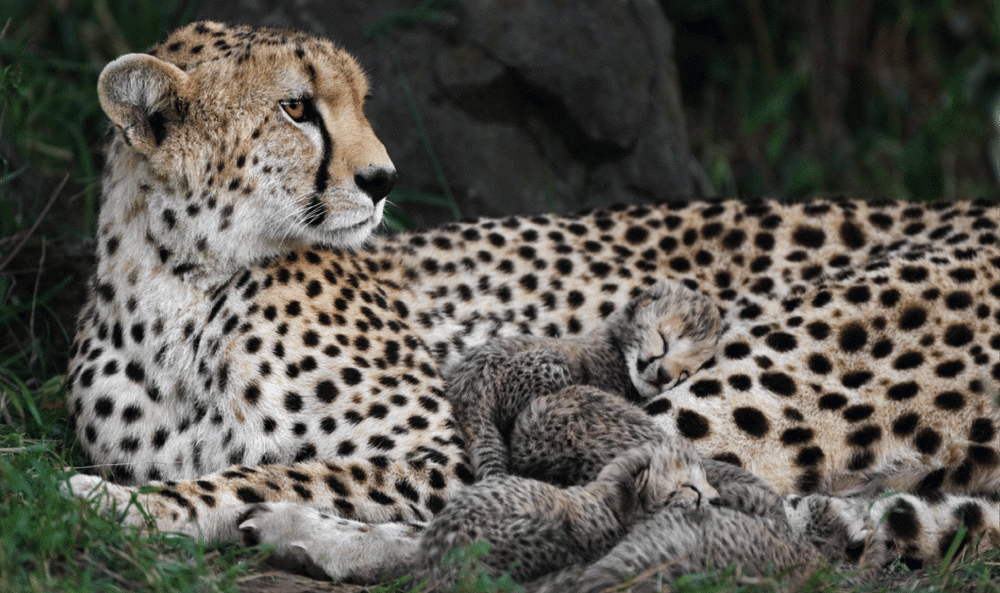
Cheetah Cub Survival: The Brutal Odds Facing Africa’s Fastest Cat
The cheetah is the fastest land animal on earth. Its cub is one of the most vulnerable. More than half of all cheetah cubs die before they reach three months old. The causes are numerous and relentless. Lions, leopards, hyenas, and even eagles take cubs. The same open savanna that gives the cheetah its hunting advantage offers little protection for its young. Understanding cheetah cub survival explains why cheetah populations remain fragile despite good habitat.
Litter Size and Birth
A female cheetah gives birth to between one and eight cubs, with three to five being the most common litter size in East Africa. Birth takes place in dense cover — thickets, tall grass, or rocky outcrops. The mother gives birth alone and nurses her cubs for the first weeks without returning to the open. She moves the litter to a new den site every few days. Scent accumulation attracts predators, and a moved litter reduces detection risk.
Cubs are born blind and helpless. Their coats carry a distinctive silver mantle of longer grey hair on the back and neck. This mantle is thought to mimic the honey badger’s coloring—an animal most predators avoid. Whether predators are actually deterred by this resemblance remains debated, but the mantle is present in young cubs across the cheetah’s entire range and disappears as they mature, which suggests it serves a purpose.
Predation: The Primary Killer of Cubs
Lions kill cheetah cubs deliberately and opportunistically. A lion that finds a cheetah den destroys the litter without hesitation. Lions suppress cheetah reproduction in areas where they are very dense. Studies in the Serengeti found that cub mortality from lions accounted for over 70 percent of total cub deaths in heavily lion-occupied areas. In areas with lower lion density, cub survival improved significantly.
Leopards kill cubs too, though less frequently than lions. Spotted hyenas are a major threat in areas with high hyena density. Eagles — particularly martial eagles and tawny eagles — take very young cubs. Baboon troops have been documented killing cheetah cubs when a mother is briefly absent. The predation pressure comes from multiple directions simultaneously.
How Mothers Protect Their Cubs
A cheetah mother’s protective strategies are remarkable given her physical limitations. She cannot fight a lion or a hyena and survive. Her defense is concealment, mobility, and sacrifice. She keeps her cubs in the densest available cover, and she moves them frequently. She scans incessantly from elevated positions while they rest below her.
When a predator approaches, the mother distraction-displays—moving away from the cubs and calling loudly to draw attention to herself. This works reliably against single hyenas and jackals. Against lions, it is less effective. A mother cheetah facing a lion can only attempt to delay the attack long enough for the cubs to scatter and hide. Cheetah mothers in the Maasai Mara have been observed sustaining serious injuries from lions while attempting to protect cubs.
The Learning Phase: Juvenile Survival
Cubs that survive to three months old face a different set of challenges. They now accompany their mother on hunts. They learn to run and coordinate their movements with hers. Keeping cubs in formation during a hunt is energetically costly for the mother and reduces her hunt success rate. She must balance teaching with feeding.
Between six and twelve months old, cubs begin participating actively in hunts. They chase prey the mother has targeted. Their contributions are disruptive at first — they startle prey, arrive late, or interfere with the kill. Over time coordination improves. Cubs that reach twelve months with an intact family group have reasonable survival odds for the first time since birth.
Survival Rates: What the Data Shows
Long-term data from the Serengeti Cheetah Project shows that only about 5 percent of cubs born in high-lion-density areas survive to adulthood. In areas with lower predator pressure — certain conservancies around the Mara, parts of Amboseli, and large private ranches in Kenya — survival to adulthood reaches 20 to 30 percent. Protected area management that reduces lion and hyena density in core cheetah breeding areas improves cub survival measurably.
Females that successfully raise one litter to independence show significantly higher success with subsequent litters. Experience matters. A first-time cheetah mother makes den site choices and protective decisions that a seasoned mother does not. Experienced mothers choose denser cover, move cubs more frequently, and manage their own energy budget more efficiently during the long nursing and teaching period.
Plan Your Safari
Seeing a cheetah family with cubs is one of the most sought-after experiences on an East Africa safari. The Maasai Mara’s open conservancies — particularly Naboisho and Mara North — have documented cheetah mothers with cubs in most years. Tanzania’s Serengeti and Ngorongoro Crater produce regular cheetah family sightings. Kenya’s Amboseli ecosystem is also excellent, with cheetahs using the open short-grass plains around the swamp edges.
African Wild Trekkers times Kenya and Tanzania itineraries to coincide with active cheetah family sightings reported by our guide network. Contact us to build a safari around this remarkable and fragile cat.