Impala Facts Africa: The Antelope That Every Predator Wants for Dinner
The impala is the perfect prey animal. It is mid-sized enough to feed a lion or a leopard alone and is abundant enough to be found wherever there is suitable habitat.
It tastes good enough that cheetahs, wild dogs, hyenas, and crocodiles all prefer it given a choice. Leopards hoist it into trees routinely. Lions chase it across the Maasai Mara daily.
It survives all of this attention by being fast, agile, extremely alert, and capable of jumps that would stop any safari visitor cold.
What Is an Impala?
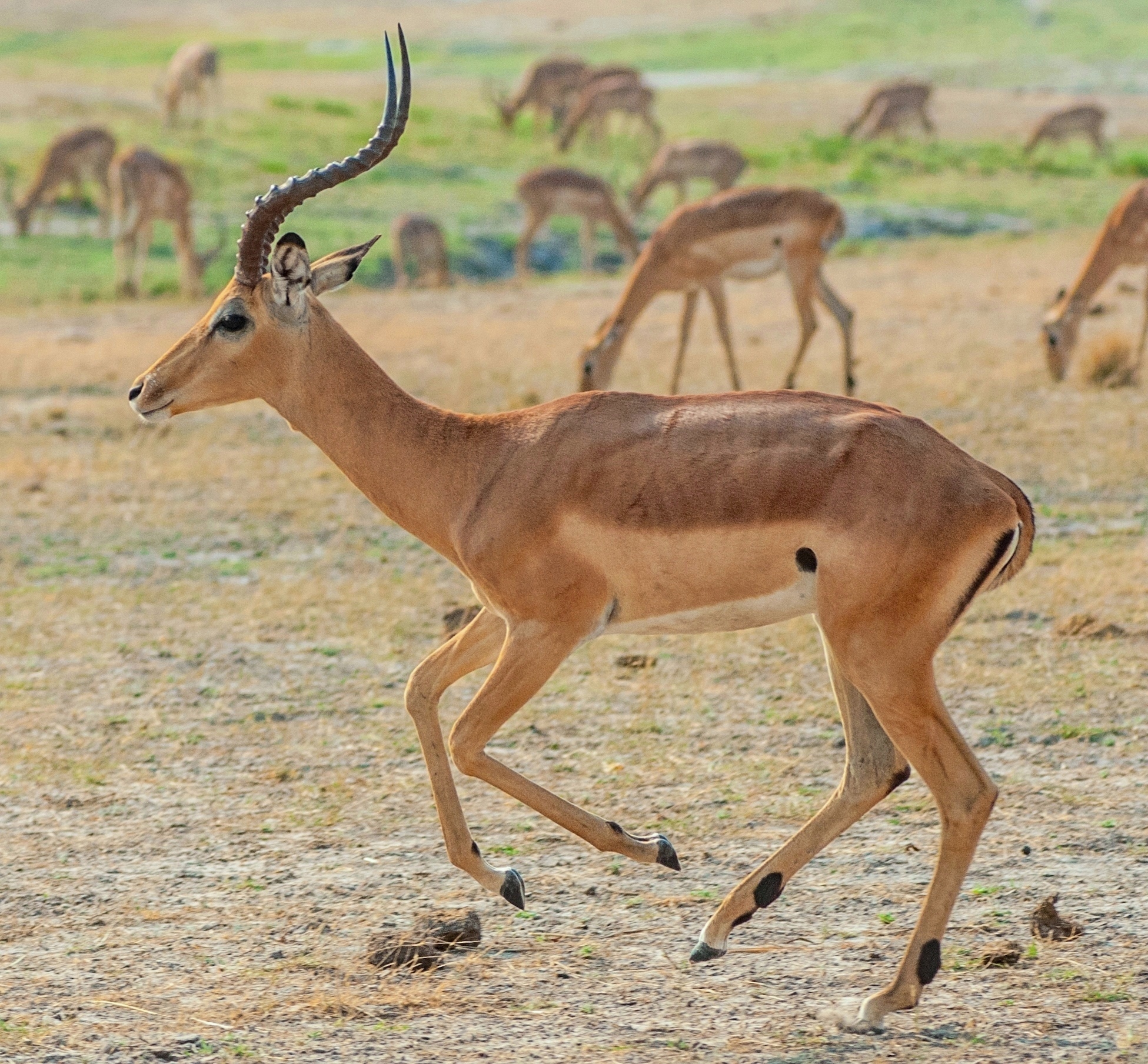
The impala, Aepyceros melampus, belongs to the family Bovidae. It is the sole species in the genus Aepyceros. An adult male weighs between 53 and 76 kilograms. Females are lighter at 40 to 53 kilograms.
Body length reaches 1.4 meters. The coat is tan-rufous above, with paler flanks and white underparts. The back carries a distinctive vertical black stripe on the hindquarters.
The species name means “black foot”—a reference to the black tufts on the heels of the hind legs.
Only males carry horns. The horns are lyre-shaped, heavily ridged, and reach between 45 and 92 centimeters. The horns are used in dramatic rutting combat during the breeding season.
Outside the rut, males in bachelor herds spar casually to maintain relative rank without serious escalation.
The Leap: Alarm and Confusion
The impala’s alarm response involves a series of leaps that reach 3 meters in height and over 10 meters in horizontal distance. These leaps are performed when a predator is detected at close range and pursuit is imminent.
The function of the high leaps—rather than simply running at top speed—has been explained as confusion for the predator. When an entire group of impalas leap simultaneously in multiple directions, the visual scene of 20 airborne animals crossing each other’s trajectories makes it extremely difficult for a pursuer to focus on and follow a single target.
The leaps also produce a “click” sound from the black heel glands as the legs extend. This sound may function as an alarm signal that is harder to localize than a vocal alarm—it comes from many directions as multiple animals leap, making it difficult for the predator to pin down where the individuals are relative to its current position.
The Rut: Male Competition and Territorial Exhaustion
The impala rut in East Africa typically peaks during the dry season. Territorial males become intensely vocalized and physically active, herding females aggressively and fighting rival males continuously.
The roar of a rutting male impala—a deep, resonant series of short barks—carries hundreds of meters and announces his territorial occupancy to every competitor in the area. Males may lose up to 30 percent of their body weight over a rut period that lasts three to four weeks.
Bachelor males challenge territorial holders continuously during the rut. Successful challenges oust the resident male from his herd. The displaced male joins the bachelor group and attempts recovery.
Males that enter the rut in poor body condition rarely hold herds for more than a few days before being displaced. Physical condition entering the rut is the primary determinant of reproductive success.
Allogrooming: The Impala’s Social Glue
Impalas practice mutual allogrooming at unusually high rates compared to other bovids. Two individuals stand head to tail and use their incisor teeth to comb through each other’s coats. This grooming reduces tick and ectoparasite loads on the head and neck—areas the animal cannot groom itself.
Studies show that impalas deprived of grooming partners carry significantly higher tick loads than those with access to partners. The grooming behavior is not incidental—it is a measurable health benefit that drives social grouping in this species.
Plan Your Safari
Impalas are the most common antelope in East Africa’s savanna parks. Every major park holds them in abundance. The Maasai Mara, Serengeti, Amboseli, Queen Elizabeth, and Lake Mburo all produce daily impala encounters.
The rut in the dry season months adds vocal drama and visible male competition to what is already one of the most watchable antelopes on the continent.
African Wild Trekkers covers impala habitat in every East Africa itinerary we design. Contact us to plan a safari that gives you time with all the layers of East Africa’s extraordinary wildlife—including the animals everyone sees but few truly watch.