Giraffe Feeding Behaviour: How the World’s Tallest Animal Eats and Drinks
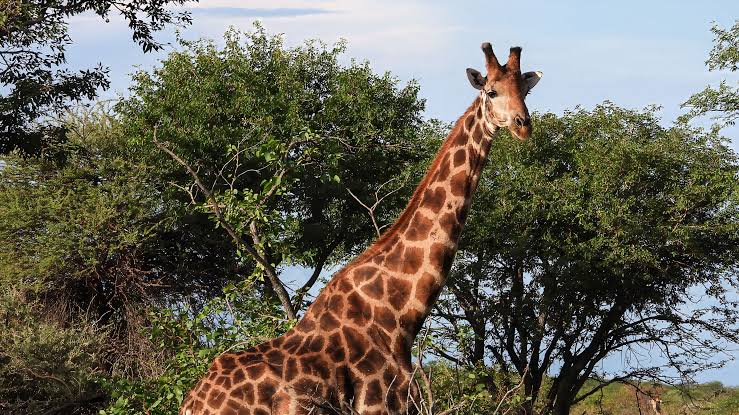
Everything about giraffe feeding behaviour follows from height. The 18-centimetre prehensile tongue strips leaves from thorny branches. A neck 2.4 metres long demands a cardiovascular system capable of pumping blood 3 metres upward to the brain. During drinking, the giraffe must splay its front legs wide to reach the waterhole surface — leaving itself unable to stand quickly if a predator approaches. Height defines the strategy. Every other aspect of giraffe biology follows from that single commitment.
The Prehensile Tongue: The Primary Feeding Tool
A giraffe’s tongue reaches 45 to 50 centimetres in length. Dense melanin pigmentation gives it a dark grey-blue-black colour — protecting the exposed surface from sunburn during hours of feeding in open canopy. The tongue wraps around branches, selects individual leaves, and strips them from the stem in a precise, controlled movement. A flexible upper lip works alongside the tongue to manipulate branches around thorns. Acacia thorns reach up to 10 centimetres in length — the tongue navigates between them without contact through tactile precision built over a lifetime of feeding in thorny trees.
Tongue use extends to social behaviour. Giraffes lick each other across the neck and back during grooming sessions that maintain pair bonds and alliances. The tongue’s reach allows grooming of areas the giraffe’s own mouth cannot access on itself.
The Preferred Diet: Acacia and Other Canopy Foliage
Giraffes browse canopy at heights of 4 to 6 metres — above the reach of any other savanna browser except the elephant. In the Maasai Mara and Serengeti, whistling thorn acacia, umbrella acacia, and various Commiphora species are the primary food trees. Camelthorn acacia provides the most reliable dry-season food in East Africa’s drier zones. Selective browsers, giraffes choose the highest-nitrogen, highest-protein leaves on each tree before moving on.
Giraffes are ruminants with a four-chambered stomach and they regurgitate cud for re-chewing. Extended rumen fermentation breaks down the cellulose and tannins in Acacia leaves, many of which contain chemical defences that reduce palatability. Large body mass and a long gut transit time allow processing of large food volumes at moderate nutritional yield — a volume strategy rather than a quality strategy.
Drinking: The Dangerous Moment
Drinking is the giraffe’s most vulnerable behaviour. Reaching the waterhole surface requires splaying the front legs outward and lowering the head through an awkward 10-to-15-second positioning sequence. During those seconds the giraffe cannot stand quickly, run, or watch for threats effectively. Lions that know a giraffe’s regular waterhole visit pattern position themselves for ambush at the drinking site.
Giraffes respond with extreme vigilance. Before drinking, they approach slowly and stop 50 to 100 metres out, watching for 5 to 15 minutes. Drinking itself is fast — 35 to 40 litres in 2 to 3 minutes — followed by an immediate withdrawal. Multiple individuals visiting a waterhole together reduce individual risk through collective vigilance.
Dietary Water: Independent of Surface Water
Acacia leaves contain 50 to 60 percent water by weight during the wet season. Giraffes extract significant water from browsing, reducing dependence on surface sources. During the dry season, leaf moisture drops and surface water dependency increases. Even in the dry season, however, giraffes persist longer without surface water than most similarly sized savanna mammals. This independence reduces — though does not eliminate — the waterhole vulnerability.
Plan Your Safari
The Maasai Mara and Serengeti produce giraffe feeding encounters year-round. Watching a giraffe tongue strip leaves from a whistling thorn at eye level from a vehicle roof — no zoom required — ranks among East Africa’s most intimate wildlife encounters. Amboseli and Samburu both offer excellent giraffe watching during the early morning feeding hours.
African Wild Trekkers designs Kenya and Tanzania safari itineraries around the full range of giraffe behaviour. Contact us to plan a safari that observes East Africa’s most distinctive animal in all its feeding and social complexity.