Gelada Baboon Ethiopia: The Grass-Eating Primate of the Simien Mountains
The gelada is not a baboon though it looks like one. It is the sole surviving member of an ancient primate lineage that split from the baboons millions of years ago. the only primate in the world that eats grass as its primary food.
It lives on the high Afroalpine plateaus and escarpment edges of Ethiopia’s Simien Mountains and Guassa plateau at altitudes above 2,000 metres. And it forms the largest primate aggregations in Africa sometimes exceeding 1,200 individuals in a single daytime foraging group on the Simien plateau.
What Is a Gelada?
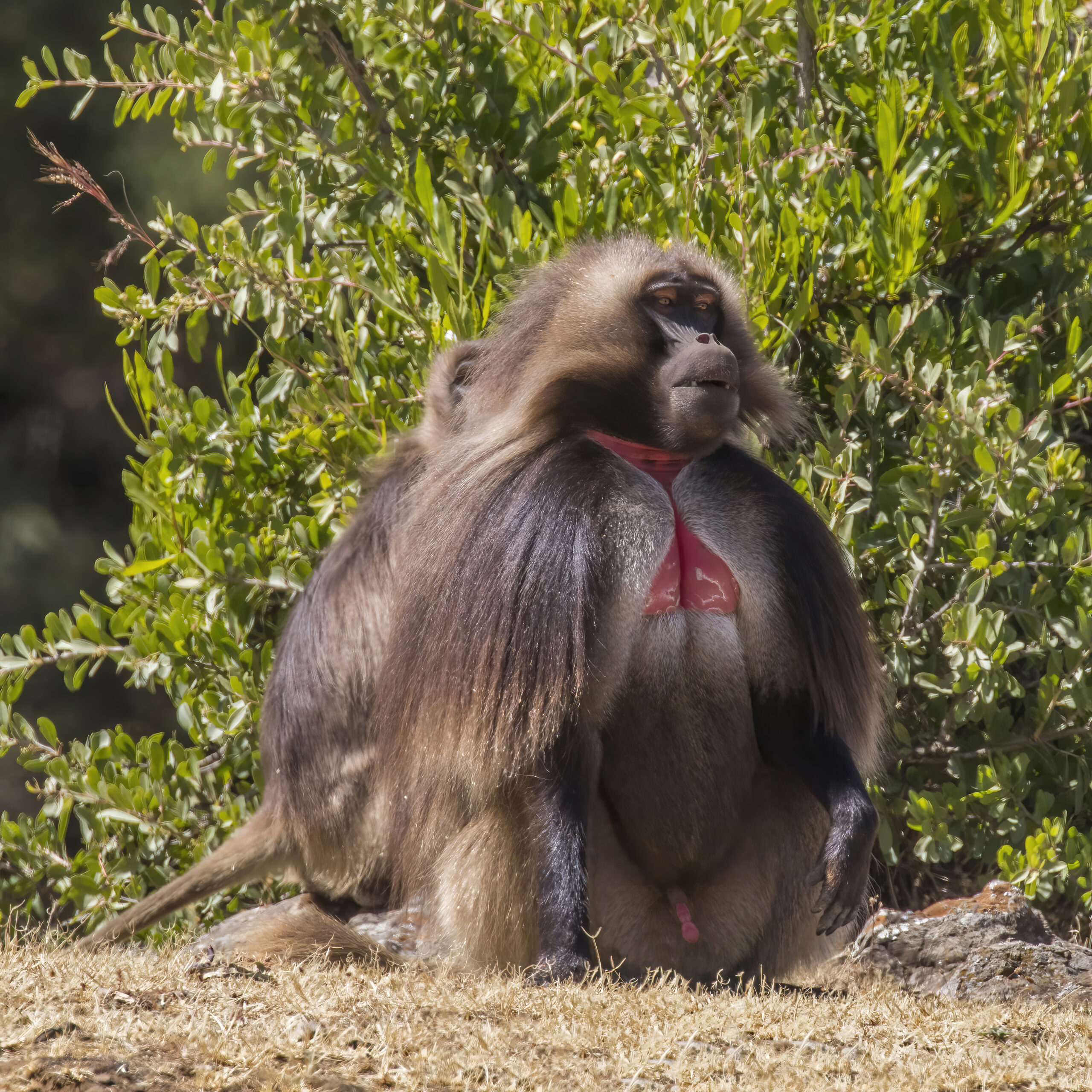
The gelada, Theropithecus gelada, is the world’s only living representative of the genus Theropithecus a group that once included much larger species found across Africa and India. An adult male weighs between 18 and 21 kilograms. Females weigh 11 to 15 kilograms. Body length in males reaches 70 to 75 centimetres. The coat is dark brown above with lighter underparts. Males carry a distinctive mane of long, dark hair on the head and shoulders reminiscent of a lion’s mane in silhouette.
The most striking feature of both sexes is the bare, hourglass-shaped skin patch on the chest and neck brilliant red-pink in adult males, paler in females. In sexually receptive females, this skin is bordered by raised, fluid-filled blisters a visual signal of reproductive status.
The Grass Diet: A Unique Primate Specialisation
Geladas eat grass almost exclusively approximately 90 percent of the diet is grass blades, grass seeds, and grass roots. This dietary specialisation is unique among primates. They sit upright on the short-grass swards of the Afroalpine plateau and move forward by shuffling on their haunches, using both hands to gather grass blades with a precise two-fingered pinch grip.
This grass specialisation works because the Afroalpine plateau is covered by extremely dense grass sward the Festuca and Poa grasses of the highland meadows are short, dense, and present in enormous quantities year-round. No other primate competes for this resource in the Ethiopian highlands. The gelada has found a food source abundant enough to support the largest primate communities in Africa.
Social Structure: One-Male Units and Bands
Gelada society is organised at multiple levels. The basic unit is the one-male unit: one adult male, one to twelve adult females, and their offspring. The male defends the females against rival males and has exclusive mating access. Females within the unit form strong, long-term bonds with each other female’s position within the unit is her most important social relationship.
Several one-male units and bachelor male groups together form a band a higher-level social grouping that forages together on the plateau. Multiple bands gather on the cliff-edge sleeping sites each evening, sometimes forming super-herds of hundreds or thousands.
Plan Your Safari
The Simien Mountains National Park in northern Ethiopia is the primary location for gelada watching. The Guassa Community Conservation Area south of the Simiens is a less visited but excellent alternative. Both sites produce encounters at close range geladas are highly habituated to human presence and allow approach to within 5 metres. The cliff-edge sleeping site gatherings at dawn and dusk are the most extraordinary visual moments. The Simiens also hold the world’s largest population of Ethiopian wolves and walia ibex, making it one of Africa’s most rewarding specialist wildlife destinations.
African Wild Trekkers designs Ethiopia wildlife itineraries combining the Simien Mountains with the Bale Mountains and the country’s extraordinary history and culture. Contact us to plan an Ethiopia safari built around the gelada and the country’s unique highland wildlife.