Bushbuck Facts Africa: The Solitary Antelope of East Africa’s Forest Margins
The bushbuck is one of East Africa’s most widespread antelopes and one of the least watched. Dense forest margins, riverine woodland, and thick bush keep it concealed through most of the day. Primarily nocturnal and crepuscular, it emerges at dawn and dusk from the cover where it rests. Solitary by nature, it does not form the visible herds that make impala and zebra easy to observe. Yet the bushbuck rewards patience and attentiveness with some of the most intimate forest-edge antelope encounters in Africa a ram stepping from dark forest shadow into morning sunlight, white spots glowing and spiral horns catching the light, is genuinely striking.
What Is a Bushbuck?
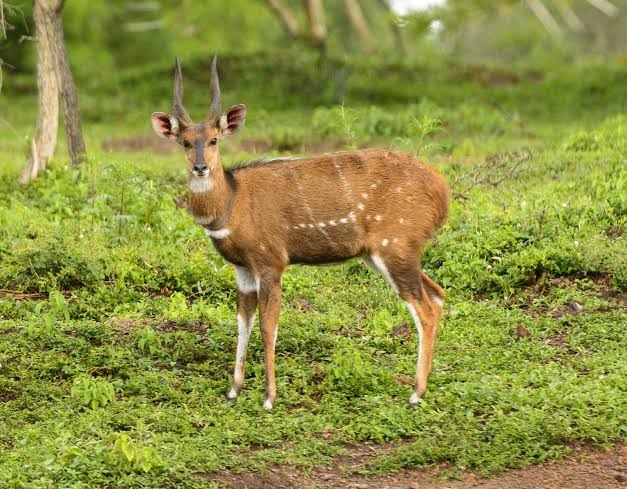
The bushbuck, Tragelaphus scriptus, is a medium-sized spiral-horned antelope in the same family as the kudu, sitatunga, and eland. Adult males rams weigh between 30 and 80 kilograms. Females ewes weigh 25 to 60 kilograms. Shoulder height reaches 65 to 100 centimetres. Only males carry horns one complete spiral, keeled, and reaching 25 to 57 centimetres. Ram coat colour varies across the range: forest populations are dark chestnut-brown; savanna-margin populations are paler tawny-brown. Both sexes carry white spots and stripes on the body the pattern varies between subspecies but always includes white spots on the cheeks, throat, and flanks, and white stripes or rows of spots on the shoulders and back.
Females are hornless and considerably paler than males in most populations. The white markings are present in both sexes and are the most reliable identification feature across the subspecies range.
Solitary and Territorial
Bushbucks are solitary. Rams hold territories that overlap with the home ranges of several females. The territory is marked through scent deposits, dung piles, and thrashing vegetation with the horns. Rams compete through parallel walking, horn display, and occasional direct sparring, but serious fights are infrequent the spiral horn configuration makes dangerous injuries possible and most rams assess each other without escalating to physical contact.
When a bushbuck ram is cornered by a predator or confronted in a confined space, it becomes genuinely dangerous. Charged individuals have killed hunting dogs and injured leopards with the spiral horn point. The ram’s short, spiralled horns deliver a sharp, penetrating thrust at short range a defensive weapon far more effective than it appears on a browsing animal.
Habitat: Forest Margins and Dense Riverine Bush
Dense cover near water defines the bushbuck’s habitat requirement. Riverine forest, gallery woodland, papyrus margins, and the dense scrub at forest edges all suit it. The bushbuck does not enter open grassland and avoids long moves across exposed terrain. In national parks, bushbucks concentrate along river banks and drainage lines exactly where vehicle tracks are least present and where guides must search along waterside vegetation rather than through open country.
Range in East Africa
Bushbucks are among the most widespread forest-margin antelopes in Africa. In East Africa they occupy Uganda’s forest edges and riverine zones, Kenya’s forest margins and riverside habitats from the coast to the highlands, and Tanzania’s riverine woodland and forest patches throughout the country. They appear on the edges of Bwindi and Kibale forests in Uganda, along the Mara River in Kenya, and in Selous-Nyerere’s dense riverine zones in Tanzania.
Plan Your Safari
Uganda’s Bwindi Impenetrable Forest margins and Queen Elizabeth’s river banks produce regular bushbuck encounters. Kenya’s Maasai Mara River and forest edge zone deliver dawn and dusk sightings. Tanzania’s Selous-Nyerere riverine forest and Ruaha’s Great Ruaha River banks are the most productive Tanzania locations. Early morning drives along water courses before 8 am when bushbucks are still active produce far more sightings than midday or afternoon drives when the animals retreat to thick cover.
African Wild Trekkers designs Uganda, Kenya, and Tanzania safari itineraries with river-focused drives that target the forest-margin antelopes. Contact us to plan a safari capturing East Africa’s full antelope diversity.