Sitatunga Facts Africa: The Swamp Antelope of East Africa’s Papyrus Beds
The sitatunga lives in swamps. Not near swamps or occasionally in swamps it lives permanently in papyrus, reeds, and flooded marsh vegetation where the ground underfoot is never firm and the water never fully recedes. No other African antelope specialises in this environment to the same degree. The sitatunga’s anatomy reflects decades of evolutionary pressure from its wet habitat: splayed, elongated hooves that spread on soft substrate; a shaggy, oily waterproof coat; and a body mass distribution that keeps the centre of gravity low for stability in uneven swamp terrain. Seeing one requires going to the swamp, not the savanna.
What Is a Sitatunga?
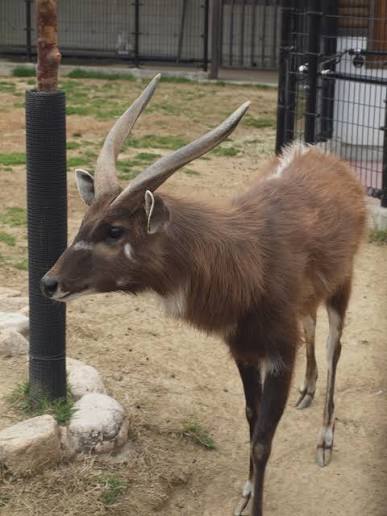
The sitatunga, Tragelaphus spekii, belongs to the spiral-horned antelope family alongside the kudu, bushbuck, and eland. Adult males weigh between 76 and 125 kilograms. Females weigh 24 to 60 kilograms. Shoulder height in males reaches 81 to 116 centimetres. Only males carry horns open spirals of one to one and a half turns, reaching 45 to 92 centimetres in length. The male coat is dark chocolate brown to almost grey-black with faint white stripes and spots on the flanks and face. The female coat is bright chestnut-red with more distinct white markings. The coat texture is long, shaggy, and slightly oily the oils provide water resistance during continuous swamp living.
The hooves are the most distinctive anatomical feature. They are long, pointed, and widely splayed spreading to distribute body weight across the soft swamp floor and preventing the animal from sinking into the mud with each step. This splayed foot structure makes sitatungas awkward on dry, firm ground but highly effective in the swamp terrain they have specialised for.
Swamp Life: Feeding, Moving, and Hiding
Sitatungas feed on papyrus shoots, reeds, water-lilies, swamp grass, and the leaves of marginal vegetation. They push through papyrus beds by pressing against the stems with their chests, parting the dense vegetation by force and weight rather than by navigating around it. Movement in deep papyrus is slow the animals create tunnels and paths through the vegetation that they use repeatedly, creating a network of swamp trails visible from above in aerial surveys.
When threatened, sitatungas submerge to the neck in water and hold still among reed stems. This concealment behaviour makes predator detection of individuals in deep papyrus extremely difficult. Leopards are the primary predator taking sitatungas at the papyrus margins where the ground is more accessible. Lions rarely penetrate deep enough into swamps to take sitatungas reliably.
Uganda: The Sitatunga Stronghold
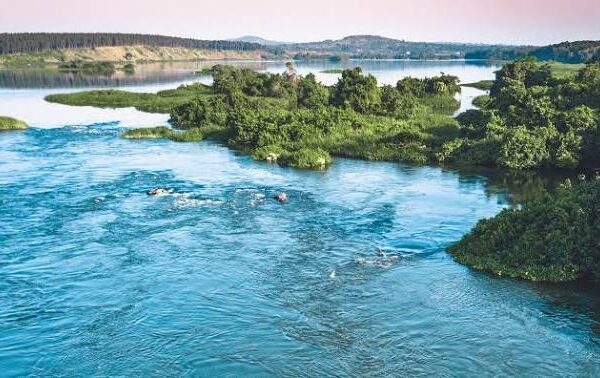
Uganda holds the most accessible sitatunga populations in East Africa. The papyrus swamps of the Albertine Rift the Lake George wetlands, the Kazinga Channel margins, the Bigodi Wetland Sanctuary near Kibale Forest all support resident populations. Rwanda’s Akagera National Park lake system holds sitatungas in its papyrus margins. Kenya’s few swamp systems and Tanzania’s western wetlands hold scattered populations, but Uganda remains the most reliable destination.
Plan Your Safari
Bigodi Wetland Sanctuary near Kibale Forest in Uganda offers the most accessible sitatunga encounters in East Africa. Guided walks through the sanctuary’s papyrus margins produce sightings of both males and females in the early morning, when sitatungas are most active at the papyrus edge. The Kazinga Channel boat safari in Queen Elizabeth National Park passes papyrus margins where sitatungas stand at the water’s edge. Rwanda’s Akagera National Park’s lake system produces boat safari sightings in the papyrus zones at dawn.
African Wild Trekkers includes Bigodi Wetland in Uganda safari itineraries and designs Akagera boat safaris for visitors interested in swamp and wetland wildlife. Contact us to plan an itinerary that captures this rare and specialised antelope.