African Lion Pride Structure: How a Lion Society Functions in East Africa
The lion is the only truly social cat. No other member of the cat family lives in the stable, cooperative groups that lions form. Understanding the lion’s social structure means understanding an animal that hunts cooperatively, raises cubs communally, defends territory collectively, and maintains social bonds over years. A female coalition in the Maasai Mara contains sisters, mothers, daughters, and nieces that have hunted together their entire adult lives. The males that hold territory over them are brothers or cousins from the same birth cohort who grew up together. Lion society rests on these kinship bonds — built through years of shared experience, not just shared genes.
The Female Core: Related Lionesses
The core of every lion pride is a group of related adult females. Sisters, mothers, and daughters form the stable multi-generational foundation of the pride. These lionesses remain in their birth territory for life — female natal philopatry is the defining feature of lion social structure. A pride’s female cohort may span three or four generations of related females hunting in the same territory their grandmothers hunted before them. Female coalition size ranges from 2 to 18 adults in East Africa prides. Larger female coalitions hold larger territories, defend them more successfully against rivals, and raise more cubs to independence per female per year than smaller groups.
Cooperative cub rearing is one of the pride’s most significant benefits. Females synchronise reproduction — giving birth within days or weeks of each other — and then raise their cubs communally. A female from the group nurses any cub, not just her own offspring. This communal nursing means orphaned cubs continue to receive milk and care if their mother dies, significantly reducing cub mortality compared to solitary raising.
Male Coalitions: Brothers Holding Territory
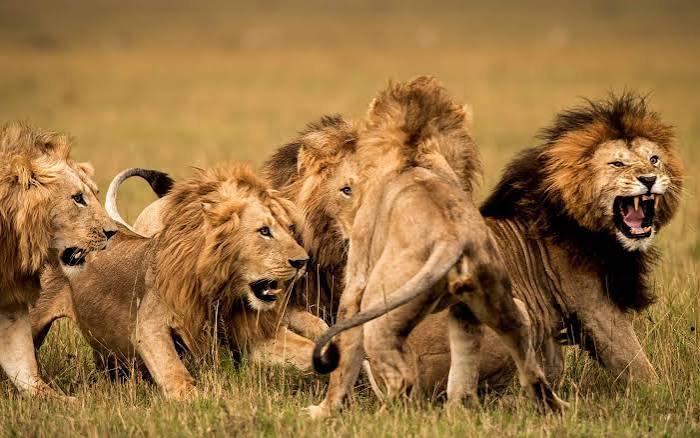
Adult male lions live and operate in coalitions of two to six males. These coalitions form from males born in the same cohort — brothers, cousins, or age-mates who grew up together and dispersed from their birth pride simultaneously. A male coalition takes over a female pride’s territory through confrontation with the previous male coalition. The takeover involves roaring displays, parallel walking, and sometimes serious fighting. Once the coalition holds the territory, the males mate with the pride females and defend the territory against rival male coalitions and single males.
Coalition size determines competitive success. Two males rarely hold a territory for long against larger coalitions. Coalitions of three to five males dominate territories for three to five years in competitive savanna ecosystems like the Maasai Mara. Single males hold territory briefly and rarely raise many cubs to independence before a coalition displaces them.
Cub Survival and the Infanticide Risk
When a new male coalition takes over a pride, they kill all existing cubs sired by the previous males. This infanticide returns the females to oestrus within weeks, allowing the new males to father cubs before their tenure ends. The behaviour is genetically logical for the incoming males but devastating for the females. Females with large, mobile cubs sometimes temporarily leave the pride territory and avoid the new coalition until the cubs reach an age that reduces infanticide risk. The females’ responses to incoming coalitions involve active coalition counter-strategies that occasionally succeed in saving older cubs.
Territory and East Africa Pride Sizes
Lion pride territories in East Africa range from 20 to 400 square kilometres depending on prey density. Ngorongoro Crater prides operate in territories of 20 to 60 square kilometres on the prey-rich crater floor. Serengeti and Maasai Mara prides hold 40 to 150 square kilometres in the open grassland ecosystem. Large territories in lower-prey habitats like Ruaha can exceed 300 square kilometres.
Plan Your Safari
Kenya’s Maasai Mara and Tanzania’s Ngorongoro Crater offer the finest lion pride observation in East Africa. Ngorongoro’s enclosed crater concentrates pride interactions in a small area — watching two prides encounter each other at a territory boundary, or observing cubs nursing from multiple females simultaneously, reveals the pride structure’s full social complexity. Maasai Mara’s large prides — some exceeding 20 individuals — produce spectacular morning wake-up and evening hunt sequences during the migration season.
African Wild Trekkers designs Kenya and Tanzania safari itineraries with experienced guides who understand lion social structure and can explain what you observe in real time. Contact us to plan a safari that goes beyond spotting lions to understanding the society behind them.