African Firefinch Facts: The Tiny Red Jewel of East Africa’s Woodland Edge
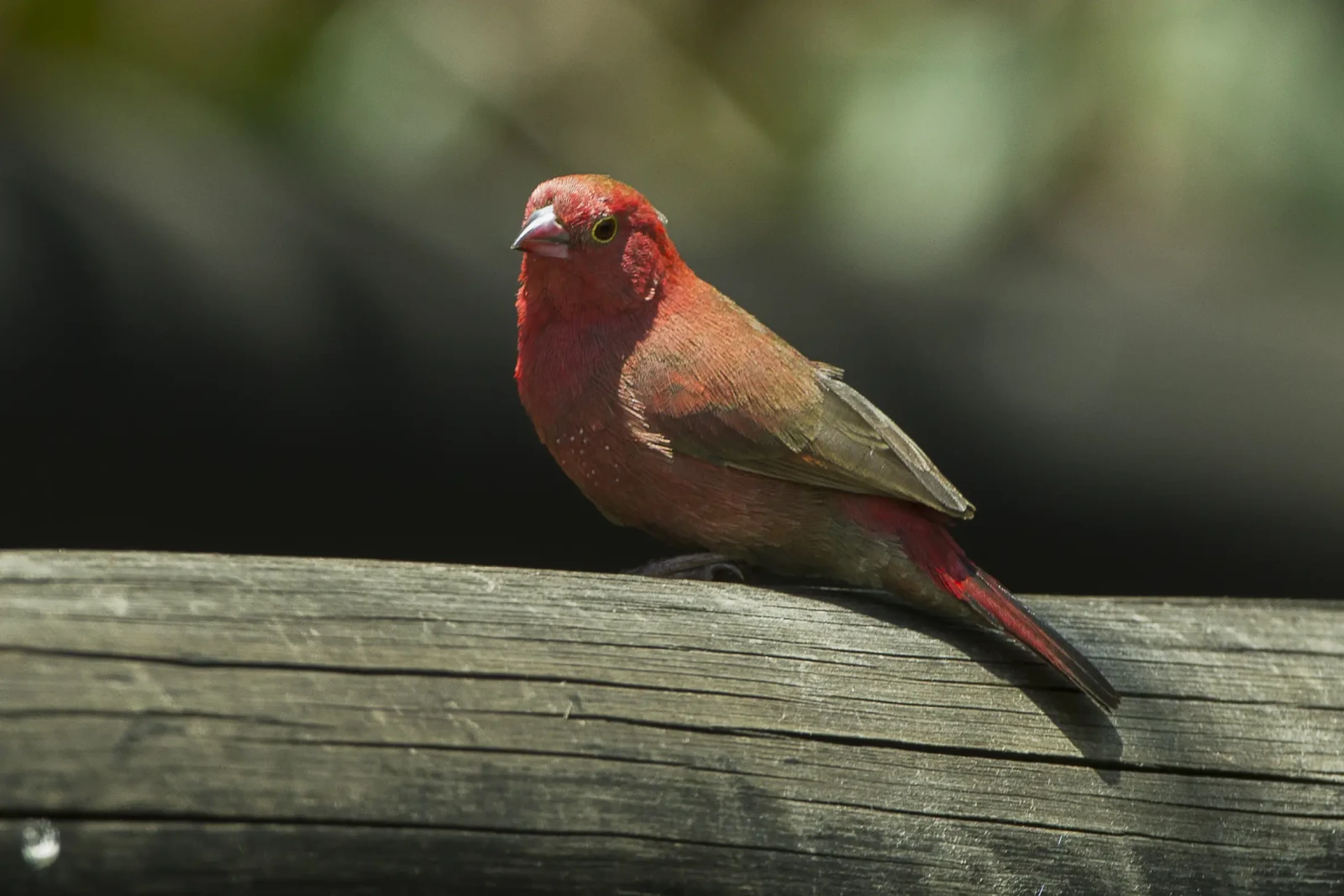
The African firefinch is one of East Africa’s most colorful small birds. The male displays bright crimson-red feathers across the head, face, breast, and underparts. This vivid color makes it stand out in woodland edges, gardens, and bushy grasslands where it lives.
Despite its striking appearance, the African firefinch is not always easy to observe. Its small size and preference for thick, low vegetation often allow it to remain hidden. Many visitors hear its soft calls before they get a clear view of the bird.
The African firefinch belongs to the waxbill family. These small seed-eating birds occur widely across Africa’s savannas, grasslands, and woodland habitats. Several firefinch species occur in East Africa, but the African firefinch has the widest distribution and is the most commonly encountered.
Identifying the African Firefinch
The male African firefinch is easy to recognize once seen clearly. Its head, face, breast, and sides show a rich crimson-red color. The belly appears darker, while the back and wings remain brown.
The bird has a red bill with a blue-grey base. Small white spots appear on the flanks and lower breast. These spots help distinguish the African firefinch from similar firefinch species found in the region.
Female African firefinches look much less colorful. They have brown upperparts and soft pinkish-buff underparts. They also show white spotting on the flanks, but their overall appearance helps them blend into their surroundings.
Female identification requires closer attention because several small waxbill species share similar brown plumage. The bill color, body shape, and spotting pattern help experienced birders separate them from related species.
The African firefinch produces soft musical calls. Both males and females use these gentle notes to communicate while moving through vegetation. The quiet twittering often reveals the birds’ presence before they appear in the open.
African Firefinch and the Village Indigobird
The African firefinch has one of Africa’s most fascinating relationships with another bird species. The village indigobird acts as a brood parasite by laying its eggs inside firefinch nests.
After hatching, the indigobird chick copies the mouth markings of firefinch chicks. This remarkable adaptation tricks the adult firefinches into feeding the indigobird chick as if it were their own offspring.
The relationship goes beyond nest parasitism. Male village indigobirds also imitate African firefinch songs. This song mimicry helps them attract firefinch females and remain close to potential host nests.
This evolutionary connection makes both birds more interesting to observe. Visitors who find African firefinches should also watch for village indigobirds nearby. The presence of one species often increases the possibility of seeing the other.
Habitat and Distribution
African firefinches prefer areas with dense low vegetation and access to grass seeds. They occur in bushed grasslands, woodland edges, gardens, and forest margins.
The species adapts well to different environments across East Africa. It can live in low coastal areas to highland forest edges at elevations reaching around 2,500 meters.
Uganda, Kenya, and Tanzania all support reliable African firefinch populations. The species frequently visits safari lodges, camps, and gardens where grass seeds and natural cover are available.
In Tanzania, visitors can find African firefinches around woodland areas of the Serengeti and other northern safari destinations. Kenya’s Laikipia region also provides excellent habitat through its acacia woodland and grassland areas. Uganda’s forest edges and gardens often attract these colorfulbirds.
The species can even appear in urban gardens in cities such as Nairobi, Kampala, and Arusha. Gardens that maintain native vegetation and grass areas provide suitable feeding locations.
Feeding Behaviour
African firefinches feed mainly on grass seeds. They search through low vegetation and the ground beneath grass patches while looking for food.
They usually move quietly through dense cover in pairs or small family groups. Their feeding behavior keeps them close to vegetation, which helps protect them from predators.
The birds become easier to observe when they visit open feeding areas. Seed-rich patches near camps and lodges provide excellent opportunities for close sightings.
Early morning is the best time to watch African firefinches. Birds are more active during cooler hours before midday temperatures increase. The softer morning light also creates better conditions for photography.
Best Places to See African Firefinches
African firefinches do not require a specialist birding trip. They appear naturally during many East African safaris that pass through suitable habitats.
The best opportunities come from areas with woodland edges, gardens, and grass-covered landscapes. Safari camps with natural vegetation often provide some of the closest encounters.
Visitors should spend time quietly observing areas around accommodation. Patience near grass patches or feeding areas often produces better sightings than searching quickly during game drives.
The species is especially rewarding for photographers because the bright red male contrasts beautifully against green vegetation and dry grass backgrounds.
Plan Your Birding Safari
The African firefinch is a perfect example of East Africa’s hidden bird diversity. Its brilliant colors, quiet behavior, and fascinating relationship with the village indigobird make it a memorable species for bird lovers.
Visitors traveling through Uganda, Kenya, and Tanzania have excellent opportunities to encounter this small but spectacular bird. Spending time around lodge gardens and woodland habitats increases the chances of a close sighting.
African Wild Trekkers designs East Africa birding safaris that include diverse habitats for waxbills, finches, and other colorful bird species. Contact us to plan a safari that explores the incredible variety of East Africa’s birdlife.