Purple Grenadier Africa: The Spectacular Small Seed-Eater of East Africa’s Dry Thornbush
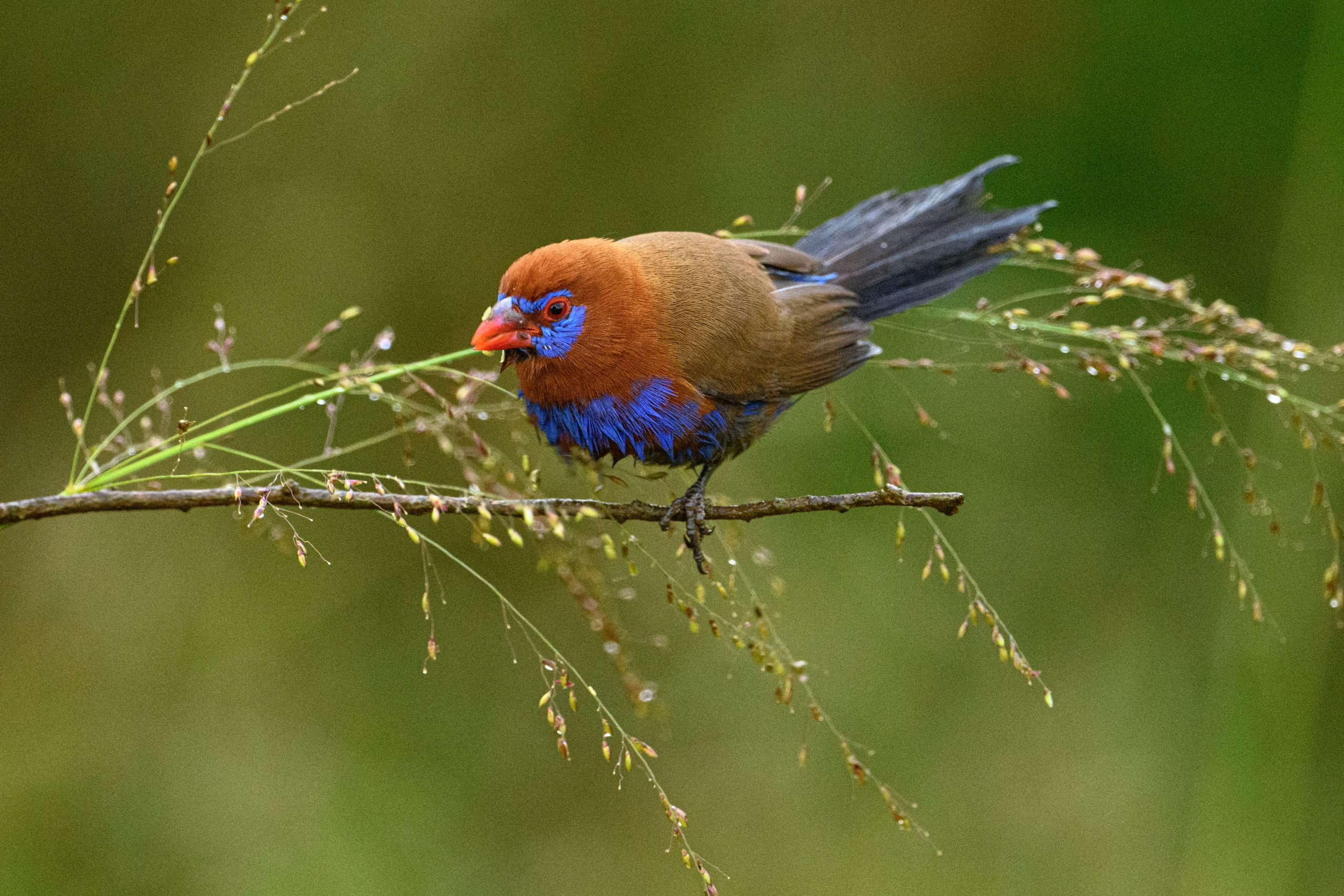
The purple grenadier is one of Africa’s most colorful small birds. The male displays a remarkable combination of cinnamon-brown feathers, deep violet-purple underparts, and a bright blue eye ring. This striking color combination makes the bird look like a tiny jewel moving through East Africa’s dry landscapes.
The species belongs to the waxbill family and thrives in dry thornbush, arid savanna, and semi-desert habitats. Unlike many colorful birds that prefer wetter environments, the purple grenadier survives in areas with limited rainfall. It feeds mainly on grass seeds and spends much of its time searching through low vegetation.
Although the species has a wide range in suitable habitats, many safari visitors miss it. The purple grenadier prefers dense thorny bushes and behaves quietly while feeding. Patient observation and guided walks often provide better sightings than searching from a moving safari vehicle.
Identifying the Purple Grenadier
The male purple grenadier is one of East Africa’s easiest waxbills to identify. Its head and upper body show warm cinnamon-brown coloring. The lower body displays deep violet-purple feathers with small pale spots across the breast.
The most distinctive feature is the bright blue ring around the eye. This colorful eye marking contrasts strongly with the brown head and purple body. The bird also has a reddish-orange bill that adds another bright feature to its appearance.
Female purple grenadiers look much more subdued. They have brown upperparts and pale underparts with light spotting. Their blue eye ring remains visible but appears less intense than in males.
When a male and female appear together, the difference between them is dramatic. The male attracts attention with his vivid colors, while the female blends easily into the dry vegetation.
The purple grenadier has a soft, quiet call. Its gentle twittering sound often disappears among other bird calls and background noise. Careful observation remains the best way to find the species.
Habitat and Behaviour
Purple grenadiers specialize in dry habitats. They occur in thornbush, semi-arid savanna, and open grasslands with scattered shrubs. These environments receive less rainfall than the woodland and forest habitats preferred by many other East African birds.
The species usually occurs below 1,500 meters in areas with low annual rainfall. This adaptation allows it to survive in landscapes where fewer seed-eating birds can compete successfully.
Purple grenadiers usually move in pairs or small family groups. They feed mainly on grass seeds, picking them from dry stems or collecting fallen seeds from the ground. Their movements are slow and deliberate, making them easier to observe when they move into open areas.
The birds spend the hottest parts of the day hidden inside thorny vegetation. Early morning and late afternoon provide the best opportunities to see them. During these cooler periods, they become more active while searching for food.
Where to See Purple Grenadiers in East Africa
Kenya provides some of the best opportunities to see purple grenadiers. The dry northern regions offer ideal habitat for this species and many other arid-zone birds.
Samburu National Reserve and Buffalo Springs National Reserve are among the most reliable locations. The dry thorn landscapes around the Ewaso Nyiro River support healthy populations of purple grenadiers. Visitors can often find them during game drives or guided walks.
Tanzania’s Tarangire National Park also provides excellent habitat. The dry areas away from the main river channels support purple grenadiers alongside other dry-country bird specialists. The species fits naturally into a Tarangire safari experience that combines elephants, wildlife, and bird watching.
Uganda’s Kidepo Valley National Park offers another opportunity to see this unique species. Kidepo’s dry savanna environment differs greatly from Uganda’s wetter western forests and savannas. The park supports a collection of northern dry-zone birds rarely seen elsewhere in Uganda.
Best Time to See Purple Grenadiers
The purple grenadier can be seen throughout the year in suitable habitats. However, the dry season often provides better viewing conditions because birds concentrate around remaining food and water sources.
Early morning offers the best chance for sightings. Birds are active before temperatures rise and often feed in open areas. The softer morning light also creates excellent conditions for photography.
The late afternoon is another productive period. As temperatures cool, purple grenadiers return to feeding areas before settling into sheltered vegetation for the night.
Birding Tips for Finding Purple Grenadiers
Finding purple grenadiers requires patience because of their quiet behavior. Searching slowly through thornbush areas is more effective than driving quickly through open landscapes.
A knowledgeable bird guide can identify suitable habitat and locate feeding areas. Guides also recognize the soft calls that reveal the presence of birds hidden inside shrubs.
Walking safaris provide some of the best opportunities for close encounters. Moving quietly through dry woodland allows visitors to observe the birds at ground level without disturbing their natural behavior.
Plan Your Birding Safari
The purple grenadier is a highlight for visitors exploring East Africa’s dry landscapes. Its brilliant colors, specialized habitat, and quiet behavior make every sighting rewarding.
Kenya’s Samburu and Buffalo Springs reserves, Tanzania’s Tarangire National Park, and Uganda’s Kidepo Valley National Park provide some of the best opportunities to encounter this beautiful waxbill.
African Wild Trekkers designs East African birding safaris that include dry-zone destinations and specialist bird habitats. Contact us to plan a safari that explores East Africa’s incredible bird diversity, from colorful waxbills to rare arid-zone species.