African Hoopoe Facts: East Africa’s Most Distinctive Crest-Bearing Bird
The African hoopoe is one of the easiest birds to identify on an East Africa safari. Its long curved bill, pinkish-orange body, black and white wings, and famous fan-shaped crest make it instantly recognizable. The bird appears across savanna, woodland, and open grassland habitats throughout the region. Its unique appearance and behavior make it a favorite among birdwatchers and safari visitors.
The African hoopoe belongs to the hoopoe family and occurs widely across sub-Saharan Africa. It remains a resident species in most areas and does not require seasonal timing to find. Visitors on Kenyan, Tanzanian, or Ugandan safaris often encounter this colorful bird near lodges, camps, and open plains.
Identifying the African Hoopoe
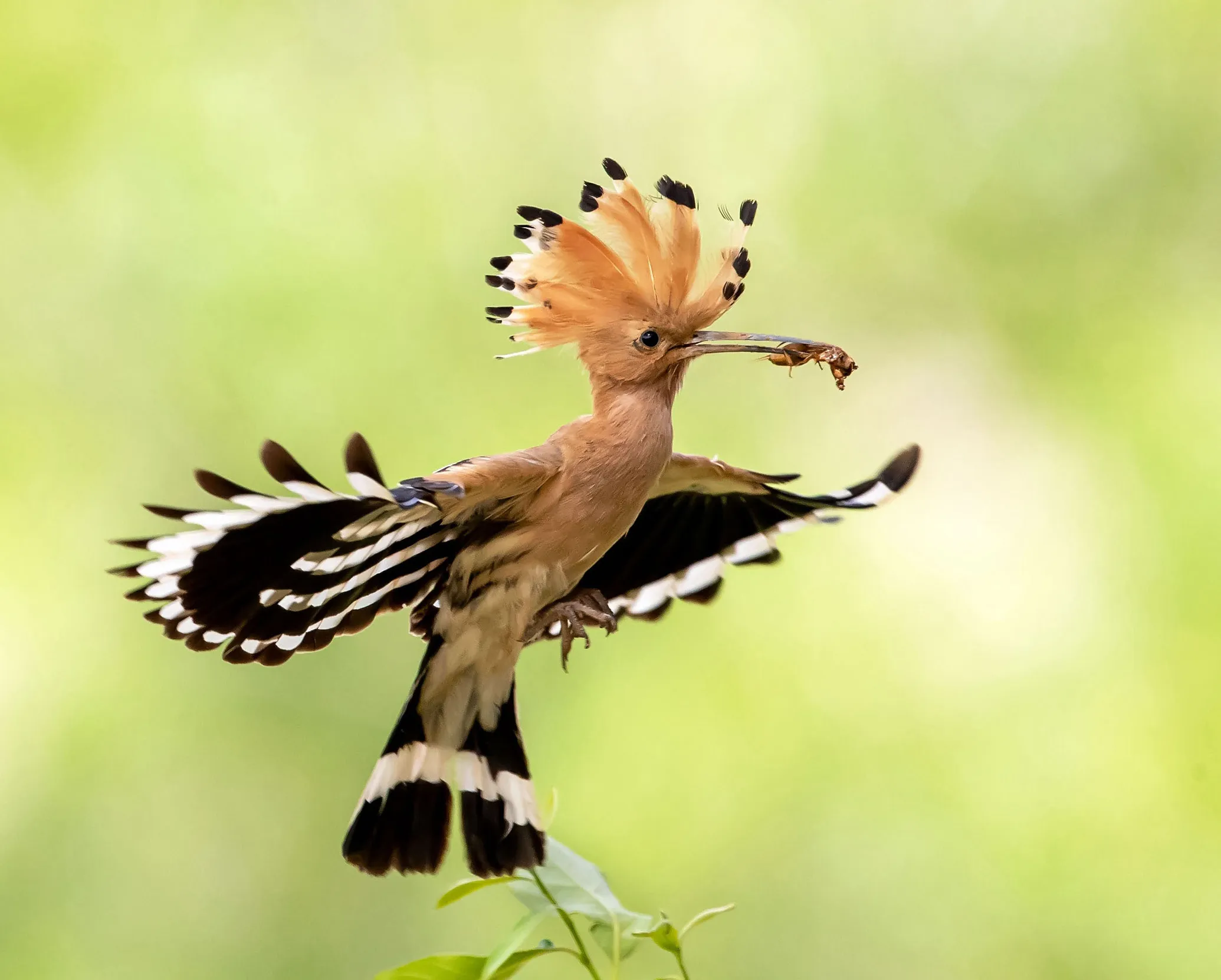
The African hoopoe measures about 26 to 28 centimeters in length. Its head and breast show a warm salmon-pink color. The wings display bold black and white patterns that become especially visible during flight. A white rump appears when the bird spreads its wings or flies between feeding areas.
The most distinctive feature is the long, curved bill. The hoopoe uses this specialized bill to search for insects hidden underground. Its famous crest sits flat along the head when the bird feels relaxed. When alarmed, displaying, or landing, the crest opens into a beautiful fan shape for a brief moment.
The hoopoe’s crest display is one of the most memorable sights during birding safaris in East Africa. The bird usually raises the crest for only one or two seconds. However, patient observers near camps and feeding areas often capture this impressive behavior.
The African hoopoe also has a distinctive call. It produces a low series of repeated “hoop-hoop-hoop” sounds. This call carries across open landscapes and often reveals the bird’s presence before visitors spot it. Early morning savanna landscapes frequently echo with these calls alongside other iconic African bird sounds.
African Hoopoe Feeding Behaviour
The African hoopoe feeds mainly on insects and other small invertebrates found in soil and leaf litter. Its long curved bill allows it to probe beneath the surface and locate hidden prey. Beetle larvae, ants, worms, and other insects form an important part of its diet.
The bird walks slowly across open ground while searching for food. It repeatedly pushes its bill into the soil before pulling out prey. This feeding method allows the hoopoe to exploit areas where many other birds cannot reach insects.
Open grasslands near livestock often attract African hoopoes. Cattle movement disturbs the soil and exposes insects. Animal dung also attracts beetle larvae and other invertebrates. These conditions create excellent feeding opportunities for hoopoes.
Experienced safari guides often look for hoopoes near large mammals. Elephants, buffalo, and other animals disturb the ground while feeding or moving through the landscape. The hoopoe takes advantage of these disturbed areas to find hidden insects.
Where to See African Hoopoes in East Africa
African hoopoes occur throughout East Africa’s major safari destinations. They thrive in areas with open woodland, grassland, and scattered trees. These habitats provide both feeding areas and suitable nesting locations.
In Kenya, visitors can see African hoopoes in the Maasai Mara, Amboseli, Samburu, and many private conservancies. Tanzania’s Serengeti, Tarangire, and Ngorongoro Conservation Area also support healthy hoopoe populations. Uganda’s Murchison Falls and Queen Elizabeth National Parks provide excellent opportunities to observe this species.
The African hoopoe does not require a specialized birding trip. Most visitors encounter it during regular game drives. The bird often appears near roads, open plains, and lodge gardens where insects are abundant.
Many safari lodges across East Africa attract hoopoes around their grounds. Early morning walks near accommodation areas often produce close sightings. These relaxed encounters provide excellent photography opportunities because the birds are usually comfortable around people.
African Hoopoe Behaviour and Habitat
African hoopoes prefer warm, open environments with enough vegetation for nesting and feeding. They often use tree holes, rock openings, or old nesting sites created by other birds. Their ability to adapt to different habitats helps explain their wide distribution.
The species spends much of its time on the ground searching for food. Unlike many colorful birds that remain high in trees, hoopoes provide excellent viewing opportunities at eye level. Their slow movements and distinctive appearance make them easy to observe during safari activities.
During flight, the African hoopoe shows its striking wing pattern. The black and white markings create a flashing effect as the bird moves between feeding areas. This combination of ground behavior and colorful flight makes it one of East Africa’s most rewarding birds to photograph.
Best Time to See African Hoopoes
African hoopoes can be seen throughout the year in East Africa. They are resident birds and do not depend on seasonal migration patterns. Visitors have opportunities to encounter them during both dry and wet seasons.
The dry season offers excellent viewing conditions because animals gather near water sources and vegetation becomes more open. The wet season also provides good opportunities because insects become more active after rainfall. This attracts feeding hoopoes across grasslands and woodland areas.
Morning and late afternoon provide the best viewing conditions. Birds are usually more active during cooler periods of the day. The softer light during these hours also creates better photography opportunities.
Plan Your Birding Safari
The African hoopoe is one of the easiest and most rewarding birds to include in an East Africa safari experience. Visitors do not need specialist birding skills to appreciate this species. Its bright colors, unusual crest, and interesting feeding behavior make every sighting memorable.
A safari through Kenya, Tanzania, or Uganda offers excellent chances to see African hoopoes alongside big game and other bird species. Including time around lodge gardens, open plains, and woodland areas increases the opportunity for close encounters.
African Wild Trekkers designs East Africa safari itineraries that combine wildlife viewing with birding experiences. Our itineraries include destinations where species such as the African hoopoe form part of the daily safari experience.
Contact African Wild Trekkers to plan an East Africa safari that explores the region’s incredible wildlife and bird diversity.