Carmine Bee-eater: Africa’s Most Spectacular and Colourful Bird Colony
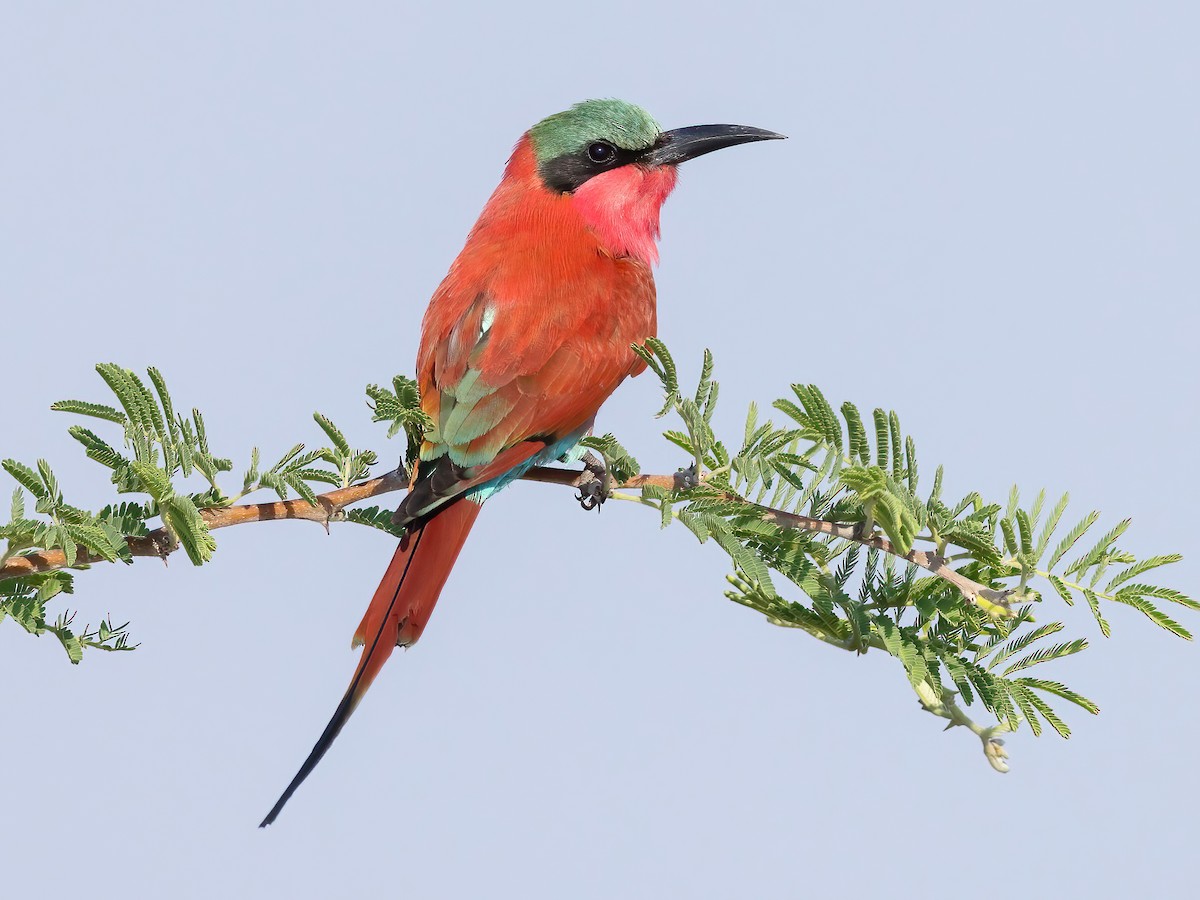
The carmine bee-eater is widely regarded as Africa’s most spectacular bee-eater species. Its vivid crimson-red plumage, turquoise-blue head and throat, and long, pointed tail streamers make it one of the continent’s most visually stunning birds. When hundreds or thousands of individuals nest in the same sandbank colony, the colony becomes one of Africa’s greatest wildlife spectacles—a wall of red and blue filling the air with constant wheeling, calling, and feeding activity.
Two subspecies exist. The northern carmine bee-eater breeds across the Sahel zone and migrates to East Africa as a seasonal visitor. The southern carmine bee-eater breeds along the Zambezi valley and also visits parts of East Africa seasonally. Both provide extraordinary spectacle when they occur in numbers at breeding or feeding aggregations.
Identification
The carmine bee-eater is a large bee-eater measuring 38 centimeters, including the long pointed tail streamers. The entire body is vivid carmine-red. The head and throat are turquoise-blue in northern birds. The long tail streamers extend 8 to 10 centimeters beyond the main tail. The bill is long, curved, and black.
In flight, the carmine bee-eater shows a characteristic gliding action between rapid wingbeats. The red plumage catches the light in flight, creating a constant flashing red spectacle above a feeding or nesting colony. At the colony itself, hundreds of individuals wheel in the air simultaneously, creating one of Africa’s most visually overwhelming bird aggregations.
The call is a distinctive “trit-trit-trit” series of high, metallic notes repeated frequently in flight. Above a large colony, the combined calling of hundreds of individuals creates a continuous, resonant chorus audible from considerable distances across the surrounding savanna or river valley.
Colonial Nesting Behaviour
Carmine bee-eaters nest in colonies of hundreds to thousands of pairs in sandbanks or earth cliff faces along riverbanks. Each pair excavates a horizontal burrow up to 2 meters deep in the soft sediment. The burrow ends in a rounded egg chamber where the female lays 2 to 5 white eggs.
Both parents incubate the eggs and feed the chicks. The entire colony nests synchronously, with most pairs entering incubation within a week of each other. This synchrony means that all the chicks fledge within a short period, flooding the area with recently fledged young birds and producing a temporary abundance of naive prey that attracts a variety of predators to the colony vicinity.
The colony site becomes a landmark destination for local and visiting birders when an active breeding colony is established. The sounds, the smell, and the constant aerial activity create a total sensory immersion in a natural spectacle that has few parallels anywhere in East Africa’s wildlife calendar.
Where to See Carmine Bee-eaters in East Africa
Uganda’s Murchison Falls National Park hosts carmine bee-eater colonies on the Nile River banks seasonally. The colonies appear between September and November when the northern carmine bee-eater migrates through East Africa in large numbers. The river boat trip from the park’s launch site to the delta wetlands passes active colonies during the peak season.
Kenya’s Lake Baringo and the Kerio Valley carry carmine bee-eater colonies in the hot lowland zones during the breeding season. Tanzania’s Ruaha National Park’s Great Ruaha River banks and the Rufiji River in Selous-Nyerere host southern carmine bee-eater colonies during the October-to-February breeding period.
The timing of carmine bee-eater colony visits is crucial. Colonies that are at peak breeding activity—when adults are actively feeding chicks and the air above the colony is full of flying birds—provide a far more spectacular experience than early-season visits when the colony is still becoming established.
Plan Your Birding Safari
Carmine bee-eater colony visits should be planned around the species’ seasonal presence at specific sites. Uganda’s Murchison Falls provides the most accessible East African colonial experience from September to November when the boat trip passes active nesting banks.
Tanzania’s Ruaha and Selous-Nyerere rivers provide colony experiences during the October-to-February period, combining the bee-eater spectacle with the extraordinary dry-season wildlife concentration of Tanzania’s southern circuit parks.
African Wild Trekkers times East Africa safari itineraries to capture the carmine bee-eater colony season at the most productive sites. Contact us to plan a safari that includes the colony visit as a highlight of the East African birding calendar.