Variable Sunbird: East Africa’s Most Widespread and Colourful Small Sunbird
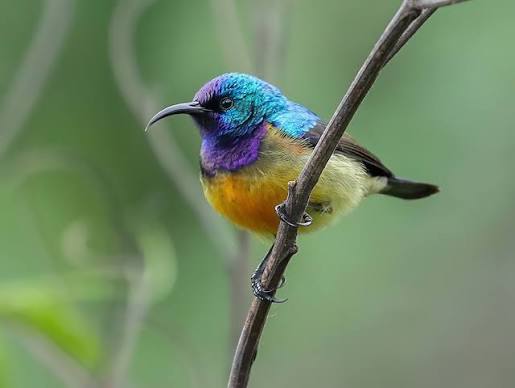
The variable sunbird is one of East Africa’s most common sunbird species and one of the most reliably encountered across the region’s woodland, garden, and forest edge habitats. The breeding male shows iridescent blue-green plumage on the head and back, with a yellow belly and a prominent purple breast band. Despite its common occurrence, the variable sunbird’s brilliant plumage makes every close encounter a rewarding experience for observers of any level of birding experience.
The species earns its name from the considerable variation in male plumage across its wide geographic range. Different populations show slightly different combinations of iridescent colour on the head and back, and the extent and intensity of the breast band varies between regions. This variation makes the variable sunbird an interesting species for birders tracking geographic plumage differences across East Africa’s different environments.
Identification
The breeding male variable sunbird shows iridescent green or blue-green upperparts and head. The breast band is deep purple-blue in most populations. The belly below the breast band is bright yellow. The bill is long, slender, and curved downward for nectar feeding. The overall effect is a brilliantly coloured small bird measuring approximately 11 to 12 centimetres.
The female is olive-green above and pale yellow below without any of the male’s iridescent plumage. Female variable sunbirds are difficult to distinguish from females of several related sunbird species. The combination of habitat, range, and the male’s plumage seen nearby provides the most reliable basis for female identification in ambiguous cases.
The call is a series of sharp, metallic “tseep” notes given in flight and a longer, more musical song delivered by the male from an exposed perch during the breeding season. The song is given persistently from high, prominent perches in the territory and is one of the characteristic sounds of woodland and garden habitats throughout the East African lowlands.
Behaviour and Diet
Variable sunbirds feed primarily on nectar from a wide range of flowering plants. They are generalist nectar feeders that visit flowers of many different shapes and sizes, making them less dependent on specific plant species than some of the more specialised sunbird species in the region. This dietary flexibility contributes to the species’ widespread distribution across diverse habitat types.
The birds also take insects as an important protein supplement, particularly during the breeding season when chick production requires higher protein intake. They hawk flying insects in brief aerial sallies from exposed perches and pick small insects from leaf surfaces during slow foraging movements through the vegetation.
Males defend territories around productive flowering plants with aggressive chasing and continuous singing. The territorial male’s continuous song from a high perch is the most reliable indicator of the species’ presence in any habitat where it occurs.
Distribution and Habitat
The variable sunbird is present across a wide range of sub-Saharan Africa from West Africa through East Africa to southern Africa. In East Africa, it inhabits woodland, forest edge, garden vegetation, and coastal scrub from sea level to approximately 2,000 metres altitude. The species is one of the most adaptable East African sunbirds in its habitat use.
The species is common in the garden vegetation of most East Africa lodges and camps and is regularly encountered at camp flower borders and the garden edges of dining areas where flowering plants are cultivated. Lodge gardens with indigenous flowering species reliably attract variable sunbirds within metres of outdoor seating areas.
Plan Your Birding Safari
Variable sunbird sightings require no specialist effort on any East Africa safari. The species is present at most woodland and garden habitats across the region and appears reliably at flower borders near camp accommodation.
Getting the best close views of the male’s iridescent plumage requires calm, sunny morning conditions when the plumage colour is most intense and the birds are most active at flowering plants near camp before the heat of the day drives them into shade.
African Wild Trekkers designs East Africa safari camps and lodges in destinations where sunbird diversity is greatest. Contact us to plan a safari where the full spectrum of East Africa’s extraordinary sunbird community is part of the daily wildlife experience.