White-bellied Bustard: East Africa’s Most Colourful Small Bustard
The white-bellied bustard is one of East Africa’s most attractive medium-sized bustards. The male’s combination of a blue-grey neck, white belly, and richly patterned brown and black upperparts creates a plumage composition that makes it one of the most distinctive bustard species in the region. The species inhabits dry open grassland and lightly bushed savanna, where it forages on the ground for insects and plant material in the dry grass zones of East Africa’s savanna belt.
The white-bellied bustard is considerably smaller and more approachable than the kori bustard and often allows closer vehicle approach before flushing. This relative tolerance makes it easier to study the plumage details and behaviour of the species in the field compared to the more alert and wary larger bustard species that share its habitat.
Identification
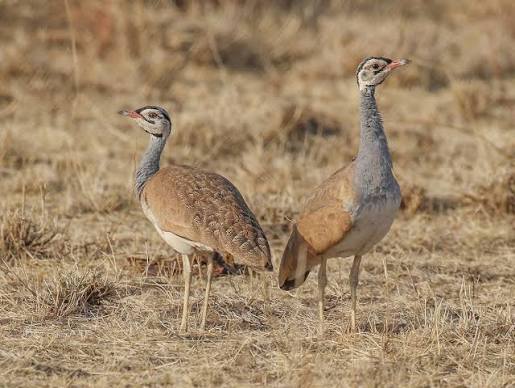
The male white-bellied bustard shows a distinctive blue-grey neck that immediately separates it from other bustard species in East Africa. The face and crown are brown and streaked. The underparts are white. The upperparts are richly patterned in brown, black, and buff in the typical bustard cryptic pattern.
The female is considerably more cryptically coloured than the male. She shows brown streaked upperparts and pale streaked underparts without the blue-grey neck that makes the male immediately identifiable. Identifying females requires careful attention to the overall size, the structural features, and the habitat context to separate them from other similar medium-sized ground birds.
The call is a series of distinctive, frog-like croaking notes. The call is quite unlike the calls of most other bustard species and is one of the most useful identification features when the bird is calling but not yet in clear view. Males call from exposed positions in the grass during the breeding season and the call carries well across open grassland.
Habitat and Behaviour
White-bellied bustards inhabit dry open grassland, lightly bushed savanna, and the grassy margins of dryland cultivation areas. The species avoids dense bush and tall grass habitats. It prefers areas where the grass is short enough to allow unobstructed movement and clear visual access to the surrounding ground for predator detection.
The birds are typically encountered singly or in pairs. They walk steadily through the grass, pausing occasionally to look around before resuming their methodical ground search for food. When alarmed, they initially crouch and rely on their cryptic plumage for concealment rather than immediately flushing. If the threat approaches closely, they burst into fast, direct flight low over the grass before landing at a distance and resuming their ground routine.
Furthermore, the white-bellied bustard is an insectivore and seed-eater. It takes grasshoppers, beetles, and other large insects as a major diet component. Seeds and berries supplement the insect diet during periods when insect abundance is low after the dry season’s peak heat months.
Where to See White-bellied Bustards in East Africa
The white-bellied bustard is present across a wide range of East Africa’s dry savanna zones. Kenya’s Tsavo East and West National Parks, the Maasai steppe of northern Tanzania, and the dry grassland areas of Kenya’s Laikipia Plateau all carry white-bellied bustard populations accessible on standard game drives.
Tanzania’s Tarangire National Park and the Maasai steppe south of Tarangire produce reliable white-bellied bustard sightings in the dry grassland sections away from the main river valley. The species is most visible in the dry season when the grass is short and the birds’ movements are easier to detect against the open ground.
Kenya’s Samburu-Buffalo Springs National Reserve in the north carries white-bellied bustards in its open grassland sections alongside the other dry-zone species that make Samburu one of Kenya’s most productive birding destinations for grassland and bush specialists.
Plan Your Birding Safari
White-bellied bustard sightings are most reliable at East Africa’s drier savanna destinations during the dry season when the short grass maximises visibility. Tanzania’s Tarangire and Kenya’s Samburu provide the most accessible habitat within established safari circuits.
Slow-speed game drives through the dry grassland sections of these parks with attention to the ground ahead of the vehicle produce the most sightings. Bustards on the ground ahead of a moving vehicle are easily missed at high speed but are conspicuous when the vehicle moves slowly enough for the ground detail to be assessed properly.
African Wild Trekkers includes dry savanna destinations in East Africa safari itineraries where the full range of bustard species is accessible. Contact us to plan a safari that explores East Africa’s grassland and open savanna bird community in depth.