Kori Bustard Weight: How Africa’s Heaviest Flying Bird Lives on the Savanna
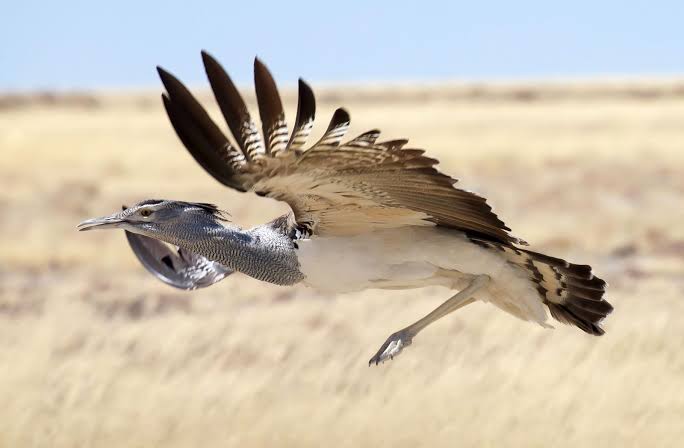
The kori bustard is Africa’s heaviest flying bird. Adult males weigh between 7 and 19 kilograms, with the heaviest individuals representing the upper limit of body mass that sustained flight is physically possible for any bird. The average male kori bustard weighs approximately 11 to 12 kilograms. Large individuals at the upper end of the weight range are among the heaviest birds capable of true powered flight anywhere on earth.
The bird’s size is immediately apparent when it is seen in the field. Standing up to 1.2 metres tall and measuring up to 1.5 metres from bill to tail, the kori bustard dwarfs all other open-ground birds sharing its savanna habitat. A large male standing in the open plains of Tanzania’s Serengeti or Kenya’s Maasai Mara creates an impression of solid, ground-dominating mass unlike any other bird in the East African landscape.
Weight and Flight
The kori bustard’s extreme weight creates significant constraints on its flying behaviour. Unlike lighter birds, kori bustards cannot take off instantly. They require a running take-off run of several metres before generating sufficient lift for flight. The take-off is laboured and clearly requires considerable physical effort compared to the effortless launches of lighter savanna birds.
Once airborne, however, the kori bustard is a capable and surprisingly swift flier. The broad wings generate substantial lift and the bird can cover long distances in sustained flight. Movement between feeding areas and water sources involves regular flights of several kilometres. During the breeding season, males fly between display sites and rival territories across distances that suggest no significant flight limitation despite their extreme weight.
Female kori bustards are significantly lighter than males. Female body weight ranges from 3.5 to 7 kilograms, representing roughly half the weight of an average male. This extreme sexual size dimorphism — one of the largest differences between sexes in any bird species — reflects the male’s reliance on body size as a display feature in competition for females.
Breeding Display
The kori bustard’s breeding display is one of East Africa’s most extraordinary wildlife performances. The displaying male inflates his white throat pouch into a balloon-like structure that approximately doubles the apparent size of his head and neck. The tail is fanned and tilted forward over the back. The wings are spread and lowered to expose the white wing patches. In full display, the bird resembles a white balloon balanced on a pair of brown legs far more than it resembles its normal, cryptically coloured self.
The display is accompanied by a deep booming call and is performed from elevated ground within the male’s territory. Displaying males are conspicuous from considerable distances and are a reliable spectacle at the right destinations during the breeding season.
Furthermore, males do not contribute to incubation or chick rearing after mating. The female alone incubates the 1 to 2 eggs in a ground nest and raises the chicks. This division of reproductive labour allows males to maximise their display effort without the constraints of parental duty.
Diet and Habitat
Kori bustards are omnivorous. They feed on insects, small lizards, snakes, seeds, and berries gathered by slow walking across open ground. Harvester termites are a particularly important food source. The birds move methodically across their feeding areas, pausing frequently to investigate the ground surface and the low vegetation for prey.
The species inhabits open savanna, short grassland, and lightly bushed grassland in East Africa. It requires open sightlines for predator detection and avoids dense bush and woodland. The largest numbers occur in areas of short grass or bare ground interspersed with scattered acacia trees that provide both foraging substrate and shade during the hottest midday hours.
Tanzania’s Serengeti short grass plains, Kenya’s Amboseli open flats, and the open areas of the Maasai Mara all provide excellent kori bustard habitat. The birds are conspicuous and easily observed on vehicle game drives through these open environments due to their large size and their slow, deliberate movements across the open ground.
Plan Your Birding Safari
Kori bustard sightings require open savanna destinations. Tanzania’s Serengeti and Kenya’s Amboseli and Maasai Mara produce the most reliable kori bustard encounters in East Africa. The large body size of the male makes it one of the most immediately impressive birds encountered on any game drive through these open landscapes.
Witnessing the breeding display requires visiting during the dry season months from June to October when displaying males are most active in the Serengeti and Mara ecosystems. The display is performed in the mid-morning hours and is visible from moving vehicles at distances of 300 to 500 metres.
African Wild Trekkers designs Tanzania and Kenya safari itineraries through open savanna destinations where kori bustards are reliably encountered. Contact us to plan a safari that captures Africa’s heaviest flying bird alongside the full open savanna wildlife experience.