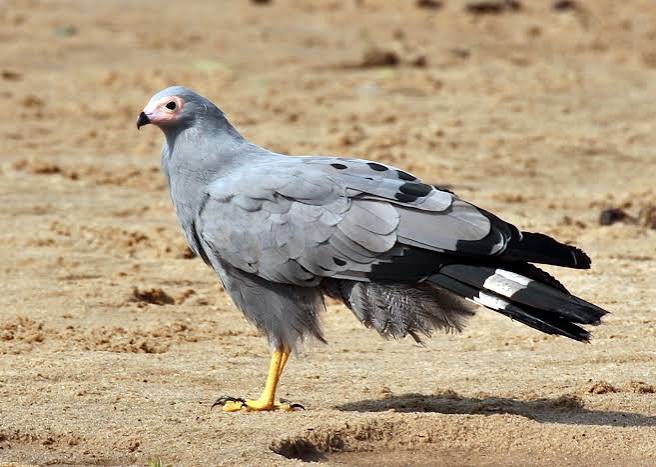
African Harrier-hawk: East Africa’s Most Unusual Raptor With Double-Jointed Legs
The African harrier-hawk is one of Africa’s most anatomically unusual raptors. It possesses double-jointed legs that can bend both backward and forward, allowing it to reach into tree holes, crevices, and weaverbird nests to extract chicks and eggs that are inaccessible to raptors with normal leg structure. This specialised leg anatomy makes the harrier-hawk the only bird of prey that systematically raids enclosed nest structures as its primary hunting strategy.
The species is also known as the gymnogene, a name derived from the bare yellow facial skin that is a distinctive feature of the species. The facial skin flushes red during excitement and display, providing a visible emotional signal that is unusual among birds of prey. This bare-faced appearance gives the harrier-hawk a distinctive, slightly alien look compared to other raptors in the region.
Identification
The African harrier-hawk is a medium to large raptor measuring 60 to 66 centimetres. The upperparts and head are pale grey. The underparts are white finely barred with grey. The tail is black with a single broad white bar. The facial skin is bare and yellow in normal circumstances, flushing to orange-red when the bird is excited or engaged in display.
In flight, the harrier-hawk shows a distinctive small head relative to its body and wing size. The wings are long and broad. The tail pattern of black with a white bar is clearly visible in flight from below. The flight action includes a slow, flapping style when searching for nests at close range and a faster, more direct flight when moving between hunting areas.
The call is a series of plaintive, whistled notes quite unlike the typical raptor calls of buzzards and eagles. The call carries well through woodland and is often the first indication of the species’ presence before the bird comes into view clambering awkwardly around a weaver nest colony.
Hunting Method
The harrier-hawk’s nest-raiding behaviour is remarkably acrobatic. The bird lands on or near the target nest and proceeds to reach into the entrance with the articulated leg, feeling for eggs or chicks inside the nest chamber. The double-jointed leg bends at angles that allow it to probe deeply into enclosed spaces that a normal raptor leg cannot enter.
Village weaver colonies are a particularly favoured target. The harrier-hawk works systematically through a colony, testing each nest in turn and removing any chicks or eggs it locates. The weavers mob the raiding bird noisily but rarely succeed in driving it off. The raid typically continues until the bird has searched every accessible nest in the colony.
Furthermore, the harrier-hawk also raids woodpecker holes, barbet nests, and any natural tree cavity that might contain a breeding bird’s chicks. Its nest-raiding specialisation gives it access to a food resource largely unavailable to other raptors and reduces direct competition with the more conventionally hunting eagles and hawks sharing its habitat.
Where to See African Harrier-hawks in East Africa
The species is widespread across East Africa’s woodland and forest edge habitats from Uganda through Kenya and Tanzania. It is present in virtually every East African national park that contains woodland and weaver bird colonies and is regularly encountered on game drives through these areas.
Any active weaver colony in East Africa has the potential to be raided by a harrier-hawk. Colonies in Uganda’s national parks, Kenya’s Rift Valley woodland, and Tanzania’s miombo woodland areas all produce regular harrier-hawk sightings. The raid of a weaver colony by a harrier-hawk is one of the most entertaining wildlife sequences available on any East Africa wildlife drive.
The Kazinga Channel area in Uganda’s Queen Elizabeth National Park, the Naivasha area in Kenya’s Rift Valley, and Tanzania’s Lake Manyara National Park all produce reliable harrier-hawk encounters in their woodland and lakeside tree habitats.
Plan Your Birding Safari
African harrier-hawk sightings are most likely at destinations with active weaver colonies in woodland habitats. The species appears without specialist searching at any East Africa destination where weavers nest in accessible trees within vehicle range.
Watching a harrier-hawk systematically raid a weaver colony is one of East Africa’s most entertaining raptor behaviour sequences. Any guide aware of an active weaver colony near camp accommodation will alert guests to the opportunity when the harrier-hawk arrives to raid.
African Wild Trekkers designs East Africa safari itineraries that include the woodland destinations where harrier-hawk raids on weaver colonies are part of the regular wildlife experience. Contact us to plan a safari that captures East Africa’s most behaviourally unusual raptor.