Black-backed Jackal Facts: The Versatile Canid of East Africa’s Open Savanna
The black-backed jackal is one of the most adaptable predators in East Africa. It eats carrion from lion kills, hunts Thomson’s gazelle fawns, catches rodents, collects insects, raids bird nests, eats wild fruits, and scavenges human refuse. This dietary range combined with a tolerance for human-modified habitat makes it one of the most widespread and abundant carnivores in Africa. The black-backed jackal persists where lions, leopards, and wild dogs have disappeared. Understanding it reveals what a medium-sized canid needs to thrive in a continent that increasingly reduces habitat for large predators.
What Is a Black-backed Jackal?
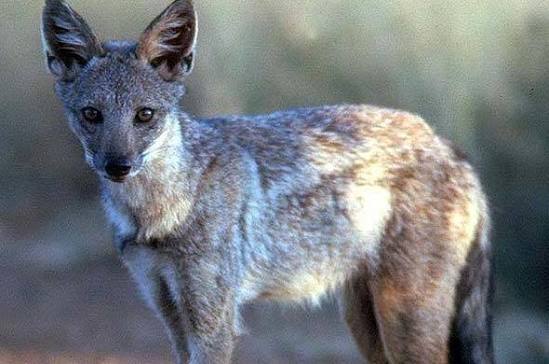
The black-backed jackal, Lupulella mesomelas, is one of three jackal species in Africa. Adults weigh between 6 and 13 kilograms. Shoulder height reaches 38 to 48 centimetres. The black saddle a patch of mixed black and silver hairs running from the shoulders to the base of the tail is the species’ definitive identification mark. No other East Africa canid carries this black saddle. The remaining coat is rich reddish-brown on the flanks and legs with pale underparts. The tail is bushy and black-tipped. Large pointed ears sit upright permanently — a predator-detection configuration used during the animal’s nearly continuous environmental scanning.
Pair Bonds and Territory
Black-backed jackals form lifelong monogamous pair bonds. The paired male and female jointly hold and defend a territory of 0.5 to 3 square kilometres. Both partners produce the characteristic long, wailing territorial call a series of howls that announces presence and warns neighbouring pairs. Territories are scent marked with urine and faecal deposits at boundary points. The bond strengthens through joint food sharing and pup rearing both parents bring food to the den and guard the pups from predators. Sub-adult offspring from the previous litter sometimes remain as helpers at the den, increasing pup survival rates significantly.
When a pair member dies, the survivor quickly seeks a new partner. Unpaired jackals experience significantly lower reproductive success than bonded pairs the pair bond functions as a critical fitness advantage in this species.
Hunting and Opportunistic Feeding
Black-backed jackals hunt cooperatively in mated pairs. Pairs tackle prey up to impala calf size through coordinated pursuit one partner drives the prey toward the other’s ambush position. The pair’s hunting success on fawn-sized prey exceeds solitary individual success by a wide margin. At large predator kills, jackals approach and retreat repeatedly between lion feeding sessions, snatching pieces of carcass opportunistically and retreating before a lion charges. The jackal’s speed and agility allow close approach to large predators that slower, heavier scavengers like hyenas cannot safely achieve.
Role in the Ecosystem
Black-backed jackals control rodent populations, scavenge carcasses that large predators abandon, and disperse fruit seeds through their droppings. Their presence at large kills alerts vultures to food locations through the activity and sound their arrival creates. This indirect facilitation benefits the scavenger community. Jackals also alert other prey species to predator presence the jackal’s persistent alarm calling at a hunting cheetah or lion communicates danger to surrounding herbivores.
Range in East Africa
Black-backed jackals occur across Kenya and Tanzania’s savanna, woodland, and semi-arid zones. The Maasai Mara, Serengeti, Amboseli, Ngorongoro, and all major national parks in both countries hold resident populations. Uganda holds fewer black-backed jackals the side-striped jackal replaces it across much of Uganda’s wetter woodland zone.
Plan Your Safari
Black-backed jackals appear on virtually every Maasai Mara, Serengeti, and Ngorongoro game drive. Dawn drives produce the most active behaviour pairs calling from territory boundaries as the sun rises, and individuals hunting at large predator kills from the previous night. Watching a pair work together to distract a female cheetah from her kill while the other grabs a piece and retreats produces one of East Africa’s most entertaining small carnivore observations.
African Wild Trekkers designs Kenya and Tanzania safari itineraries that reveal the full carnivore community from large predators to the savanna’s most adaptable small hunters. Contact us to plan a safari exploring East Africa’s complete predator hierarchy.