Spotted-Necked Otter: The Fast-Swimming Predator of East Africa’s Great Lakes
Two otter species share East Africa’s waterways. Most people know only one. The spotted-necked otter is smaller, faster, and more fish-focused than its larger relative.
It lives where the water is clear and the fish are plentiful. Africa’s great lakes—Victoria, Tanganyika, and Kivu—are its stronghold.
What Is the Spotted-Necked Otter?
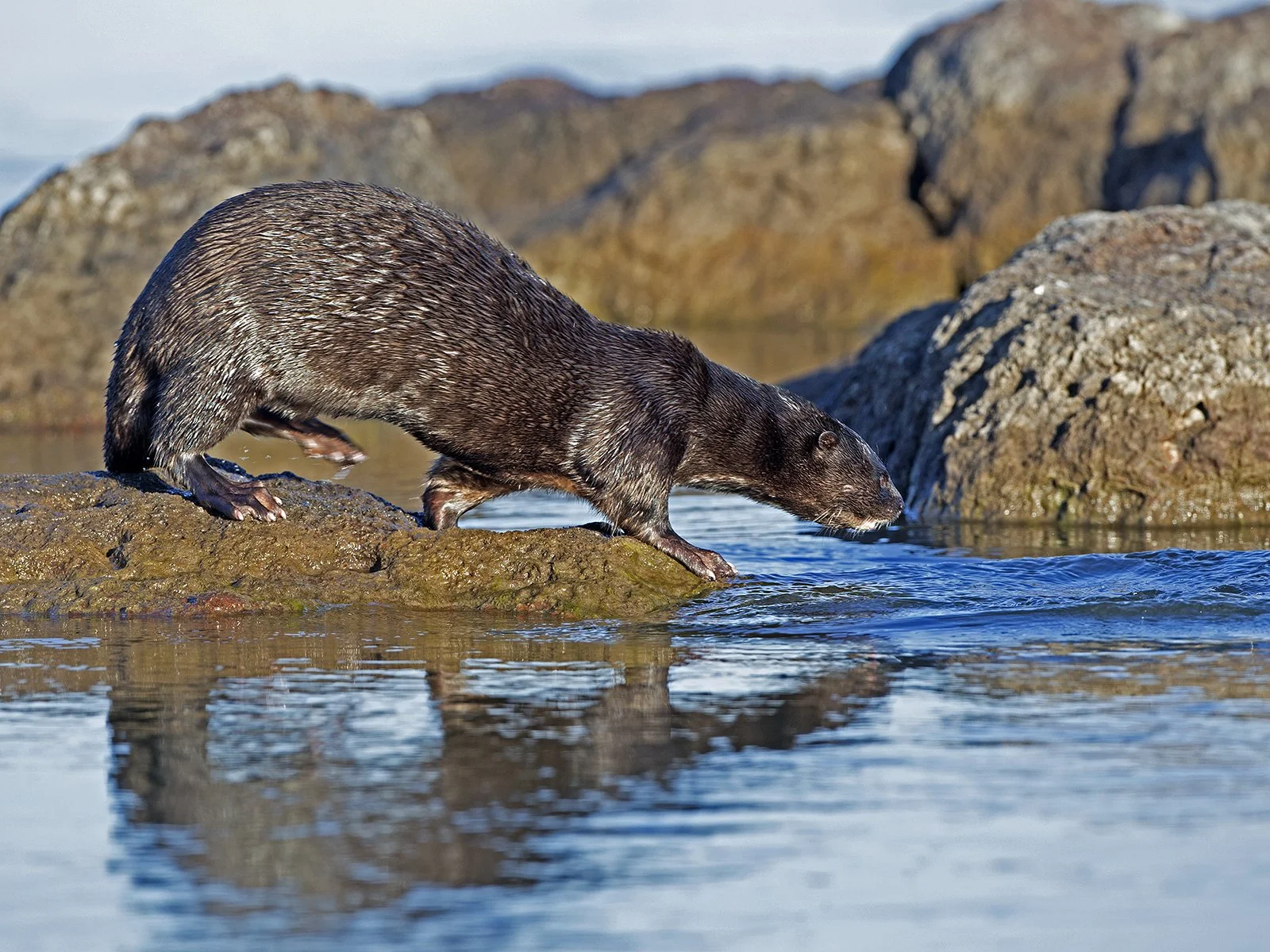
The spotted-necked otter, Hydrictis maculicollis, belongs to the family Mustelidae. It is one of two otter species in East Africa, alongside the African clawless otter. The spotted-necked otter is smaller than its relative and more fully adapted to open-water, fish-focused hunting.
The common name refers to the white spots or patches on the throat and chest—the most consistent identification feature.
An adult spotted-necked otter weighs between 3.5 and 6.8 kilograms. Body length reaches about 60 centimeters.
The tail adds another 35 centimeters. The entire animal is considerably smaller than the African clawless otter.
The build is streamlined and torpedo-shaped, tuned for speed in the water column rather than power in rock crevices.
How to Tell the Two East African Otters Apart
The two East African otter species differ clearly in the field with a close look. The spotted-necked otter is smaller and darker — its coat is a rich reddish-brown to dark brown with pale mottling on the throat.
The clawless otter is larger, more robust, and paler with a clearly white throat.
The feet provide the surest distinction. The spotted-necked otter has claws on all four feet and fully webbed feet — a commitment to aquatic locomotion. The clawless otter has unwebbed front paws without claws.
The spotted-necked otter also has a narrower, more streamlined head compared to the broad, rounded head of its larger relative.
Diet and Hunting Strategy
Fish form the overwhelming majority of the spotted-necked otter’s diet. It is a specialist fish predator in a way the clawless otter is not. It catches fish in open water through high-speed pursuit.
The streamlined body, powerful tail, and fully webbed feet make it one of the fastest-accelerating otters in the world over short underwater distances.
The spotted-necked otter also eats frogs, aquatic insects, and crabs when fish are scarce. On Lake Victoria and Lake Tanganyika, cichlid fish form the primary prey.
The otter hunts in the shallows near the shore during morning and evening peak activity periods. It surfaces regularly to breathe and to consume large fish at the surface.
Social Behaviour and Group Hunting
Spotted-necked otters are social. They live in groups of 2 to 20 individuals, occasionally gathering in larger temporary aggregations on productive fishing grounds.
Group hunting on Lake Victoria involves coordinated herding of cichlid schools into shallow water. Multiple otters work in formation, driving fish against the shore where capture becomes easier.
Groups communicate with high-pitched whistles and chirping calls. The calls carry clearly over open water. Family groups maintain contact while foraging across a wide area of lake surface.
Alarm calls are distinct from contact calls. Experienced otter watchers learn to distinguish the social calls of resting otters from the hunting calls of active groups.
Range and Habitat in East Africa
The spotted-necked otter ranges across central and eastern Africa. In East Africa it lives on the shores of Lake Victoria, Lake Tanganyika, Lake Kivu, Lake Albert, and Lake Edward.
It also uses large rivers connected to these lakes. It prefers clear water with abundant fish. Turbid, heavily silted water reduces its hunting efficiency, and it avoids these areas.
Uganda’s Lake Victoria shoreline, particularly around the Sese Islands, holds strong populations. Tanzania’s shores of Lake Tanganyika support them in Mahale Mountains National Park and Gombe Stream. Rwanda’s Lake Kivu holds a distinct population.
Lake Victoria’s Otter Decline
Lake Victoria once supported one of the largest spotted-necked otter populations in Africa. The Nile perch introduction in the 1950s and 1960s devastated the native cichlid fish community that otters depended on. Over 200 cichlid species disappeared from the lake.
The otters’ preferred prey base collapsed. Spotted-necked otter populations on Lake Victoria declined sharply in the decades following the perch introduction.
Recovery has been partial. Some native fish communities have returned in sheltered bays, and otter populations have followed.
Gill net fishing now presents the most acute threat on the lake. Spotted-necked otters follow fish into nets actively and drown at a rate that alarms conservation researchers monitoring lake populations.
Some fishers deliberately kill otters they find in their nets, viewing them as competitors. Community education programs along Uganda’s Lake Victoria coast aim to reduce this persecution and promote the release of live otters found in nets.
Conservation Monitoring and Status
The spotted-necked otter is classified as Least Concern by the IUCN globally, but regional assessments for Lake Victoria populations suggest a significantly more precarious situation.
Populations on Lake Tanganyika in Tanzania are considered more stable. Mahale Mountains National Park and Gombe Stream National Park provide protected lakeshore habitat where fishing pressure is lower and otter populations appear healthy.
Rwanda’s Lake Kivu holds a distinct population that benefits from the lake’s extreme depth and cold, clear water. This population is less studied but appears stable based on camera trap data from the lake’s shoreline.
Conservation programs in Rwanda focus on maintaining riparian vegetation and regulating fishing intensity near known otter foraging areas.
Plan Your Safari
The spotted-necked otter is best watched from a boat on one of East Africa’s great lakes. Lake Tanganyika at Mahale Mountains or Gombe Stream, in Tanzania, produces reliable morning sightings.
Uganda’s Lake Victoria at Entebbe or on the Sese Islands offers opportunities in the early morning when the otters are most active near the shore. Patient watching from a quiet boat at dawn or dusk gives the best results.
African Wild Trekkers builds Tanzania and Uganda itineraries that include time on the great lakes. Contact us to design a trip that includes otter watching alongside chimpanzees at Mahale or Gombe.