African Striped Weasel: The Most Fearless Tiny Predator in Africa
The African striped weasel weighs under 400 grams. It is one of the smallest carnivores on the continent. Yet it attacks prey its own size and carries a chemical weapon powerful enough to deter animals twenty times larger. This tiny predator earns its fearless reputation every night it hunts.
What Is the African Striped Weasel?
The African striped weasel, Poecilogale albinucha, is a member of the family Mustelidae. It is the sole species in its genus. It occupies a similar ecological role to the zorilla—a small, chemically defended nocturnal predator of the African savanna and grassland—but the two are distinct species in separate genera.
An adult African striped weasel weighs between 230 and 380 grams. Body length reaches about 26 centimeters. The tail adds another 16 centimeters. The body is extremely elongated and slender — the most serpentine body plan of any African mustelid. This narrow body shape allows it to pursue rodents down tunnels and into burrows.
The Warning Colours
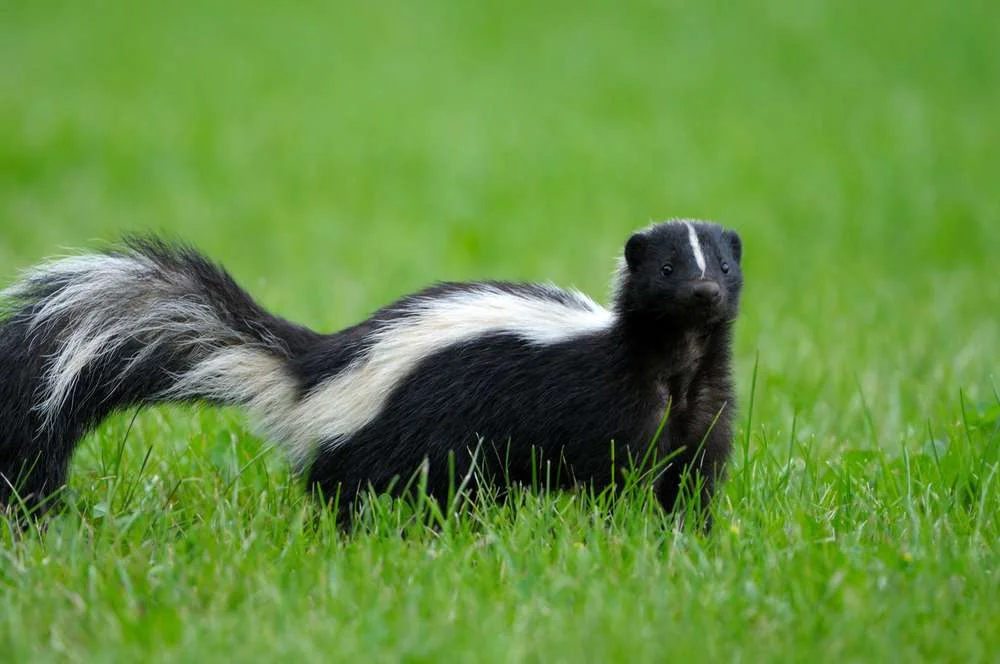
The African striped weasel’s coloring is strikingly bold. The underparts and most of the body are black. Four distinct white stripes run from the nape to the base of the tail. The top of the head is pure white. The tail is white or pale buff. This high-contrast patterning is aposematic—a visual warning to predators that the animal carries a chemical defense.
The pattern works. Most experienced predators avoid striped weasels entirely. Young or inexperienced predators make the mistake once. The chemical spray that follows provides a lesson that lasts permanently. The white head and stripes ensure visibility in darkness when black-and-white contrasts stand out more sharply than any color combination could.
Chemical Defence and Predation Risk
The African striped weasel possesses enlarged anal scent glands that produce a highly pungent, sulfur-rich spray. The spray causes intense irritation on contact with eyes, nose, and mouth. The weasel delivers it accurately at short range, typically from a standing position with the tail raised and the back arched.
Before spraying, the weasel gives a warning display. It raises its tail, stamps its feet, and makes a sharp rasping sound. Most predators retreat at this stage. The spray itself is a last resort. Its production requires metabolic investment, and the glands need time to recharge after use. The weasel prefers to warn rather than spray.
Diet and Hunting Method
The African striped weasel specializes in rodents. It hunts mice and rats almost exclusively. The elongated body allows it to pursue prey down tunnels no other small carnivore can follow. It kills with a single bite behind the skull. The kill is fast and precise.
The weasel’s speed in enclosed spaces is remarkable. Inside a burrow system, it outmanoeuvres rodents that would escape any other surface predator. It also eats frogs and large insects when rodents are scarce. Surplus prey is cached near the burrow for later consumption.
Range in East Africa
The African striped weasel lives in grassland and moist savanna across East and Southern Africa. In East Africa it lives primarily in Uganda and parts of western Tanzania. It is absent from Kenya and most of eastern Tanzania. It favors moist high-altitude grassland and montane areas. Bwindi Impenetrable Forest’s edge habitats shelter some individuals. Western Uganda’s crater lake district also holds populations.
The Body Shape That Makes the Weasel Unstoppable Underground
The African striped weasel’s body plan is extreme even by mustelid standards. The spine is extraordinarily flexible. The rib cage is narrow and compressible. The legs are short but the stride is fast. Together these features allow the weasel to enter any burrow system a rodent can create. It turns corners at full speed and reverses direction inside tight passages. A rodent that retreats into its own burrow to escape the weasel finds itself trapped rather than safe.
The weasel’s skull is also unusually flat from top to bottom. This flattening—called cranial depression—is common in pursuit predators that hunt underground. It allows the skull to fit through any gap wide enough for the rest of the body. The weasel can compress its whole body through a gap barely wider than its skull. This is why it remains a lethal threat in environments where larger predators cannot follow prey underground at all.
Conservation Status and Observation Rarity
The African striped weasel is classified as Least Concern by the IUCN. However, it is one of the least-studied carnivores in East Africa. Camera trap detection rates are extremely low compared to other small carnivores. Whether this reflects genuine rarity or simply the species’ secretive nocturnal habits in dense grass cover is not resolved. Researchers in western Uganda working on small carnivore surveys consistently report the African striped weasel as the hardest species to reliably detect.
Habitat loss in the moist highland grasslands of western Uganda and Rwanda represents the main conservation concern. These habitats have contracted under agricultural pressure over the past four decades. The weasel’s dependence on high rodent densities in thick grass makes it sensitive to grassland degradation. Conservation of montane grassland ecosystems in Uganda and Rwanda — undertaken primarily to protect mountain gorilla habitat — benefits the African striped weasel as a secondary beneficiary.
Plan Your Safari
The African striped weasel is genuinely rare to see. It is strictly nocturnal and lives in areas with dense grass cover where spotlighting is difficult. Most sightings are opportunistic encounters during night drives in Uganda’s western highlands. Inform your guide that you want to watch for small carnivores specifically. The white stripes catch a spotlight beam well in short grass.
African Wild Trekkers designs Uganda itineraries that include the western highland areas where this and several other rare small carnivores live. Contact us to plan a trip focused on Uganda’s lesser-seen wildlife.