Chimpanzee Facts Uganda: Behaviour, Intelligence and the Best Trekking Sites
The chimpanzee is our closest living relative. We share 98.7 percent of our DNA with the common chimpanzee. This genetic proximity means that a chimpanzee encounter in Uganda’s forests is simultaneously a wildlife experience and something closer to meeting a distant but recognisable cousin. The intelligence, the social complexity, the use of tools, and the range of facial expressions visible in a chimpanzee community encounter leaves very few visitors unmoved.
What Is the Common Chimpanzee?
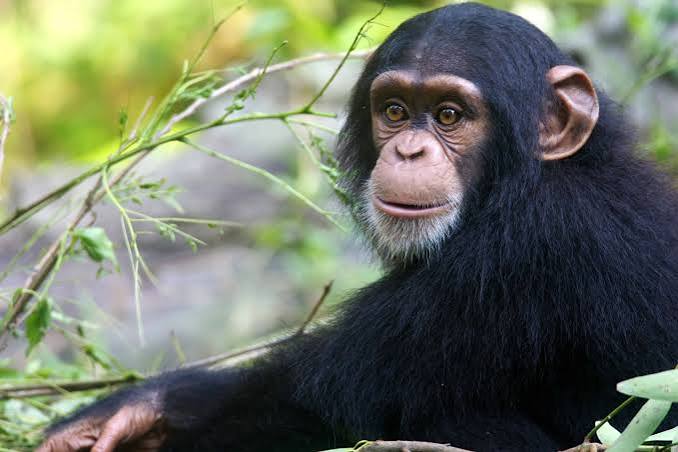
The common chimpanzee, Pan troglodytes, belongs to the family Hominidae the great apes, the same family that includes humans, gorillas, and orang-utans. It is the most numerous and widespread of the great apes. In Uganda, the subspecies present is the eastern chimpanzee, Pan troglodytes schweinfurthii. An adult male chimpanzee weighs between 40 and 65 kilograms. Females weigh 27 to 50 kilograms. Standing height reaches 1 to 1.7 metres when upright, though chimpanzees walk quadrupedally most of the time.
The face is bare and dark. The ears are large and rounded. The hands have long fingers and a relatively short, opposable thumb. The foot is adapted for gripping branches the big toe is highly mobile and used like a second thumb in climbing. Despite this climbing adaptation, chimpanzees spend significant time on the ground, especially adult males moving between trees or during hunts.
Community Structure and the Fission-Fusion Society
Chimpanzees live in communities of 20 to 150 individuals. The community shares a territory. Within the community, individuals split into smaller parties sometimes just two or three animals, sometimes 30 or more that move, feed, and rest together for hours or days before splitting and reforming differently. This fission-fusion social system means that the community is rarely all together in one place. The composition of the party you encounter on a trek changes daily.
Males are philopatric they spend their entire lives in their natal community. Females transfer between communities at sexual maturity. The dominant male the alpha maintains his position through political alliances with other males rather than through physical dominance alone. An alpha chimpanzee recruits and maintains alliances that support his position against rivals. Losing these alliances leads to loss of rank more often than losing a direct fight.
Tool Use: The Behaviour That Changed Our Understanding of Animals
Jane Goodall’s 1960 observation at Gombe of a chimpanzee stripping leaves from a twig and inserting it into a termite mound to extract termites termite fishing was one of the most consequential wildlife observations of the twentieth century. Before this, tool use was considered uniquely human. The observation forced a redefinition of both tools and humanity.
Uganda’s chimpanzee populations use multiple tools. Nut-cracking with stone hammers and anvils is documented in some populations. Leaf sponges crumpled leaves used to absorb water from crevices are used widely. Sticks probe bee nests and termite colonies. Leaves are used for wiping clean after defecation and after contact with injuries. Each community has a distinct tool-use repertoire that is learned and passed between generations a cultural transmission of technical knowledge that is, in form if not in complexity, analogous to human cultural learning.
Hunting and Meat-Eating
Chimpanzees hunt red colobus monkeys cooperatively and eat meat with enthusiasm. A hunting party of adult males surrounds a colobus group in the canopy, with some males blocking escape routes and others driving the monkeys toward the blockers. A successful hunt produces intense competition at the kill site high-ranking males get the most meat. Meat is shared more widely than plant food and is used as a social and political currency.
The frequency of hunting varies between communities. The Ngogo community in Kibale has one of the highest recorded hunting rates of any chimpanzee population. The hunting impact on the local red colobus population at Ngogo is measurable the colobus population is significantly lower in the core Ngogo territory than in areas outside it.
Uganda’s Chimpanzee Trekking Sites
Kibale National Park is the world’s best chimpanzee trekking destination. Its forest holds approximately 1,500 chimpanzees the highest density of any national park in Africa. Multiple habituated communities are available for trekking. Budongo Forest Reserve in Murchison Falls National Park is the second site the Budongo habituated community was the site of some of the earliest chimpanzee research in Uganda. Kyambura Gorge in Queen Elizabeth National Park offers a more intimate and physically demanding chimpanzee walk through a steep river gorge.
Plan Your Safari
A Kibale chimpanzee trek typically lasts two to five hours. Tracking starts at 8 am with a community briefing and follows fresh trails to the community’s current position. Once found, the hour of observation produces behavioural moments grooming, display, fruit feeding, juvenile play that remain vivid in memory for years. Budongo offers a quieter, less visited alternative with a research atmosphere.
African Wild Trekkers builds Uganda forest circuits that combine Kibale chimpanzee trekking with Bwindi gorillas and the savannas of Queen Elizabeth and Murchison Falls. Contact us to plan a Uganda safari that captures the full range of the country’s extraordinary primates.