Thomson’s Gazelle Facts: The Cheetah’s Favourite Prey and Its Survival Strategies
The Thomson’s gazelle is the cheetah’s primary prey animal across the Maasai Mara and Serengeti ecosystem. Cheetahs target Tommy the field nickname more consistently than any other prey species. This predation pressure has shaped Thomson’s gazelle behaviour profoundly. The flicking black tail that never stops moving, the stotting jump performed when a predator approaches, the alarm-snort that coordinates group flight every distinctive behaviour the Thomson’s gazelle displays reflects millions of years of selection driven primarily by the cheetah and its hunting technique.
What Is a Thomson’s Gazelle?
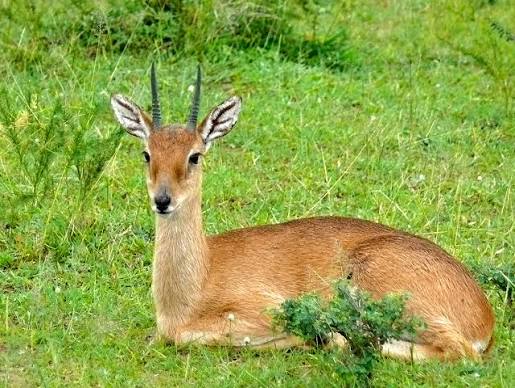
Thomson’s gazelle, Eudorcas thomsonii, is a small gazelle and one of the most abundant large mammals in East Africa. Adults weigh between 15 and 35 kilograms. Shoulder height reaches 55 to 82 centimetres. Both sexes carry horns lyrate and ringed, reaching 25 to 43 centimetres in males and shorter in females. The coat is bright tawny-orange on the back and sides with a white belly. The most distinctive feature is the bold black side stripe running from the shoulder to the haunches broader and darker than the equivalent marking on Grant’s gazelle. A white rump patch sits below the tail. The tail is black and flicks constantly a movement visible from 200 metres that communicates alertness status to neighbouring animals.
Stotting: The Honest Signal to Predators
Stotting is a distinctive jumping behaviour in which the gazelle springs upward with all four legs stiff and held straight, landing on all four feet simultaneously, then springs again in a repeated bouncing gait. A Thomson’s gazelle stotting at a cheetah communicates a specific message: this individual is physically capable and alert, and chasing it will waste the predator’s energy. Cheetahs watch stotting intensity before committing to a chase consistent research from the Serengeti shows that cheetahs preferentially pursue non-stotting or low-stotting individuals over those displaying strong stotting performances. Stotting is an honest quality signal that works because only a genuinely fit individual can maintain it.
The Flicking Tail and Group Alarm
The Thomson’s gazelle’s constantly flicking black tail maintains a continuous signal to group members. A tail held high and flicking rapidly indicates alertness. A tail lowered and still indicates calm. Group members track neighbouring individuals’ tail status as a real-time assessment of the group’s collective alarm state. When one individual stares at a threat and flicks its tail rapidly, neighbours orient to the same direction without any vocal signal. This silent, continuous communication system allows faster coordinated responses than any call-dependent alarm system.
Calving and Predator Swamping
Thomson’s gazelles in the Serengeti calve in a synchronised peak in January and February the same period and location as the wildebeest calving on the short-grass plains. This overlap is not coincidental. The predator swamping effect of simultaneous wildebeest calving also benefits Thomson’s gazelle calves born at the same time. The predator community’s capacity is overwhelmed by both species’ calves arriving together, improving survival rates for both.
Plan Your Safari
Thomson’s gazelles appear on virtually every game drive in the Maasai Mara and Serengeti. The most instructive encounters involve watching for cheetah-gazelle interactions finding a cheetah on a hunt and staying with it as it selects and pursues a Thomson’s gazelle produces one of East Africa’s most compelling predator-prey sequences. Ndutu in January and February produces calving Thomson’s gazelles alongside wildebeest calves and every predator species in the ecosystem.
African Wild Trekkers designs Maasai Mara and Serengeti safari itineraries that place you with cheetah families and the full plains predator-prey community. Contact us to plan a Kenya or Tanzania safari built around the grassland ecosystem’s most dynamic interactions.