African Hare Facts: The Nocturnal Sprinter of East Africa’s Open Country
The African hare appears on every East Africa night drive and disappears from almost every game drive report. Safari visitors call it a rabbit. Guides correct the identification. A hare is not a rabbit hares are born fully furred with open eyes and can run within hours of birth, while rabbits are born naked and blind in underground burrows. The African hare is a significant prey item for caracals, servals, African wild cats, African wild dogs, martial eagles, and Verreaux’s eagles. Understanding it means understanding a key component of the East Africa small mammal food web.
What Is an African Hare?
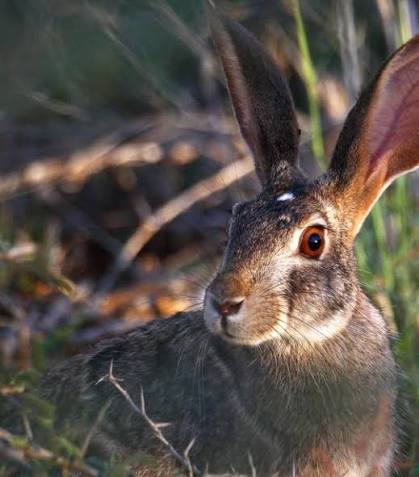
The African hare, Lepus victoriae, is one of several hare species present across sub-Saharan Africa. Adults weigh between 1.5 and 3 kilograms. Body length reaches 40 to 58 centimetres with very long hindlegs and long, black-tipped ears that stand upright when the animal is alert. The coat is greyish-brown or sandy-brown above with white underparts. The tail is small and white. The eyes are large and positioned on the sides of the head, providing nearly 360-degree vision for predator detection. The hindlegs are substantially longer and more muscular than the forelegs the configuration that produces the hare’s distinctive bounding, zigzagging sprint when flushed.
The African hare’s closest resemblance is to other large hares worldwide the European hare, the jackrabbit of North America, the cape hare of southern Africa. All share the same body plan: long hindlegs, long ears, and a reliance on speed and zigzag evasion rather than burrow refuge for escape from predators.
Leverets: Born Ready to Run
African hare young leverets are born above ground in a simple scrape or grass depression with no nest structure. They arrive fully furred, eyes open, and capable of independent movement within hours of birth. The mother leaves them hidden in separate locations spreading a litter of two to four leverets across different concealment sites to ensure that predator discovery of one does not mean loss of the entire litter. She returns to each leveret once per night to nurse, for approximately five minutes per visit. Nursing continues for about three weeks, after which the leverets forage independently.
This separation strategy differs completely from the rabbit’s underground burrow approach. Above-ground concealment and early mobility replace the burrow’s physical protection. The leveret’s grey-brown fur is cryptic against dry grass and bare soil, and the leveret responds to approach by pressing flat and remaining motionless relying on camouflage rather than flight for the first weeks of life.
Nocturnal Lifestyle and Diet
African hares are primarily nocturnal. They rest in form during the day a shallow body-shaped depression in grass or under a bush and emerge after dark to feed on grasses, forbs, leaves, shoots, and bark. They graze along predictable routes through their home range, returning to the same feeding areas night after night. This predictability makes them accessible to sit-and-wait predators like the caracal and serval, which learn individual hares’ nightly patterns.
Range in East Africa
The African hare occupies open grassland, savanna, light woodland, and agricultural margins throughout East Africa. It avoids dense forest and very arid desert. East Africa national parks across Kenya, Tanzania, and Uganda all hold hare populations.
Plan Your Safari
Night drives in any East Africa national park or conservancy produce African hare encounters. Hares freeze in the spotlight beam before sprinting in a characteristic zigzag pattern the burst of speed and direction change reveals the power of those hindlegs in seconds. Kenya’s Laikipia conservancies, Tanzania’s Ngorongoro and Serengeti, and Uganda’s Queen Elizabeth and Murchison Falls all produce regular encounters. Slowing the vehicle when a hare appears and watching the evasion behaviour rather than simply noting it and moving on reveals the biomechanical elegance behind the sprinting.
African Wild Trekkers designs East Africa safari itineraries with night drive programmes that capture the full range of nocturnal wildlife. Contact us to plan a safari that explores East Africa’s small mammal ecosystem alongside the large.