African Wild Dog Facts: Africa’s Most Endangered Large Carnivore
The African wild dog is Africa’s most endangered large carnivore. Fewer than 6,000 individuals remain in fragmented populations across sub-Saharan Africa. Yet the wild dog is also the continent’s most efficient predator pack hunts succeed on more than 70 percent of attempts, a rate that exceeds lions at 25 percent, cheetahs at 40 percent, and leopards at roughly 30 percent. This combination of extreme rarity and extraordinary hunting efficiency makes an African wild dog encounter one of the most sought-after safari experiences in East Africa, and one of the hardest to guarantee.
What Is an African Wild Dog?
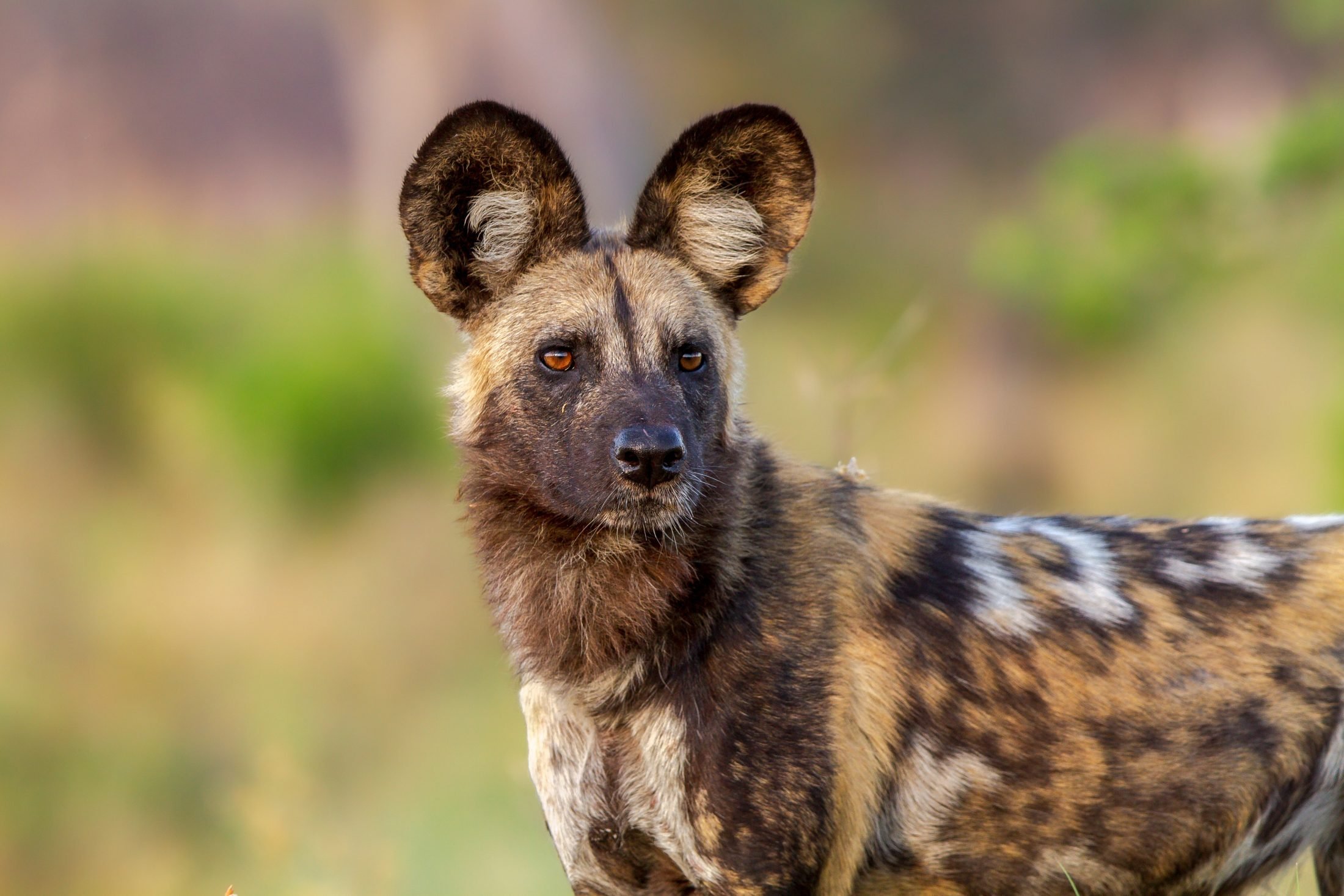
The African wild dog, Lycaon pictus, is the only member of its genus. The species name means painted wolf a reference to the mottled coat of black, brown, yellow, and white patches that covers each individual uniquely. No two wild dogs carry identical coat patterns a fact that researchers use to identify individuals from photographs without tags or collars. Adults weigh between 18 and 36 kilograms. Shoulder height reaches 60 to 75 centimetres. The head is large relative to the body, with rounded ears and long, powerful legs built for sustained running. Four toes on each foot rather than the five of most canids reflect an adaptation for endurance over complex terrain.
The social structure is cooperative at every level. A dominant breeding pair the alpha male and alpha female produces all or most of the pack’s pups. All other pack members are helpers who feed, guard, and care for the pups communally.
The Hunt: Africa’s Most Efficient Pursuit Predator
Wild dog hunts rely on sustained speed and pack coordination. Initial chase speeds reach 60 to 70 kilometres per hour. The pack maintains 48 to 55 kilometres per hour for 3 to 5 kilometres far beyond the aerobic capacity of most prey species. Pack members communicate during the chase through contact calls. Individuals take turns leading the chase as the front runners tire, maintaining collective pressure on the prey without individual exhaustion. Prey selection targets weakened, old, or young individuals identified during the initial approach before the chase begins.
The kill is quick wild dogs bring down prey through multiple simultaneous grip points on the flanks and rump, disembowelling the animal rapidly. Pack members feed simultaneously rather than in dominance order. This cooperative feeding means more individuals eat per kill and caloric distribution across the pack is more even than in lion or hyena feeding.
Conservation Status and Threats
Wild dogs face threats from habitat loss, prey base reduction, human-wildlife conflict, disease transmission from domestic dogs, and road kills along expanding road networks that cross their large home ranges. Pack home ranges average 400 to 700 square kilometres a spatial requirement that exceeds most East Africa national park boundaries and forces wild dogs into human-occupied landscapes. Conservation programmes focus on disease vaccination of domestic dog populations near wild dog ranges, corridor protection between protected areas, and community engagement around human-wildlife conflict.
Range in East Africa
Tanzania holds East Africa’s largest wild dog population concentrated in the Nyerere, Ruaha, and Katavi ecosystems. Kenya holds a small and fragmented population in the Laikipia-Samburu landscape. Uganda holds very few individuals and sightings are extremely rare. Zimbabwe, Botswana, and Zambia hold southern Africa’s largest populations outside Tanzania.
Plan Your Safari
Tanzania’s Nyerere National Park is the most accessible East Africa location for wild dog encounters. The park’s large pack population and open woodland terrain make vehicle-following of active packs possible. Morning drives departing at first light when packs are beginning the day’s hunt from their resting location — produce the highest encounter rates. Kenya’s Laikipia Plateau conservancies produce sporadic wild dog encounters when packs move through from their Samburu range. A multi-day Tanzania safari in Nyerere specifically seeking wild dogs is the most reliable strategy in East Africa.
African Wild Trekkers monitors wild dog pack locations in Tanzania’s key wild dog ecosystems and designs safaris around current pack activity. Contact us to plan a Tanzania safari prioritising one of Africa’s most extraordinary and endangered animals.