African Elephant Matriarch: The Oldest Female Who Leads the Herd
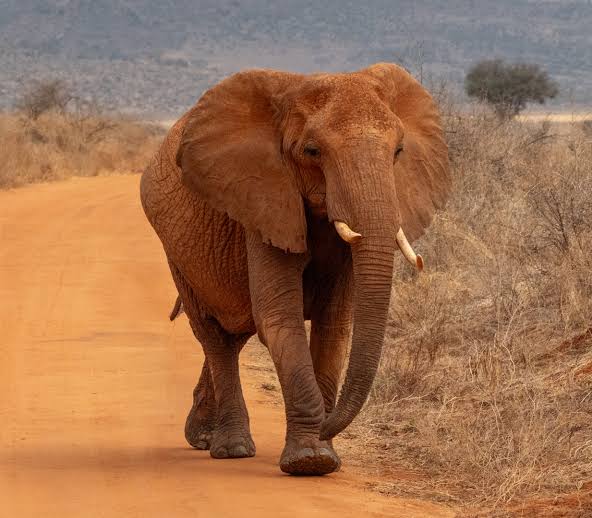
The oldest female elephant in a family group leads all major decisions — where to move, when to flee, how to respond to an unfamiliar sound. This matriarch role is not merely social seniority. Research at Amboseli and other long-term elephant study sites demonstrates that matriarch age directly predicts family survival. Families led by older matriarchs show better threat-identification accuracy, make better resource decisions during drought, and raise more calves to independence. The matriarch’s decades of accumulated knowledge functions as the family’s collective memory — a library of landscape, threat, and resource information that younger elephants cannot replicate.
What Defines a Matriarch?
The matriarch is the oldest female in an elephant family unit. Elephant families consist of related females and their offspring — mothers, daughters, sisters, and their calves. Adult males live separately after reaching sexual maturity at around 12 to 15 years and rejoin female groups only temporarily during musth. The matriarch holds this role through age and experience rather than through any formal competition. As the oldest female, she carries the longest memory of seasonal rainfall patterns, water source locations, predator territories, and the identities of other elephant families. Younger family members follow her decisions because her track record of sound judgement builds trust over decades of shared experience.
Decision-Making and Leadership
Matriarchs decide the family’s daily, seasonal, and emergency responses. Morning departure direction, feeding area selection, and the timing of moves to water sources all reflect the matriarch’s choices. Research shows that families follow the matriarch’s movement direction even when she initiates a move silently — without any apparent vocalisation or display. Younger elephants monitor the matriarch constantly and respond to subtle postural cues that communicate her intentions.
During drought conditions, matriarch-led decisions determine family survival. Older matriarchs remember water sources used decades earlier during previous droughts. Their families travel directly to these sources while families led by younger, less experienced females wander more widely searching for water. Amboseli research documented families with the oldest matriarchs showing significantly lower dry-season calf mortality compared to families with younger leaders during severe drought years.
Threat Response: The Matriarch Assesses Risk
Matriarchs identify and classify threats more accurately than younger females. Cynthia Moss’s Amboseli research demonstrated this through playback experiments. Recordings of male lion roars versus female lion roars triggered different responses in matriarch-led families — older matriarchs distinguished the higher threat posed by male lions and triggered stronger defensive bunching and alert behaviour in response to male roars. Younger females did not show this distinction. The family’s collective threat response depends on the matriarch’s assessment.
When a matriarch decides a threat is serious, the family forms a defensive formation — adults facing outward with calves positioned inside the group, ears spread and trunks raised to assess the threat’s scent and sound. The matriarch typically positions herself between the threat and the family’s calves.
Communication and Family Bonds
Elephants communicate through infrasound — vocalisations below the range of human hearing that travel through the ground and air over distances of several kilometres. Matriarchs produce and receive these infrasonic calls constantly, monitoring the locations and states of other family members and tracking the movements of other elephant families in the landscape. Contact calls maintain cohesion when family members separate to feed. Musth announcement calls from distant bulls reach matriarchs who then prepare the family’s response to an approaching bull’s visit.
Plan Your Safari
Kenya’s Amboseli National Park offers the finest matriarch observation experience in Africa. The park’s long-term research programme means guides can identify individual matriarchs and explain each family’s history, personality, and leadership context. Watching the morning departure of an Amboseli family — the matriarch moving first, the rest of the family falling into step — makes the leadership structure immediately visible. Tanzania’s Tarangire and Ruaha national parks hold large, relatively undisturbed elephant populations where family dynamics remain intact and matriarch leadership is observable on extended drives.
African Wild Trekkers designs Kenya and Tanzania elephant safari itineraries with guides who understand elephant family structure and matriarch behaviour. Contact us to plan a safari that reveals the full complexity of Africa’s most intelligent large mammal.